
The 9 Coldest Lakes In America Worth Visiting
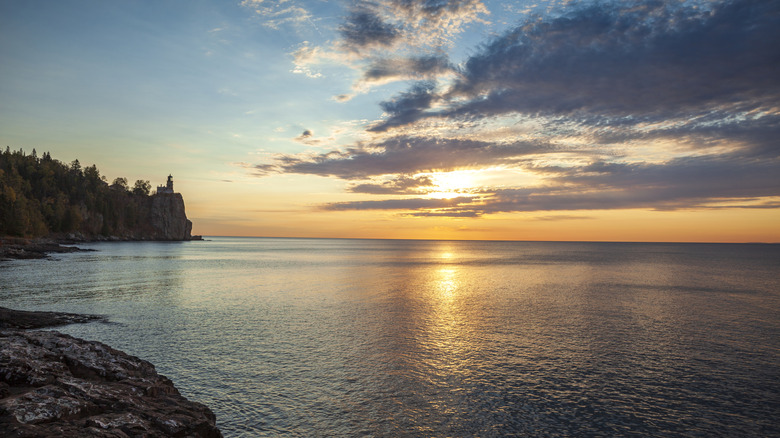
For those who can forgive the pedantic nature of the observation, the coldest American lake is actually Lake Vostok, an enormous subglacial lake found in the central plains of Antarctica, per American Scientist. A less technical and certainly less annoying answer reveals that Lake Superior, by virtue of its closer proximity to mainland America, is about as cold as it gets when it comes to inland lakes. It's also the largest, and well worth a visit in its own right. Sadly, the same cannot be said for other lakes. So, while there are many venerable bodies of water that find their way onto most frigid lists, not all of them make for as compelling a visit.
No, a list of the coldest lakes be informative for sure, and it's true that extracting a few days' entertainment messing about on even the most anonymous lake is hardly a challenge at the best of times. Here, however, is an attempt to strike a balance between temperature and the raw desirability of the location in question. Yes, all these lakes get very chilly in the winter, and, yes, the very coldest of them (Lake Superior, not Vostok) has found its way onto the list. But it earned its place because Lake Superior is an amazing place filled with things to see and do. You'll find all of these frigid lakes are still well worth a visit.
1. Lake George: New York
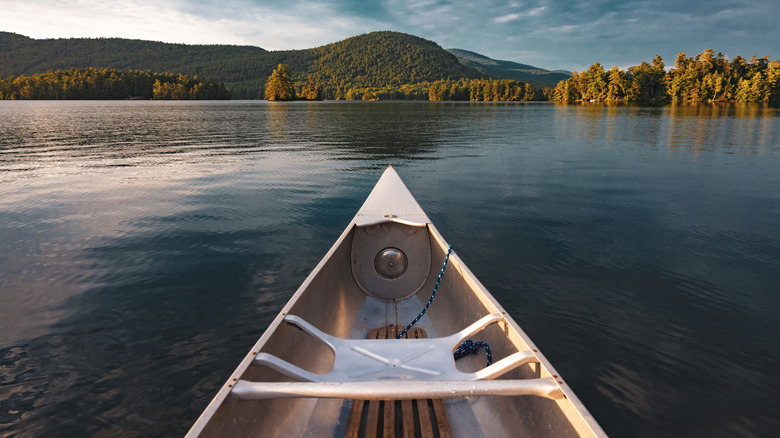
New York's Queen of the American Lakes lies 60 miles north of the state capital and presents itself as a dazzling Adirondack gem blessed with endless beauty and recreational options. At 32 miles long and only 3 miles at its widest point, per Brittanica, it much resembles a Scottish loch and certainly fits that bill when it comes to water temperature; Lake George is a chilly body of water. Over the summer, the water is warm enough to swim in. As winter approaches, the lake drops down to freezing point, and during mid-winter, a completely frozen surface is not uncommon.
All that temperature variation is good news for some of the fish living within the ecosystem: Trout and salmon thrive in the cool depths, while perch and bass luxuriate in the relative warmth of the summer flow. The lake is littered with boat launches, hidden spots, and stretches of tranquil beaches, making it a hub for angling enthusiasts, including those looking to try ice fishing, notes Lake George. Of course, the list of things to see and do does not stop there.
The lake has long been famed for its steamboat cruises, adds Lake George, which range from simple sightseeing trips to dinner and lunch come leaf peeping adventures in the fall. The Six Flags theme park is open between May and October and features over 100 rides and an indoor water park. History buffs have the Fort William Henry Museum, and a generous allotment of historic sites, (via Lake George). On top of that, there's a robust local nightlife.
2. Lake Champlain: Vermont
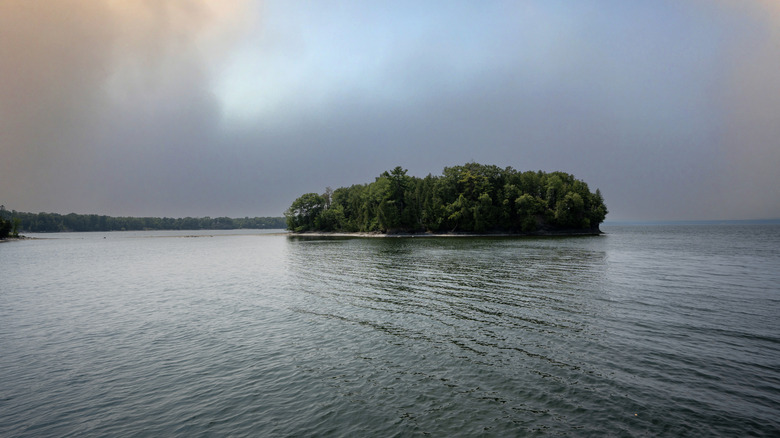
At 120 miles in length and 12 miles across at its widest point, (via Lake Champlain Land Trust), Lake Champlain seems to have only just missed being granted Great Lake status, per Lake Champlain Basin Program. Still, its size and northerly position help with two important metrics. First, the lake is very cold, and second, there are many distractions to find along the way as you explore the undeniable majesty of rural Vermont.
Temperature-wise, things are pretty much as you would expect them to be. Average summer surface temperatures reach around 63 degrees Fahrenheit, which means that swimming is both popular and tolerable. By the time mid-winter hits, the water temperature is barely above freezing, and the lake has been known to freeze over.
So, ice fishing and angling trips for sure; salmon and trout abound, notes Lake Champlain. Champlain is a place for hikers, bird spotters, and mountain bike adventures. Rock climbers can find a mixture of challenging and not-so challenging ascents, and foodies flock to the local Adirondack cuisine trails to sample the fare of local breweries and farm shops. You'll also find a selection of museums and heritage sites, including the magnificent Champlain Memorial Lighthouse built on the foundations of an 18th-century windmill. Accommodation-wise, you'll find a mixture of charming family-run inns, vacation rentals, and the odd farm stay, per the site. And, there's camping. It's a big lake, and there are many sites to choose from, some of which veer proudly into glamping territory.
3. Lake Tahoe: Nevada and California
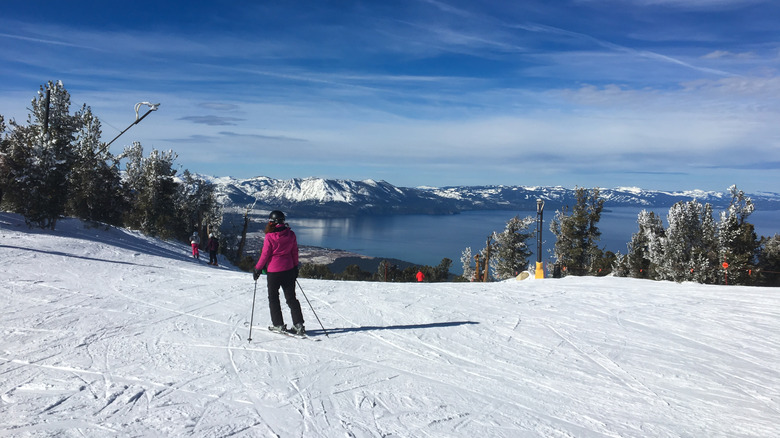
Lake Tahoe does not distinguish itself across all that many metrics. It's only 22 miles long and 12 miles across, it's hundreds of miles away from Nevada's principal gambling attractions, and in terms of surface area, it's somewhat dwarfed by its southern neighbor, Lake Mead. Still, it has one thing going for it: it's deep. Indeed, Lake Tahoe — at 1,640 feet — is one of the deepest inland lakes in all of America, and all that depth adds up to one thing: It gets really cold.
Over the summer months, you might find the water resting at an acceptable 70 degrees Fahrenheit or so, but the average temperature is more likely to drop to a low 40 degrees Fahrenheit, taking a dip from a refreshing plunge to a potentially life-threatening experience, per the State of California. Swimming then, only ever takes place within a narrow window. Thankfully, there are plenty of other things to occupy your time.
The lake itself is known for its incredibly pure, cobalt water, with visibility approaching 70 feet deep in certain places, notes Tahoe Research Center. There are beaches to lounge on over the summer, kayaking and hiking trips to arrange in the Emerald Bay State Park, and a host of spa days, fishing trips, and biking adventures to engage in. But you'll also find winter sports activities aplenty, and, thanks to its proximity to Reno, there's a myriad of gambling opportunities to take advantage of without having to battle the crowds of Las Vegas.
4. Bear Lake: Utah
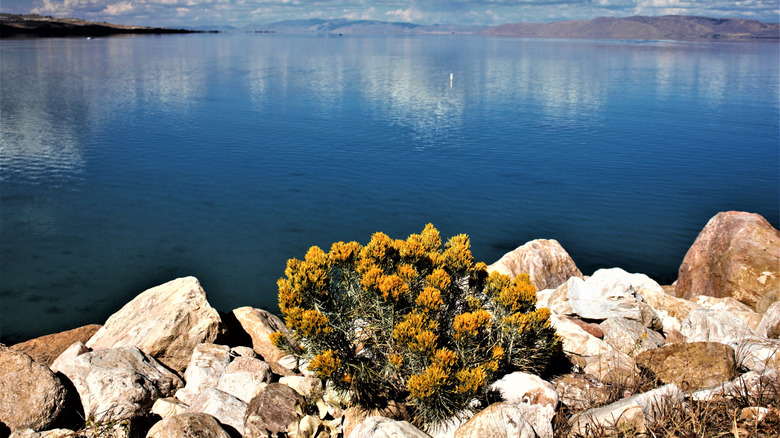
During the summer, the high concentrations of limestone in the waters of Bear Lake make for a vibrant blue hue, and that, combined with the relative warmth of the water, which can reach surface temperatures of 72 degrees Fahrenheit, makes it an inviting place to escape the summer heat. Come winter, as the cold weather approaches, the turquoise waters of Lake Bare turn to shimmering crystal, and the waters of the Utah State Park known as the Caribbean of the Rockies dip below the 40 degrees Fahrenheit mark and remain frozen until late spring.
The lake straddles the border between Idaho and Utah, meaning those wishing to explore the area have a number of options available. Garden City on the Utah side is a popular choice, with world-famous raspberry shakes to sample in the summer, per Water's Edge Resort, and snowboarding trails in the winter, adds Life Utah Elevated.
In Idaho, the East Shore Marina is a great place to rent a slip for the day or a whole season; spending time on the water cruising, fishing, or doing some sail-by leaf peeping comes highly recommended. The area is riddled with caves, and some of the best of them, like Paris Ice Cave – which remains frozen all year round — are worth a visit. You can also go fossil hunting with American Fossil at a nearby quarry.
It doesn't stop there. The Bear Lake National Wildlife Refuge provides a bounty of opportunities. The lake is awash with waterfowl, and you'll find pelicans, blue herons, and bald eagles. There are also black bears to be found, although they rarely approach the water's edge.
5. Flathead Lake: Montana
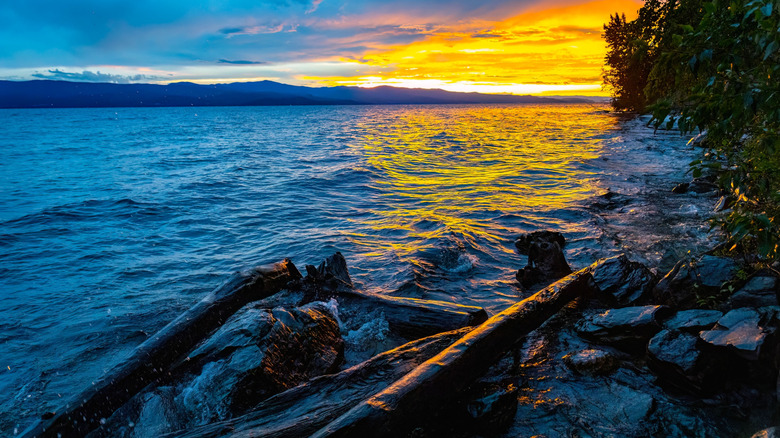
Montana is one of the coldest states in the country, per World Population Review. It's perhaps unsurprising, then, that Flathead Lake is also a chilly place. During high summer, the water might make for a comfortable swim, but it's not guaranteed. For most of the year, it stays below 50 degrees Fahrenheit and can reach lows of 32 degrees Fahrenheit during the coldest months, notes Sea Temperature Info. Even so, the lake rarely freezes due to its prodigious depth: The 27-mile-long lake has an average depth of 165 feet.
The southern side lies within the Confederated Salish and Kootenai Tribes Flathead Reservation, and those wishing to visit it need to acquire a permit, adds Kalispell. North, visitors are free to engage in the kind of activities you'd expect from such a large body of water. With 13 public access points, you'll find numerous camping opportunities, hiking trails, and fishing spots, the West Shore State Park to explore, and enough picnic spots to provide a year's worth of Instagram feeds. Meanwhile, on Wild Horse Island, the lake's largest island, wildlife opportunities are fruitful.
In warm weather, you'll find the lakeside park and crowd-free paradise offering boat rentals and jet skiing, while farmers from local cherry orchards often set up roadside stalls to sell fruit, jams, and preserves. Sample wine at Dayton, a town on the lake's west shore, gaze at the Rockies from the quiet beaches of nearby Rollins, or head to the north side of the lake to visit Somers. Rent a waterside property, camp out in style, or use it as a hub for your next skiing adventure.
6. Yellowstone Lake: Wyoming
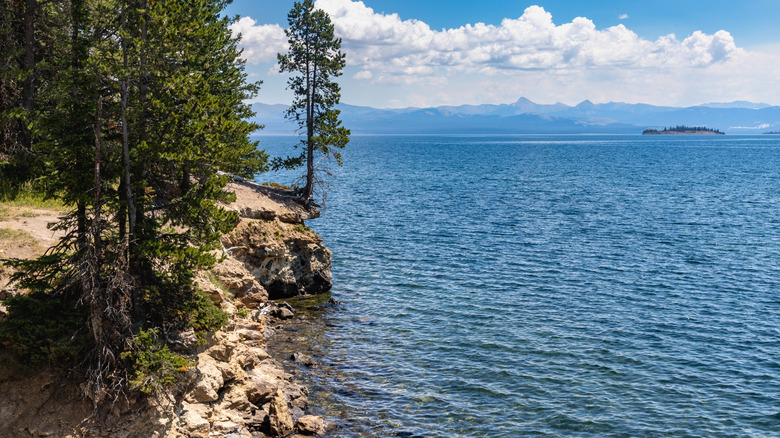
For those who've never visited Yellowstone Park, it's difficult to emphasize exactly how much they are missing out on. National Park Service says it was set up as America's very first national park in 1871. Today, it's perhaps the most famous and recognizable protected stretch of wilderness in the world. Oh, and its largest lake is really cold.
During the heights of winter, the high-altitude lake — it rests 7,733 feet above sea level — freezes over completely. Even in summer, the average temperature of the water barely registers above 40 degrees Fahrenheit; swimming in such cold water is not recommended and represents a genuine danger to life. Still, there are many other things to see and do. To start with, the most obvious point: The lake is located within a National Park. That means that everything from camping to fishing to wildlife spotting is on the table: Yellowstone remains a place of stunning beauty and the best park to visit in 2026.
The lake itself presents a host of adventures. With swimming mostly out of the question, boat rentals are a popular activity. Bridge Bay Marina, located on the lake's northwest shore, around 10 miles from Pumice Point Picnic Area, is a good place to start. Take a boat out for a spin, or spend the day on the lake admiring the scenery and wildlife. Anglers are allowed to catch and keep any trout they find on the water aside from the native Yellowstone Cutthroat Trout. Guided fishing and sightseeing tours are also available, per the park. Along the way, you're likely to spot the odd bear or two.
7. Crater Lake: Oregon
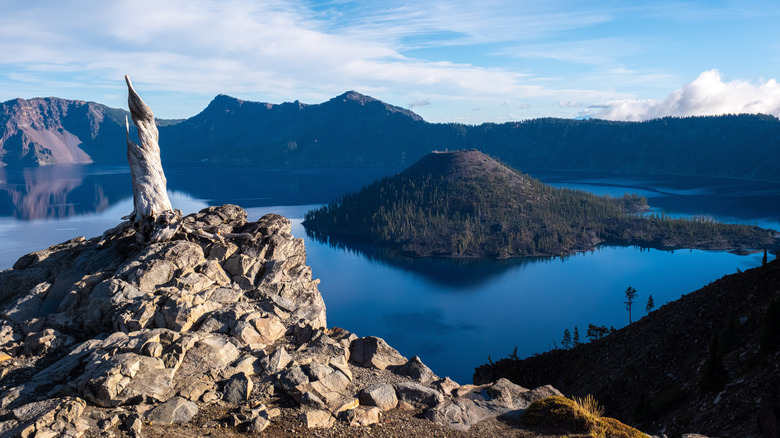
If the thought of jumping off into the icy waters of Yellowstone Lake feels off-putting, then taking a swim in Crater Lake is unlikely to be your vibe. America's deepest lake isn't a crater; it's a caldera, per U.S. Geological Survey. Its great depth — close to 2,000 feet at its deepest — and location over 6,000 feet above sea level, notes Brittanica, means that it has some of the coldest waters around. At best, the lake might offer you a 62 degrees Fahrenheit window of opportunity to take the briefest of dips, adds Shaka Guide. At its worst, the water hovers around the 38 F mark; too cold for even the most experienced swimmers. Long-distance swimming is forbidden.
Such prohibitions shouldn't deter you from enjoying the clean air of one of America's most scenic parks. Hiking trips are an obvious go-to activity, (via National Park Service), especially when combined with backcountry camping; the park is almost entirely made up of managed wilderness, so you need to know what you're doing. Those planning on a winter camp certainly need to know the rules before attempting to do so. Otherwise, you'll find scenic drives of breathtaking intensity, daily boat and trolley tours, plenty of license-free fishing, and guided ranger programs.
The Sinnott Memorial Overlook allows you to take in the full majesty of the caldera in style, as long as you arrive during high season, which runs from late June to mid-October. Those not predisposed to camping can find lodging in Prospect, less than 50 miles to the southwest. The 10-room Prospect Historic Hotel comes highly recommended and offers parking, bed and breakfast, and rustic Oregon charm.
8. Lake Michigan: Michigan
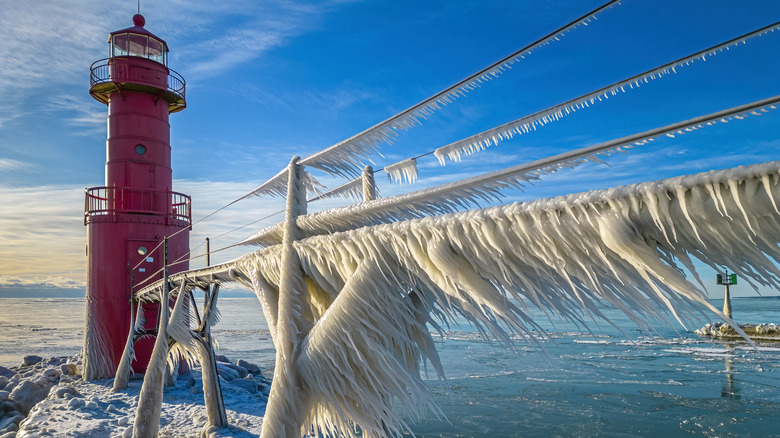
Given that both the size and depth of any body of water influence its temperature, it's hardly surprising that at least one of the Great Lakes made it onto this list. True, Lake Michigan is a stunning State Park offering a dreamy escape filled with scenic beaches and camping opportunities. But it is also the fifth-largest lake in the world, notes Statista, and an unashamedly chilly place to take a swim in at the best of times.
That is, it is for those brave enough to take a dip at all. During the summer, the surface temperature struggles to rise above 70 degrees Fahrenheit, but as the dark nights draw in, temperatures drop well below the 40 degrees Fahrenheit mark. It rarely freezes over, but you'd be hard-pressed to tell the difference during any given cold snap; ice regularly forms around the shore and often continues off into the horizon, adds The Inn at Stonecliffe. Still, not even all that ice can put a damper on things to see and do around the 118-mile-wide, 321-mile-long lake.
Chicago sits on the lake's southwest side. Yes, there are tourist traps to avoid in Chicago, and, sure, the pizza is controversial, but it's a city filled with history, festivals, and incredible sporting events. But the lake is so vast that other opportunities abound. There are the golden beaches of the Indiana Dunes National Park, coastal towns serving great food and ice cream explore. Throw a more than a few houseboat rentals to try out, fishing trips, lookouts, coves, and hidden gems into the mix, and you could spend a lifetime of vacations attempting to find even a fraction of them.
9. Lake Superior: Michigan, Wisconsin, and Minnesota
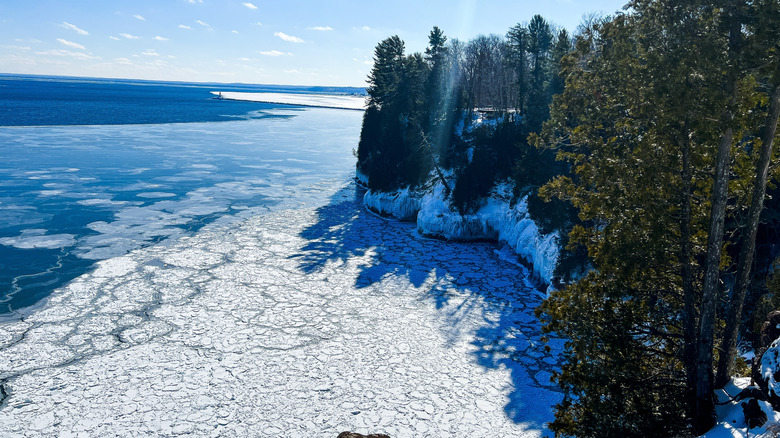
There two of the Great Lakes on this list, and Lake Superior has been added for much the same reason as Lake Michigan. It's famously enormous — the second largest lake in the world by surface area, per Statista — it's extraordinarily cold, and its position spread out across three separate states makes any attempt to summarize all the things to see and do there a necessarily brief affair. Even in summer, the lake rarely rises above the 60 degrees Fahrenheit mark, and during mid-winter, it regularly approaches the freezing point. Lake Superior is no swimmer's paradise.
Three adjacent states have a lot to offer on the U.S. side of the lake. There is the Superior National Forest, with its grey wolf population, dog sledding tracks, fishing, hiking, and camping. There's the waterfall-strewn town of Marquette that offers outstanding cuisine and tours of local breweries. You can take a trip up to Copper Harbor to view the local birds, climb the rocks, or spend time with a few links of golf. Or, if you are so inclined, you can enjoy some of the fine beaches and farmers' markets of Gladstone.
And that's just for those looking at the lake's periphery. There are 32,000 square miles of pristine waters out there, and whether you explore it via a cruise or chartered fishing expedition, there are few places in the world that offer such levels of quiet beauty. The must-hike trails of America's cleanest lake are reason enough to justify the trip, and once experienced, it's somewhere you'll probably want to explore further.
About the lake selections
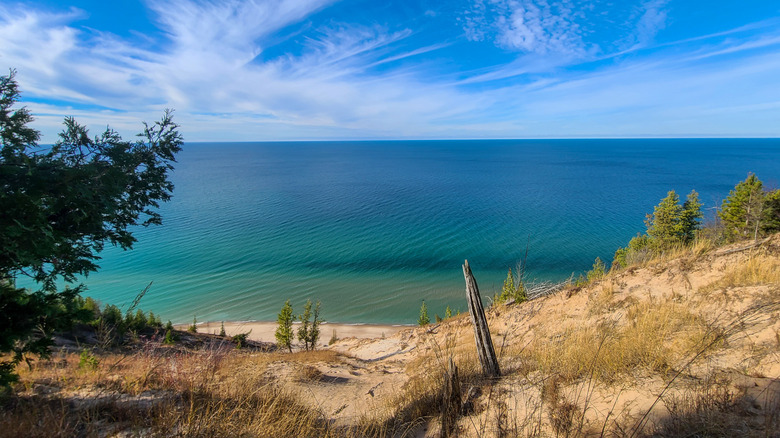
With so many cold lakes to choose from, we spent time thinking long and hard about which ones rose to the top when it came to things to see and do. In some cases — looking at you, Lake Superior — the decision was based on personal experience.
In others, it was more about recommendations, local reviews, and the stated beauty of places such as Crater Lake, a bucket-list-worthy visit in and of itself. Hard data, especially regarding temperatures, were taken from official sources such as the Lake George Association.