
The World's 'Best Destination For People Who Get Bored On Beach Holidays' Is A Mediterranean Island Paradise
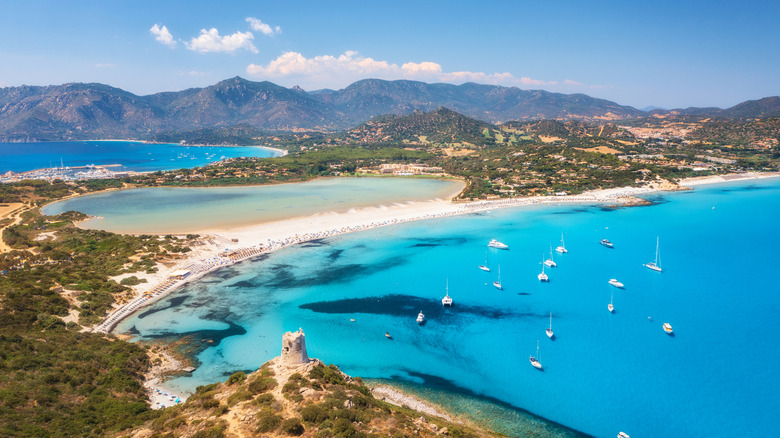
Some people can happily spend a week rotating between lying on a beach towel and cooling off in the water, with not much else to think about. Others start to look for a little more action after the first day. If you're a traveler who falls into the latter category, you likely seek out destinations that offer more range when planning a vacation — think hiking trails through shifting habitats, historic sites, or at least more scenery to bounce between from time to time. The cruise line Sail Croatia even created a study to find the "Best Destinations for People Who Get Bored on Beach Holidays." The top spot in its analysis is Sardinia.
As an Italian island sitting in the middle of the Mediterranean, Sardinia is full of Blue Flag-awarded beaches, mountains, and ancient ruins. The Sail Croatia study ranked Sardinia alongside popular beach destinations worldwide based on seven factors: number of beaches, dining, water activities, day trip options, historical sites, adventure sports, and nature or wildlife tours. Sardinia placed particularly high for its sheer number of beaches, historic attractions, and food. Its broader evaluation reflects more variety for travelers who like to spice up their beach trips with unique outings and landscapes. One trip in Sardinia can combine lazy beach mornings in turquoise coves with afternoons exploring ancient ruins, topped off by seafood platters with a coastal view.
Sardinia's seaside ruins and food that go back centuries
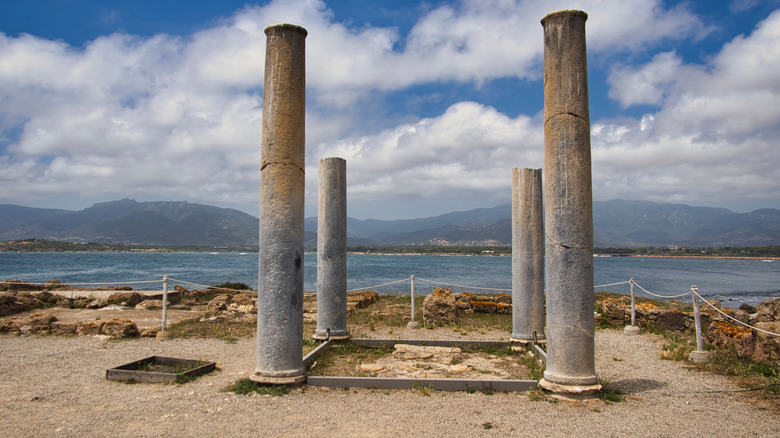
Sardinia's appeal extends beyond its pretty beaches, thanks to its archaeological sites and food traditions. Travelers can wander among ancient cities and the Domus de Janas, an ancient UNESCO site with enchanting island intrigue. The Domus de Janas are tombs built thousands of years ago and scattered across the island. In the southern Nora Archaeological Park, you can easily combine swimming and history in the same outing. Park visitors can see the Ancient City of Nora, the first city founded by Phoenicians in Sardinia in the Eighth Century B.C., with a temple, thermal baths, and underwater Roman mosaics glimpsed on a snorkeling tour.
When it comes to food options, you don't have to worry about relying on one beach shack or bland resort options: Sardinia is rich with food traditions. Pane carasau is a thin flatbread originally made by shepherds, a common staple on every table, according to Italy's official tourism website. A popular Sardinian dish is fregula, a semolina pasta often cooked with clams. Many places to try out the island's culinary culture are in Cagliari, Sardinia's largest city, with unmatched food. Here, the Mercato di San Benedetto is an indoor market with around 300 stalls, where visitors can peruse freshly caught mullet, sea bass, and mussels. For a sit-down restaurant, Antica Cagliari Lungomare Terrazza serves classics, including fregula, on a terrace overlooking the sea. An option with more modern Sardinian cuisine is deeper in the city at CUCINA.eat, which holds a Michelin Bib Gourmand.
With Sardinia's main airport, Cagliari Elmas Airport, located just outside Cagliari, the city is also a practical starting point for the island. From here, you can easily build up a multifaceted beach holiday, moving between ancient ruins, Mediterranean waters, and a bustling food market.
Sardinia's diverse coastline has hundreds of beaches
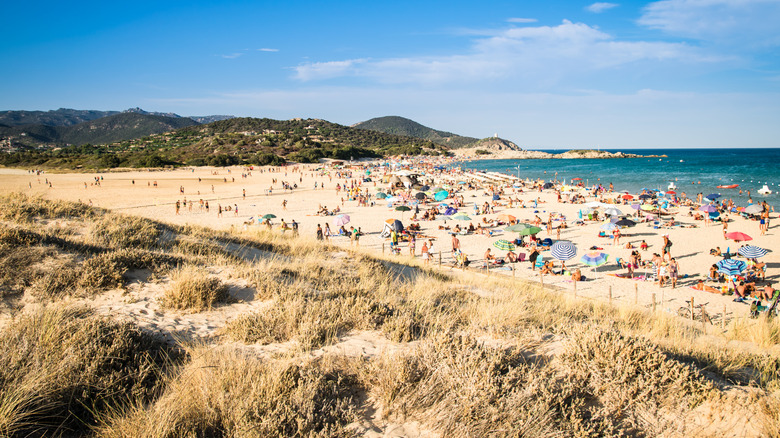
Sardinia has beaches in spades. The Sail Croatia study counted well over 500 beaches across the island, meaning it's easy to find another option when you get bored of one. It might be worth planning a trip around several different regions of Sardinia if you're looking for variety — it is a large Mediterranean island, after all, about a four-hour drive from tip to tip.
On the northeastern coast, Sardinia's Costa Smeralda has chic beaches and views akin to the Amalfi Coast, if you're drawn to a more polished retreat. The Spiaggia del Principe, often considered one of the coast's most beautiful, has a classically tropical cove setting framed by scrubby hills, with brilliant turquoise water and white sand. Its waters are shallow and well-suited for swimming or snorkeling.
On the southern coast, the beaches have quite a different character. The south is less tourist-heavy than the north, and its coastline is marked by stretches of white sand dunes. The Chia region has some of the south's most distinctive beaches. Here, you'll find the Spiaggia di Campana Dune, a beach backed by dunes speckled with Mediterranean shrubbery that rise up to around 66 feet, according to the Mare di Sardegna Port Authority. The beach and its dunes are crossed by the Cape Spartivento via Chia Tower Trail, which traces the coastline for about 8 miles and could be a good option to break up a beach day if you get tired of sunbathing.