
5 Indian Restaurant Rules American Tourists Break Within The First 10 Minutes
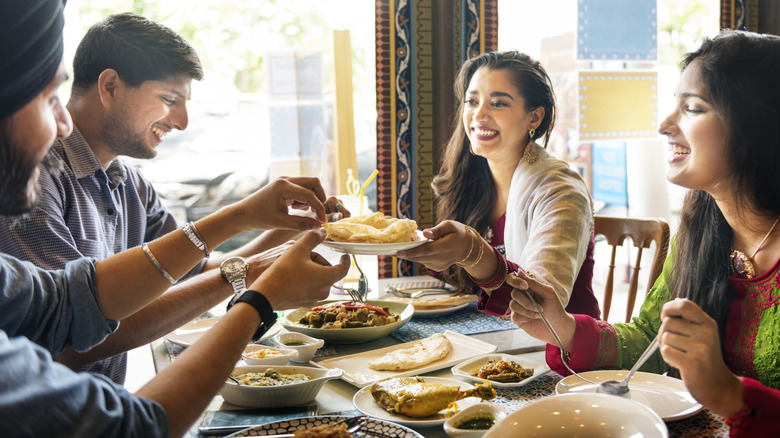
If you hail from a big city, like New York or Los Angeles, you probably have access to a wide range of international culinary options at your fingertips. You may feel confident in your supreme knowledge of diverse cuisines and dining conventions, including those at your regular Indian restaurant. You might very well know your parathas from your chapatis, your korma curry from your kofta curry, and your gulab jamun from your jalebi. However, U.S.-based Indian eateries, such as Gymkhana, one of London's top Michelin-star restaurants that opened on the Las Vegas Strip, cater to a Western audience — and are thus more likely to forgive your many cultural faux-pas. Dining in India will be an entirely different ballgame, and you should familiarize yourself with the do's and don'ts of restaurant etiquette before flying over.
As India is an almost unbelievably massive nation, it's not accurate to assume that the culture will be the same wherever you go. The most populated country in the world, with around 1.48 billion people who call it home (via Worldometer), India contains over 2,000 ethnic groups, each with their own religious beliefs, cultural practices, and social traditions. However, there are certain norms, particularly for dining, that are similar across this heterogeneous and pluralistic nation.
With that in mind, let's go through the following five Indian restaurant "rules" that American tourists break — often within the first few minutes. Being aware of them can help ensure that you don't stand out like a sore thumb (or at least not more than you already do as a foreigner). For this story, Islands reviewed a variety of articles, online forums, and guides on dining etiquette. As well, the author's own personal experience traveling through and living in various parts of India was incorporated into the article.
Not ordering everything all together
If you enjoy the occasional fine-dining experience, you may be accustomed to a multi-course meal. You'll likely be used to frequent visits by your server, asking you your thoughts on the previous course while bringing out the next one. Even your average TGI Fridays or other standard chain restaurant will offer up at least three course options — starters, entrées, and desserts — at a minimum. However, this isn't the case in India.
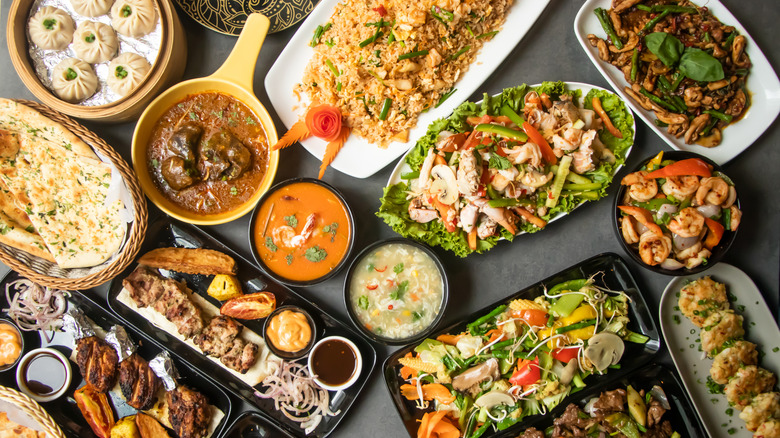
In most Indian restaurants, there aren't really courses like you'd find in other countries. The dishes usually arrive together, perhaps with the exception of sweet dessert items and a post-meal chai (tea). While smaller appetizer-style snacks do exist, they don't necessarily need to be eaten before your "entrée." Items like chutney and papadum crackers can be eaten as sides along with the other dishes and, as such, they will be brought out at the same time.
It's customary to order everything at once, so take some time with your dining companions to plan out how many (and what type of) dishes you'd like. Then, place your order with the staff so they can serve you in one go. Of course, if you do forget something or decide you want another dish, you can certainly order it later — this isn't a hard and fast rule, and it won't be considered rude not to follow it; it's just not the way things are typically done. So, don't fret if you've devoured a couple of delightfully flaky samosas and decide that you want seconds. But if you don't see Indians calling the waiters over time and again to add to the already full spread on the table, you'll understand why.
Not eating certain foods with your hands
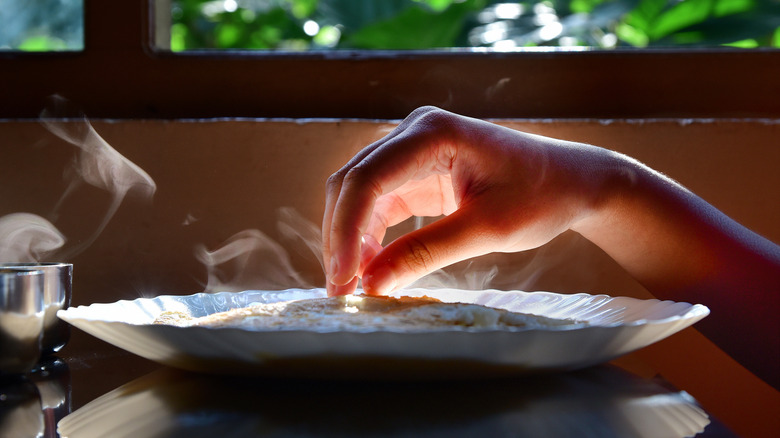
While it's common to see cutlery in Indian restaurants, it won't be used in the same way as in Western ones. Knives aren't usually needed, as meals are served with bite-sized morsels, and you should never use them on any kind of flatbread, such as naan. Just like how the way you hold your fork in Europe will out you as an American, this cutlery-related faux pas screams, "I'm a tourist!" Instead, you should tear pieces off to scoop up your curry, turning the bread into a kind of spoon. If the dish is liquid-y, like daal, it will either be served in a small bowl, so you can drink it, or you'll be given a spoon.
Eating with your hands can also add to the overall experience of the dish. A 2022 study in the International Journal of Gastronomy and Food Science found that eating with your hands can change the sensory experience overall, including aroma and flavor. Even if you're not comfortable, give it a try, and eventually it will become more natural. Just ensure that you wash your hands before the meal.
Not every hand is created equal, and in India, the right hand reigns supreme. You'll use this one alone for eating — do not use your left to touch any food. As in many cultures in Asia, the left hand is typically used for personal hygiene, including cleaning your feet and wiping yourself after going to the toilet. Therefore, consuming food with your left is seen as offensive and highly unhygienic. Make sure to only use this hand to pass dishes to others and hold your drink.
Taking food off of others' plates
When dining out with your bestie or partner, you've probably experienced the inevitable order envy: You see that savory side of sweet potato fries beside their main meal, and it's only second nature to want to grab a few for yourself off of their plate. However, this is a no-no in India.
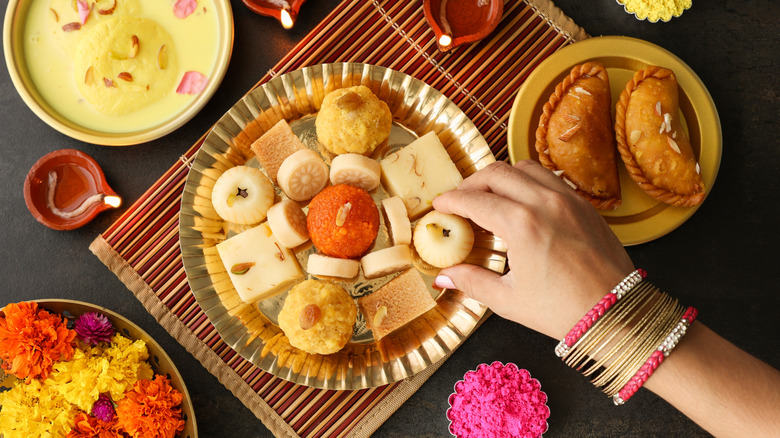
Sure, sharing is caring — and Indians practically invented the concept of good hospitality. Typically, food arrives in bowls or platters that are meant to be shared, rather than on individual plates. This is so you can help yourself to the variety of dishes on the table, choosing from a veritable cornucopia of Indian specialties. Just don't pick it off someone else's plate — the food that they have served themselves is their personal portion, and doing so will likely offend them.
In India, there is a concept known as jhootha, which refers to food or drink that has been contaminated by someone else's saliva, and it stems from local cultural norms on hygiene and food purity. It's considered unhygienic to take the cutlery that you have already used (or, even worse, your hands) to touch someone else's food and plate. Instead, if you are craving some of the rogan josh that one of your dining companions has ordered, simply ask him or her to pass the communal dish over to you. It was almost definitely meant to be shared — so you can take the serving spoon (not your personal one), give yourself a generous portion, and keep your hands and your cutlery to yourself.
Mixing vegetarian and non-vegetarian items
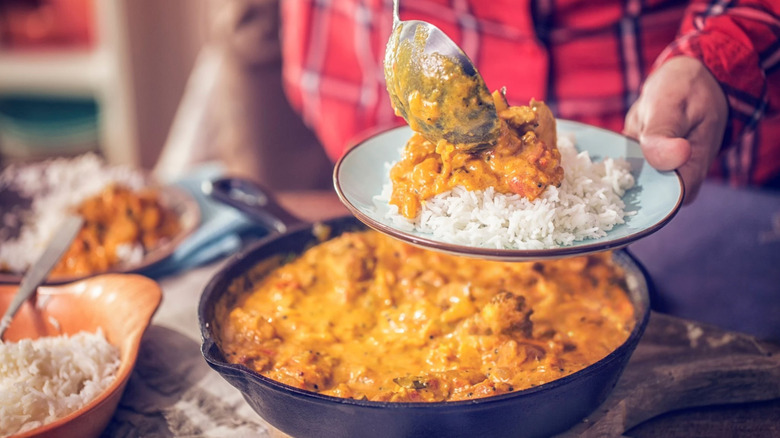
While you may well be accustomed to eating out with a group of diners who have varying dietary preferences and restrictions, with everyone just ordering for themselves, it isn't as simple in India. According to The Times of India, this nation has the largest number of vegetarians in the world, with around 30% of its people on a plant-based diet as of 2026. As a result, many Indian restaurants don't even serve meat, and those that do usually bring out veg and non-veg items in separate tableware so that there's no confusion or mixing of the two.
The reason that someone chooses to abstain from meat may not just be a matter of personal taste, but rather a value based in their religious or spiritual beliefs. This is particularly prevalent within the Hindu, Jain, and Buddhist communities, along with many others. These religions all center around a philosophy of non-violence, known as ahimsa, which encourages respect and compassion for (and minimizing harm towards) all living beings, including animals — this obviously includes eating them. Therefore, when you're dining out with Indians and you're craving something meaty, check first with the group before ordering any non-veg dishes to ensure that everybody is comfortable.
Additionally, don't touch any vegetarian dishes with servingware that has made contact with meat. If you're not a vegetarian, you may not see the harm in accidentally using the same spoon to dole out a portion of butter chicken and chana masala, and some genuinely might not care. But if they do, this could cause discomfort or, at worst, it could be deeply offensive, and it is certainly disrespectful to show a blatant disregard for someone's personal boundaries.
Leaving a mess — or leftovers
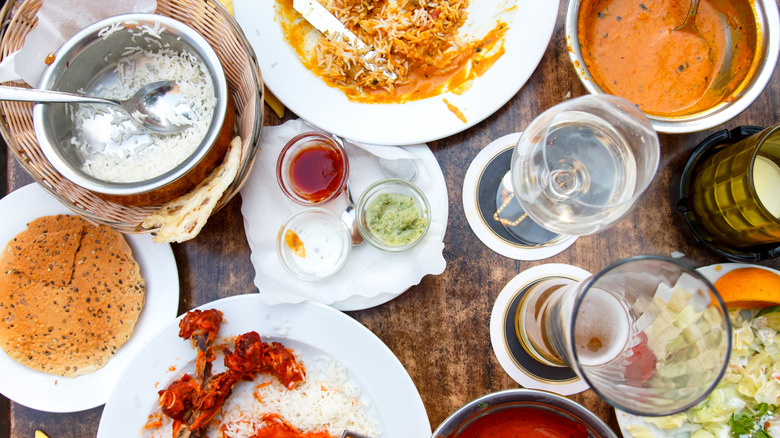
Upon seeing the scrumptious variety of Indian breads, curries, seafood, and more, you may be tempted to try it all, piling your plate high with anything that will fit. However, before doing so, be sure that you can actually eat what you've taken, as it's not in good taste to have leftovers. Food is generally considered to be a blessing or a gift, and leftovers are therefore seen as wasteful. It could also indicate that you don't like what you're eating and don't appreciate the efforts of the cook. Since you're serving yourself, you can apportion the right amount of food on your plate. Take a small quantity at first that you know you can finish. You can always have more later.
Additionally, try not to leave a huge mess at the table, as this is considered to be impolite. The leadership training center Sanjeev Datta shared their advice in a YouTube short on dining etiquette: "Don't walk away from small spills and sauce drips, leaving the table sticky and messy. Do take a moment to wipe minor spills with a tissue. Anything larger, just inform the staff."
So there you have it: five tips to help you fit in with the locals when dining out. Whether you're traveling to the northern territory of Ladakh, India's "Little Tibet," with hypnotic mountain vistas, or venturing into the southern state of Kerala to visit Varkala, the soulful Indian beach town with exceptional food, you're in for a real treat. This country's diverse regions offer some of the world's best cuisines, and now you can enjoy them while ensuring that you make a good impression.