
Between Augusta And Charleston Is South Carolina's State Park Filled With History And Hiking Trails
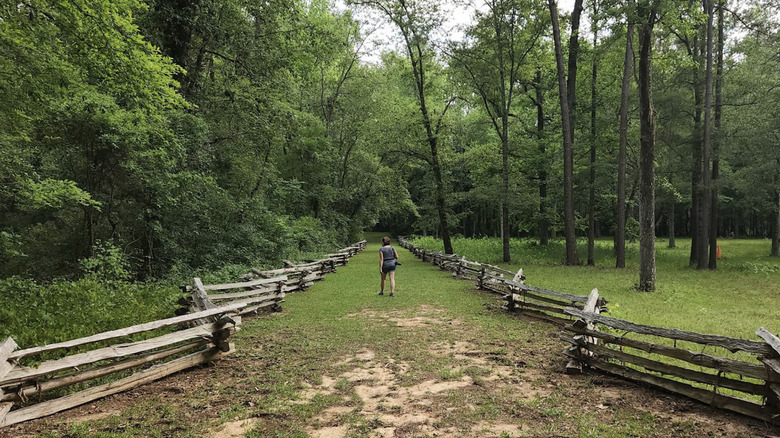
Tucked within the low-lying landscape of South Carolina's Lowcountry sits a place that played a pivotal role in one of America's most consequential wars. Battle of Rivers Bridge State Historic Site carries the haunting legacy of the Confederate Army's stand against General William Sherman's Union soldiers during the late stages of the Civil War. It's a park that combines the somber reminders of this dark chapter of American history with quiet, shaded hiking trails that follow the same hallowed grounds as soldiers from ages past once crossed.
The story of how the park came to be is compelling — in February 1865, over 1,200 Confederate soldiers marked this spot between present-day Augusta and Charleston as the place where they would hold the line against General Sherman, whose troops were advancing throughout South Carolina. The battle was fierce and bloody, but the Union soldiers eventually won at Rivers Bridge. The Rivers Bridge Memorial Association had owned the battlefield until they transferred the 390-acre site to the state. In 1945, Battle of Rivers Bridge State Historic Site opened to the public and thus became the only site within South Carolina's state park system to contain a preserved battlefield.
Battle of Rivers Bridge is a park filled with history
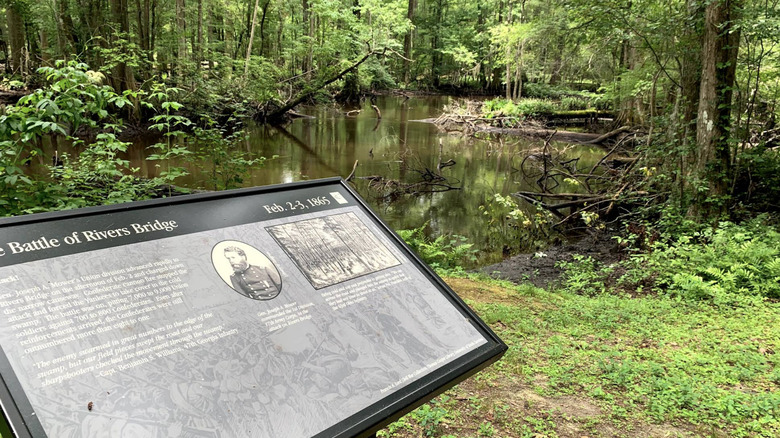
Tours at the state park are designed to educate visitors about the battlefield and its history, much like the ones at the more-famous Gettysburg Battlefield, one of America's most-visited destinations where one of the Civil War's bloodiest battles took place. There are two ways to tour the grounds: guided or self-guided. In scheduled guided tours, a park ranger takes you around the park to explain the historical significance of each site. Although park admission itself is free, these tours are $5 per person and can be purchased on the park's website. Alternatively, you can embark on your own self-guided excursion by using the interpretative signs placed throughout the park.
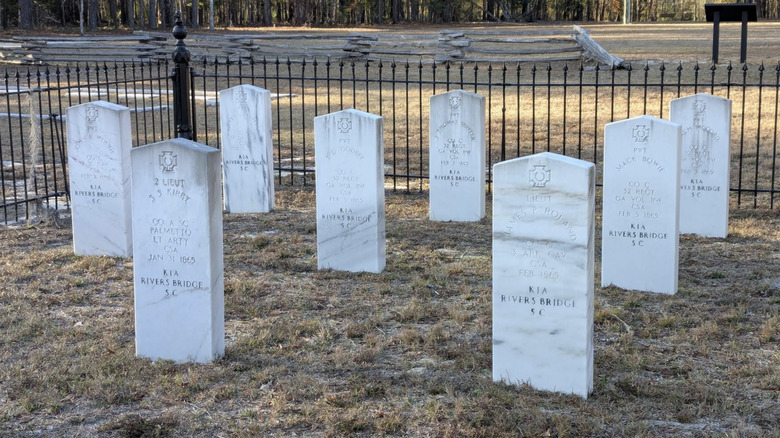
Among the sites you'll likely want to see are the four cemeteries scattered throughout the park. One of them is the resting place of Confederate soldiers who died during the battle, another is where several World War II veterans are buried, and the last two cemeteries are private burial grounds meant for members of two families — the Brelands and the Ayers. There's also a museum at the park's Memorial Grounds with information panels that detail the battle, including four panels listing the names of every soldier who died on the battlefield, whether they were Confederate or Union soldiers.
Hiking the hallowed grounds of Rivers Bridge
While historical significance is one aspect of Battle of Rivers Bridge State Historic Site, recreation is also a major draw to the park. Over one and a half miles of trails are open for hikers to explore, with the two main trails being Battlefield Trail and Historic Causeway Road Trail. Battlefield Trail, which is just over half a mile long, starts at the park's gate and takes walkers around what's left from the battleground breastworks that were once used during battle. This trail will also take you through the exact area where the Confederate Army tried to stave off Union forces.
After you've traversed Battlefield Trail, you can embark on the slightly longer Historic Causeway Road Trail, which makes for a leisurely walk. Passing beneath the towering trees, this trail is about two miles out-and-back and follows the same path on which Confederate Army soldiers marched to face off with Union forces. At one end of the hike, you'll find the Civil War Memorial Grounds, and along the way, interpretive signs give passers-by insight into the battlefield's significance, making the walk both scenic and educational.
If you want to check out another scenic gem, make your way to South Carolina's scenic Sand Hills State Forest, a 46,000-acre haven for outdoor fun. Alternatively, if you're yearning to be near the water in a coastal region with quiet shores and seafood, consider visiting South Carolina's Hammock Coast.