
Tucked Between Indianapolis And Evansville Is Indiana's Artsy Historic Site With Inspirational Views
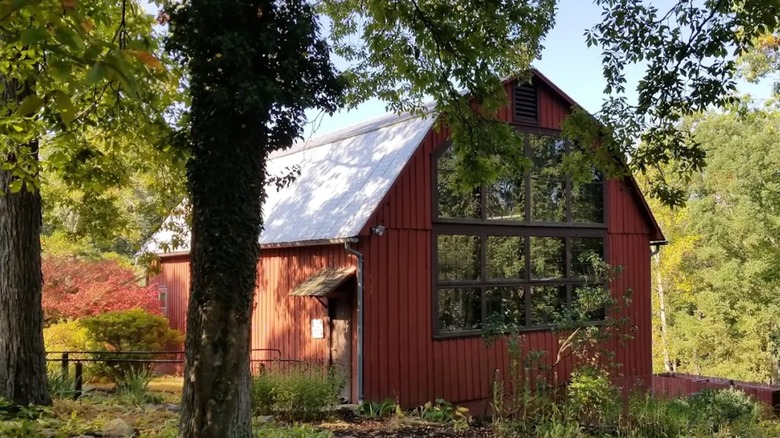
Just over 50 miles south of Indianapolis, the buildings of the capital city give way to the expansive forested acres of Brown County. In the early 20th century, this woodland region lured Theodore Clement (T.C.) Steele, arguably Indiana's most famous artist, who was inspired by its bucolic beauty. Outside of Nashville, Indiana, the largest town in Brown County, lies the T.C. Steele State Historic Site, which was his home and studio. In his early career, Steele came to prominence as a portraitist in the city but later turned to painting Impressionist landscapes. In pursuit of a scenic retreat, Steele and his wife Selma moved to Brown County in 1907. At their hillside estate, an Arts and Crafts-style residence that they named House of the Singing Winds, the couple enjoyed their life surrounded by nature. Steele painted prolifically and showcased his work in his window-lined studio, while Selma planted gardens of blooming flowers outside. Steele died in 1926, leaving behind a legacy of about 350 artworks on site. Selma remained at the property until she donated it to the state in 1945.
Today, the T.C. Steele State Historic Site is listed on the National Register of Historic Places and encompasses over 200 acres. Visitors can take guided tours through the Steeles' main residence to see how the couple lived, view walls of Steele's paintings that are exhibited in his Large Studio, and stroll through woodland trails that are part of the Selma Steele Nature Preserve.
T.C. Steele State Historic Site is about an 80-minute drive from Indianapolis and a nearly 2.5-hour drive from Evansville. The historic site is open on Wednesdays through Sundays from 10 a.m. to 5 p.m. While the site is open year round, the spring and summer bring flourishing gardens, while the fall promises brilliant foliage.
Visiting the interiors of T.C. Steele State Historic Site
As T.C. Steele State Historic Site is bordered by the Yellowwood State Forest, Indiana's wildly underrated state forest, you will immediately be surrounded by the nature that influenced Steele upon arrival. Begin your visit with a stop at the Visitor Center to watch an introductory video about T.C. Steele's life and career. Afterward, take a guided tour of House of the Singing Winds, which Steele named for the whistling winds that traveled through the secluded residence. T.C. Steele designed the house himself, with its wide gabled roof, clapboard exterior, and wraparound porch, to blend into the surrounding nature. Expert guides will lead you through the interior of the impressive house, which has been left untouched since 1945. The eclectic home is adorned with T.C. Steele's landscapes and decorated with the Steeles' globally-sourced collection of unique furniture, books, and antiques. Attached to the house is Steele's Little Studio, a small wing that he used for painting until completing his Large Studio.
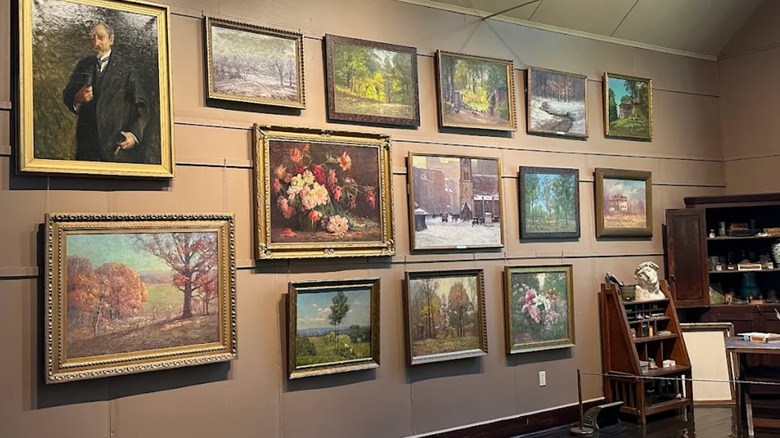
After exploring the House of the Singing Winds, you'll tour the Large Studio, a spacious red barn that Steele built in 1916. The walls of the vaulted and light-filled studio are lined with over 50 paintings by Steele, from his contemplative portraits to his vibrant Impressionist landscapes, many of which were painted right on property. You'll likely recognize some of the scenes showcased on the canvases, as Steele frequently depicted his house, studio, blooming gardens, and Brown County's woodland landscape in his artworks. "Beautiful museum and lovely guided tour," raved a reviewer on Google, where the T.C. Steele State Historic Site has a 4.7-star rating.
Exploring the grounds of T.C. Steele State Historic Site
After exploring the interior beauty of the historic site, take time to wander on a self-guided tour across the vast acreage to see the views that inspired Steele's artwork. Heading north from the Large Studio, you'll reach the Dewar Log Cabin, a circa-1870s cabin built that Selma had moved to the property. The cabin is a short stroll from one of the five trails that encircle the property. The Trail of Silences is a half-mile path along a stream that meets up with the Wildflower Trail, which starts at the log cabin.
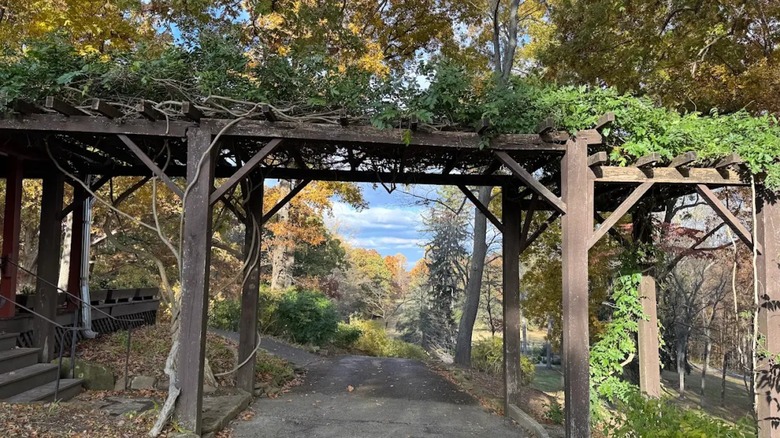
Across the T.C. Steele Road from the main house is the Selma Steele Nature Preserve, a 92-acre reserve of forested woodland. You can access the preserve by foot on the Whippoorwill Haunt Trail, a nearly mile-long path leading through thick forest and bypassing quiet creeks. This trail also connects to the steep and challenging half-mile Woodpecker Trail and the easy quarter-mile Inspiration Ridge Trail. Along the latter trail, you can see a recreation of Steele's mobile studio, a horse-drawn wagon that he painted in while traveling throughout Brown County. From here, you can circle back to the main house past Selma's formal garden, which she planted with beautiful blooms, such as wisteria and peonies.
After exploring the T.C. Steele State Historic Site, drive about 15 minutes away to Nashville, a walkable town with antiques, charm, and natural beauty. Here, you can view more art at the Brown County Art Gallery and stop for a meal (or stay overnight) at the cozy Artist's Colony Inn. For nature lovers, just outside of town is the entrance to Brown County State Park, considered the "Little Smokies of the Midwest," with cabins, trails, and bright fall colors.