
As A Local, This Is My Favorite Washington, DC Landmark That Most Tourists Miss
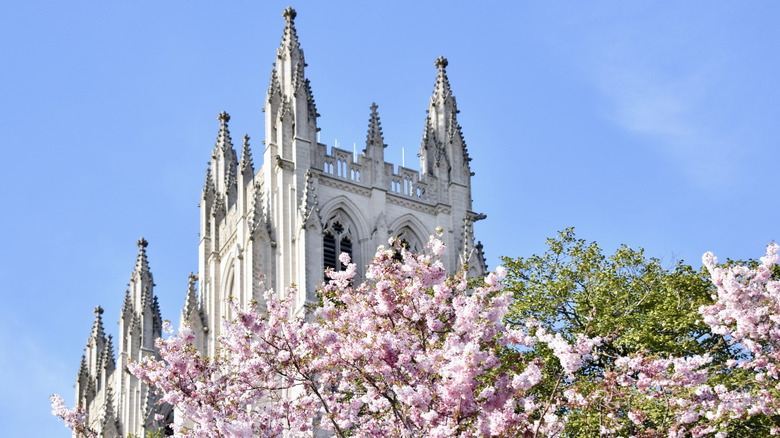
As the country's capital, Washington, D.C., brims with monuments and museums, and over 36 million visitors visit these landmarks at the National Mall each year. However, as a local — I grew up and currently live in the D.C. area — there's one stunning destination that tourists often overlook. Crowning Mount Saint Alban, the second-highest point of the city, is the Washington National Cathedral, an architectural wonder designed to resemble the centuries-old cathedrals of Europe. As an alum of the National Cathedral School, which lies in the shadow of the cathedral, I spent significant time inside the cathedral for both school services and classes. I was even a student bell ringer in the cathedral's bell tower!
Regardless of how many times I've visited, the massive scale of this sacred space never fails to amaze me. The cathedral, which is part of the Episcopal Church, took over 80 years to complete before officially opening in 1990, and it is the sixth-largest cathedral in the world today. The stately exterior, built out of Indiana limestone, adheres to traditional Gothic architecture with pointed arches, flying buttresses, and pinnacle-topped towers. Inside, the soaring nave features a vaulted ceiling and over 200 colorful stained glass windows. While the grandeur is impressive, there are also plenty of hidden treasures I've enjoyed discovering, such as the cathedral's smaller chapels and the lofty bell tower, which overlooks all of D.C. The cathedral anchors the nearly 60-acre Cathedral Close grounds, which shelter lush gardens and a scenic forest for peaceful walks.
The Washington National Cathedral is open for self-guided tours from Monday to Saturday (with varying hours per day) and on Sunday for church services. The cathedral is about a 20-minute drive from the National Mall in downtown D.C. and can also be reached by public transport.
Exploring the Washington National Cathedral's art and architecture
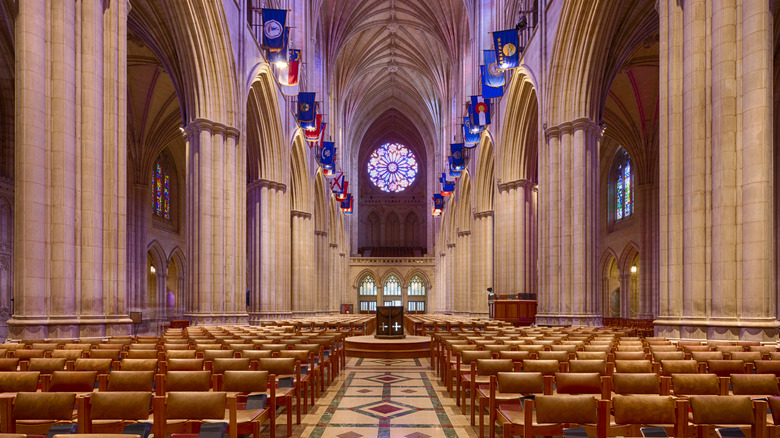
The Washington National Cathedral is one of America's most awe-inspiring churches and cathedrals to visit. However, compared to the millions of visitors that descend on the National Mall, fewer than 500,000 visit the cathedral each year. Therefore, in my experience, the cathedral never feels crowded, and you can explore its breathtaking architecture and artworks at your own pace. As you begin your self-guided tour inside, stroll down the nave's center aisle to get the perfect view of the west-facing Creation Rose Window, which is made up of over 10,500 pieces of colored glass. As sunlight illuminates the cathedral's stained glass windows, kaleidoscopic color is beautifully reflected on the beige limestone. To see more of these extraordinary windows up close, walk around the outer edges of the nave. Most of these windows depict significant biblical scenes, while the cathedral's famed Space Window showcases a piece of moon rock brought back by Apollo 11 astronauts.
Near the central crossing of the cathedral, you can witness some of the cathedral's most intricately carved architectural marvels, such as the prominent Canterbury Pulpit, the wooden pews of the Great Choir, and the High Altar, an inner sanctum with over 100 stone figures. In the northern transept, don't miss the Holy Spirit Chapel, one of my favorite chapels. Here, you'll find a richly colored triptych of Jesus sending out the Holy Spirit, painted by famed American illustrator N.C. Wyeth.
I also recommend venturing downstairs to the subterranean chapels, where you can see the cathedral's art and architecture on a smaller scale. The intimate, Gothic-inspired Bethlehem Chapel was the cathedral's very first chapel, while the Resurrection Chapel features an intricate mosaic-lined ceiling depicting Jesus' resurrection. Another recommendation is to book the cathedral's bell tower climbs, where you can ascend over 300 steps to reach the Central Tower's bell chamber. This is D.C.'s highest vantage point, and the panoramas of the city from here are remarkable.
Enjoying the Cathedral's surrounding natural beauty
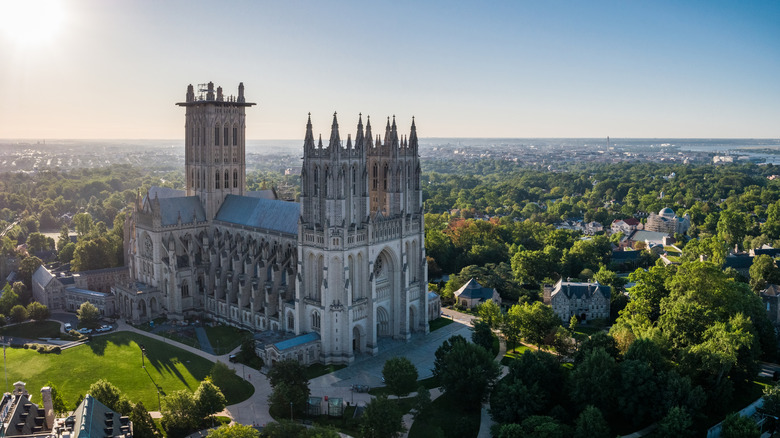
Washington, D.C., was named the best city in America for parks, and the Washington National Cathedral's green spaces are some of my favorite places in the city to enjoy nature. Adjacent to the cathedral is the Bishop's Garden, which was designed in the style of a medieval walled garden. This is a tranquil place to wander past blooming roses in the spring and fall, see the Pool of St. Catherine pond that brims with koi fish, and sit inside the stone gazebo that seems plucked from a fairytale.
Adjacent to the garden is a wide grassy lawn, which is a lovely spot for an outdoor picnic with cathedral views. For a longer walk, head across the road from the garden into the Olmsted Woods. This 5-acre woodland is so densely forested you may just think you've left the city. A stone walkway weaves through the thicket of centuries-old oak and beech trees, which is especially stunning to behold in the late fall months when they flaunt brilliant foliage.
Heading back towards the cathedral, you can stop by Open City at the National Cathedral, a cute coffee shop housed inside a historic church building where you can pick up freshly-brewed coffees and tea, pastries, and sandwiches. For a more substantial meal, the cathedral is an easy walk from a number of local restaurants. A few favorites from my school days include Cactus Cantina, a neighborhood Tex-Mex institution, and 2Amy's, a convivial pizzeria for Neapolitan-style pies. To explore more under-the-radar landmarks nearby, here are 5 underrated Washington, D.C., museums, according to a local.