
Canada's Remote Wildlife Reserve Is A Sprawling, Forested Beauty Where Bison Roam Wild
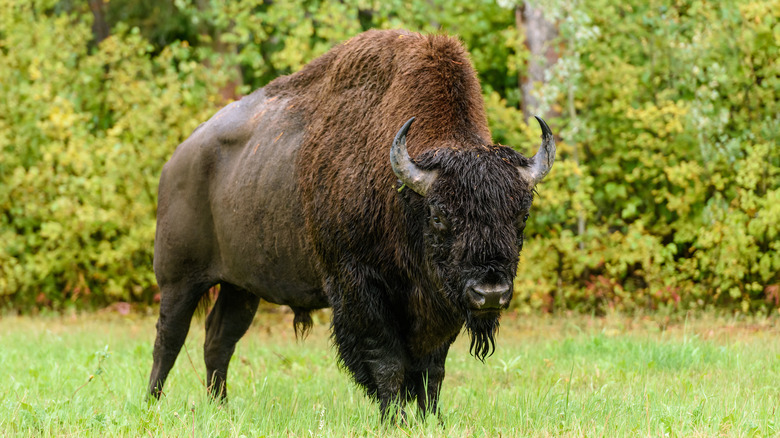
When you think of bison, perhaps Yellowstone springs to mind. After all, the legendary park is famous not just for its geysers, rivers, lakes, and forests, but also for its iconic buffalo herds. However, bison aren't just native to the U.S. You can also find these majestic creatures north of the border in Canada, and a good spot to start looking for them is at the Mackenzie Bison Sanctuary.
Situated in the Northwest Territories in Canada's wild and remote far north, this large reserve is home to the Mackenzie Herd, a group of around 850 free-roaming wood bison — bigger and darker cousins of plains bison. In the 1800s, wood bison numbered in the hundreds of thousands and ranged from the Yukon and northern British Columbia through Saskatchewan and well into the Northwest Territories. However, their numbers were decimated by hunting and disease to the point that they were thought extinct in the 1950s. But in 1963, 18 full-blooded wood bison were discovered and brought to the reserve to protect and re-establish the herd.
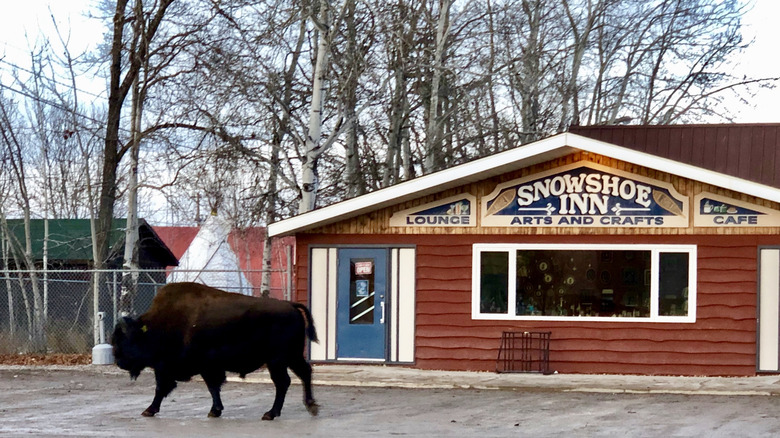
For those willing to make the trip, it's very easy to see wood bison in their native habitat today, often standing by the side of the road or even wandering through the town of Fort Providence. "Along the road from Fort Providence to Yellowknife, we saw two different groups of bison, each with 8 to 10 individuals, including babies. They are beautiful animals," wrote one awed traveler on Tripadvisor. Another reviewer echoed the same sentiment in a review titled, "Bison everywhere!" "Look for the ones that are alone and way away from the herd, these guys are giant!"
Witness nature in action at the Mackenzie Bison Sanctuary
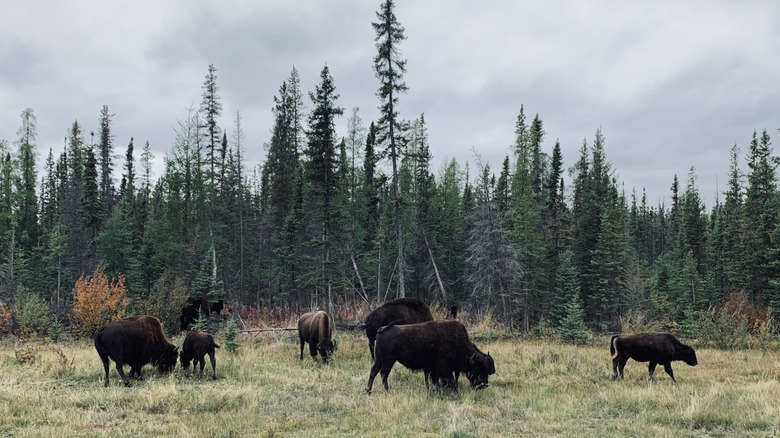
The Mackenzie Bison Sanctuary was set up as a large park. It occupies nearly 4,000 square miles of land, which gives the herd plenty of room to roam. It's also situated in northern Canada's boreal forest, a massive eco-zone made up of pine, larch, birch, spruce, fir, and poplar trees, as well as wetlands and open areas. "Beautiful colors in the fall, grasses are very bright yellow!" raved one visitor on Google Maps. "The drive is very scenic," mentioned another.
The sanctuary is large, as are the creatures that inhabit it. A full-grown bull wood bison can reach a whopping 2,250 pounds, while plains bison — the type of bison you see roaming wild at Midwest U.S. preserves — max out at around 1,900 pounds. They are usually black or dark brown, with a massive head, shaggy mane, and distinctive hump. Cows gestate for about 10 months, and the calves weigh around 40 pounds at birth and are reddish-brown. In the Mackenzie Bison Reserve, the calves' main predators are wolves, which can sometimes be seen hunting their prey.
While the most common place to see bison is along Highway 3, which connects Fort Providence with Yellowknife — one of Canada's best destinations to see the northern lights — there are also some good places to stop. North Arm is a park nestled on the shores of Great Slave Lake with 15 campsites and a day-use area. Chan Lake is a day-use site on the reserve's northern end and is an ideal spot for a picnic with a side of bison-watching. You also may catch a glimpse of sandhill cranes and other birds on the lake. Both spots have parking and public restrooms.
How to stay safe when viewing bison
Bison are massive beasts capable of inflicting serious injuries, which means you must always exercise caution when viewing them. They have almost no fear of humans and can be extremely territorial, resulting in charging attacks. The best method for taking in these majestic animals is by remaining in your vehicle. If you do choose to get out of your car, always remain at least 100 yards away from them, as they can run at speeds up to 35 miles an hour. Also pay attention to their body language: When a bison is agitated, it may stomp its feet, shake its head, and raise its tail. Any sign of these behaviors should be a cue to get back into your vehicle.
The wood bison at the MacKenzie Bison Sanctuary often congregate on the road. They will sometimes even lie down in the middle of the highway, so always drive slowly and carefully, as car-bison collisions aren't unheard of.
Yellowknife, the capital of the Northwest Territories, is home to a full-service airport. Depending on the weather, it's about a three-hour drive from there to Fort Providence, which is the nearest town to the reserve. Fort Providence boasts a couple of stores, a restaurant, and a single hotel, but not much else. When it comes to accommodations in the area, camping at North Arm is another option, and there are also plenty of hotels in Yellowknife. For even more bison in the Northwest Territories, check out Wood Buffalo National Park for fishing, lakeside camping, and wildlife watching.