
Canada's Breathtaking Quebec Island Has A Charming Village With Dunes, Colorful Houses, And Vibrant Culture
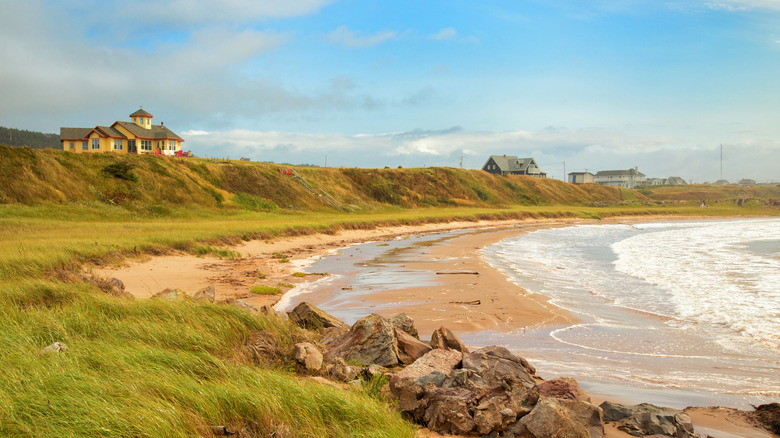
When considering Canadian geography, islands may not be the first things that come to mind. However, Quebec is home to the group of islands known as Îles-de-la-Madeleine, or the Magdalen Islands. The archipelago comprises a dozen islands, seven of which people live on. Each of these inhabited islands boasts its own charm and activities. Havre-Aubert Island, which is home to the village of Havre-Aubert, stands out from the rest for its colorful architecture, history, and beautiful scenery.
As the largest and most-wooded island out of the bunch, Havre-Aubert shines when it comes to outdoor activities. Located in the village of Havre-Aubert, Sandy Hook is a 7.6-mile sand bank alongside the eastern coast of the island. Its dunes glimmer gold from the red sandstone eroded off the island's cliffs. Yearly, Sandy Hook serves as the site of the Magdalen Island sandcastle competition, which advertises itself as "the largest amateur sandcastle competition in the world," with over 400 builders participating.
Havre-Aubert is far from the French-speaking mainland province of Quebec. You can get to the archipelago via airplane or by taking a ferry from Prince Edward Island, Canada's only bear-free province. Visitors can fly directly into Îles de la Madeleine airport in Havre-aux-maisons and take a 40-minute drive to Havre-Aubert. The alternative includes taking the five-hour ferry from Souris, Prince Edward Island, into the ferry port on Cap-aux-Meules. From there, Havre-Aubert is only 30 minutes away by car.
History plays a major part in Havre-Aubert's culture
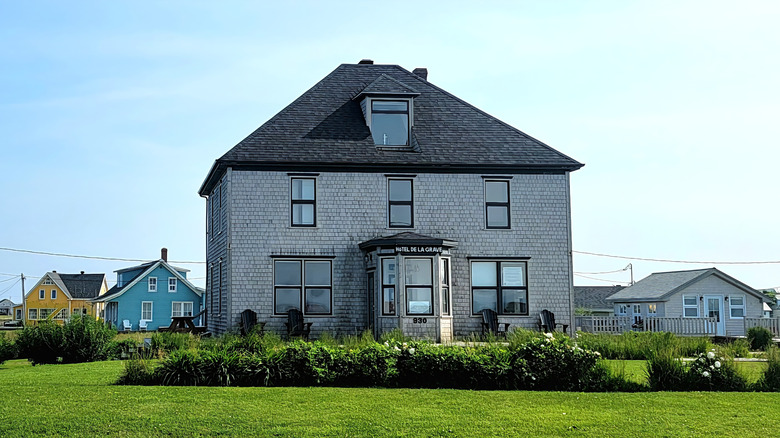
While Quebec's capital of Montreal might be a giant center of shopping and speed, Havre-Aubert's culture is steeped in its centuries-old history. The village of Havre-Aubert's main cultural and historical attraction is La Grave, the islands' first fishery site. For centuries, fishermen would take their catches to process and sell to merchants in the area. The site was used by Indigenous peoples and various European anglers, before Acadian settlers came in the mid-1800s. Today, La Grave's 15 standing structures are occupied by boutiques, galleries, and eateries. Many of the buildings erected during the 19th century are still standing, and La Grave earned its status as a heritage site from the Quebec Ministry of Cultural Affairs in 1983.
La Grave is also the location for Musée de la Mer, a museum dedicated to the island group's nautical history, where you can explore exhibits about the history of the archipelago and regional fishing. You can also check out the Atelier Côtier, which hosts workshops to turn sand materials into pieces of art.
The island continues to preserve its history through the Coop Les Culturés production of "My Islands, My Country" ("Mes Îles, Mon Pays"), a play about the archipelago's evolution over the years. It is performed at the islands' Cultural Center, and the acting troupe keeps the island's culture alive through year-round performances. Nearby, the Demoiselles Nature Reserve provides panoramic views of the island and a free walking path.
Vibrant architecture adds to Havre-Aubert's charm
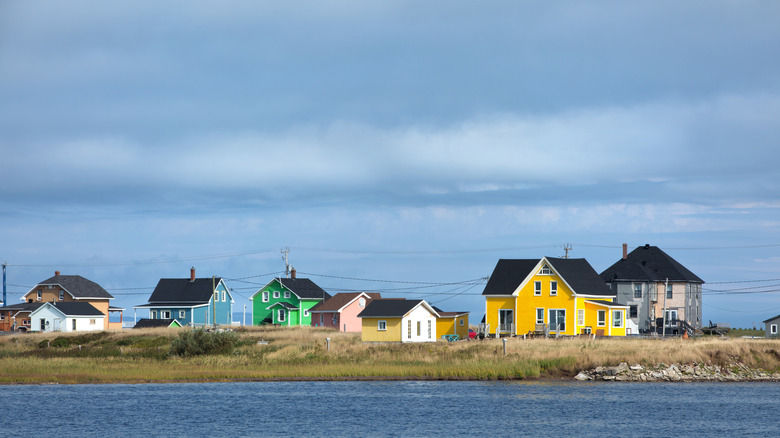
The island of Havre-Aubert is well-known for its colorful historic homes, painted in colors like pastel pink and yellow, which rival the pastel-colored residences of other vacation towns around the world. The reason for the brightly colored homes is twofold. Not only could sailors easily identify their homes from afar, but they would paint their boats and homes the same color, so their families could see them sailing home.
On the western side of Havre-Aubert Island, you'll find Étang-des-Caps, a neighborhood with a wide variety of unique architecture. Each home has its own personality and even its own name. Étolie is a three-bedroom, yellow-framed classic home, while Tanière des Îles boasts modern gray and black paneling with birch wood finishes in the interior. These homes, along with others sprinkled around the islands, are available to rent.
In the 19th century, lighthouses were installed all around the jagged coasts of the Îles-de-la-Madeleine. The tallest is Anse-à-la-Cabane Lighthouse, located in the neighboring town of Bassin along the island's southern coast. The white and red structure peers over the rocky cliffs at 56 feet high. The remaining lighthouses are a strong remainder of the proud maritime history that Havre-Aubert continues to preserve.