
Nevada's Off-The-Beaten-Path Living Ghost Town Has A Museum, Historic Cemetery, And Mountain Views
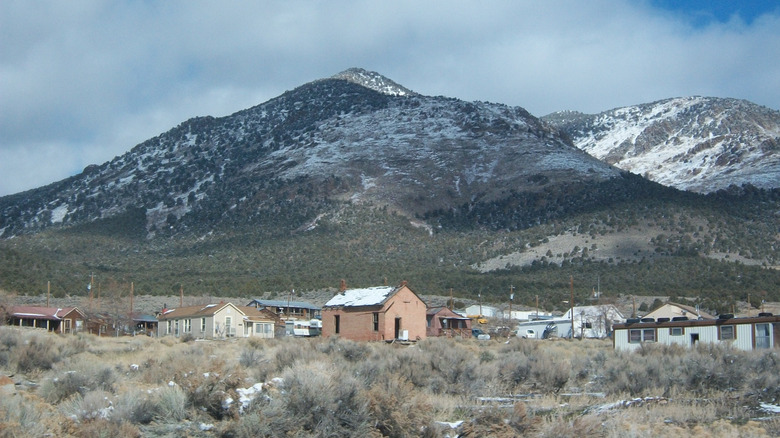
When many people think of Wild West ghost towns, what likely comes to mind are some famous examples like Calico in California or Oatman in Arizona. But did you know that Nevada has more than 600 ghost towns? One great thing about living in Las Vegas is that if you drive in any direction long enough, you're bound to stumble upon a weathered relic of the Silver State's mining past. These gems can range from abandoned one-room schoolhouses to the remnants of an old saloon.
One under-the-radar example of this is Cherry Creek, Nevada. Though most of what's left here consists of crumbling stone buildings and windswept cemeteries, under 100 people still call the area home, making this tiny slice of White Pine County a living ghost town. Wandering through Cherry Creek today, it can be hard to imagine that it was once a bustling mining hub. However, about 150 years ago, thousands of miners and their families lived and worked in this high desert hamlet.
Cherry Creek is located in northeastern Nevada, in a remote stretch of desert near Highway 50 (also known as the "Loneliest Road in America" for its isolation and the miles of vast, empty desert between towns). To say this destination is off the beaten path would be an understatement, as one of the closest populated areas is Ely, which sits about an hour's drive away. But if you're the type who enjoys exploring abandoned places (or you're making the drive between Ely and West Wendover), Cherry Creek may be worth the detour. Between the town's museum, cemetery, historical ruins, and mountain views, Cherry Creek makes for a fascinating stop in one of Nevada's more unique regions.
Visit a museum and cemetery in the Cherry Creek Ghost Town
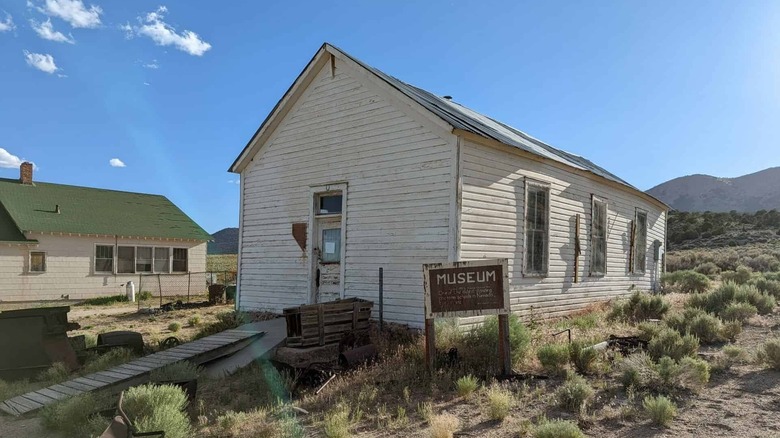
Although it may be a ghost town now, back in 1882, Cherry Creek had around 7,800 residents and a developed downtown featuring a Wells Fargo bank, a post office, restaurants, boarding houses, over 20 saloons, a luxury hotel, and a school. Today, the school remains one of its top attractions. Built in 1872, the one-room schoolhouse once welcomed 56 students before permanently closing in 1941. The school is now one of Cherry Creek's two oldest buildings and currently operates as a local history museum. Its exhibits showcase artifacts from the school as well as the town's earliest residents, which included Indigenous communities, miners, and Pony Express Station workers. The museum is open only by appointment, and you can contact Ely Visitors Center for further information.
While Cherry Creek continued producing gold and silver ore until the 1940s, many residents relocated well before then, due in part to the closure of several local mines and an 1888 fire in the town's business district. Another fire (caused by a gas lantern explosion) in 1901 burned several structures, including the schoolhouse. Today, crumbling wood and stone buildings (including an old saloon) remain. Cherry Creek's original railroad depot was relocated to the White Pine Public Museum in the Wild West town of Ely. Restored to resemble its look during the town's heyday, the depot is complete with period furniture and ticket counters.
Cherry Creek also has several graveyards. On the town's southwest edge are two large historic cemeteries with grave markers dating back to the 1800s. While some of the weathered graves have become overgrown with brush and are missing markers, many of the surviving tombstones retain information that provides insight into the tragic reality of pioneer life.
Hike to caves and along old railroad tracks in Cherry Creek
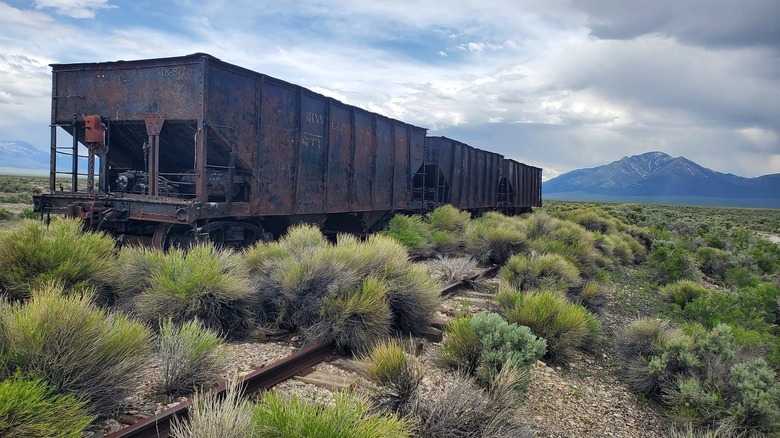
This ghost town is nestled against the central portion of the Cherry Creek Range, whose hillsides are decorated with pinyon pine and juniper trees that look especially pretty when dusted with a layer of snow. Cherry Creek is also located near the southern boundary of the Goshute Canyon Wilderness, where you can hike half a mile to see the massive Goshute Cave system's bats and limestone tunnels. Or, you can continue your Wild West explorations with a 0.7-mile walk along the Historic Cherry Creek Railroad and against a backdrop of open range and dusty blue mountains. This route, which has long been overgrown by sagebrush, can feel eerie — especially as you pass the rusted abandoned railroad cars that one hiker on AllTrails claims are still filled with ore. For more hiking, you can also take a detour about two hours south of town to see some of the world's oldest trees at Great Basin, America's most underrated national park.
When planning your visit to the area, keep in mind that Elko's regional airport is roughly two hours away. The nearest international airport, however, is in Salt Lake City, Utah, a little less than three hours from Cherry Creek. Additionally, unless you're up for pitching a tent on BLM land, your closest options for lodging are in Ely or in West Wendover, a dazzling desert border town that blends Vegas-style glamour with natural Wild West beauty. Both cities offer a variety of lodging, including options under $100 per night and spots such as the historic Hotel Nevada & Gambling Hall (located in the heart of Ely's walkable downtown). The best time to visit is during late spring, when the temperatures linger in the 70s.