
Pennsylvania's Renowned Wildlife Park With A Unique All-Water Cavern Could Become A State Park
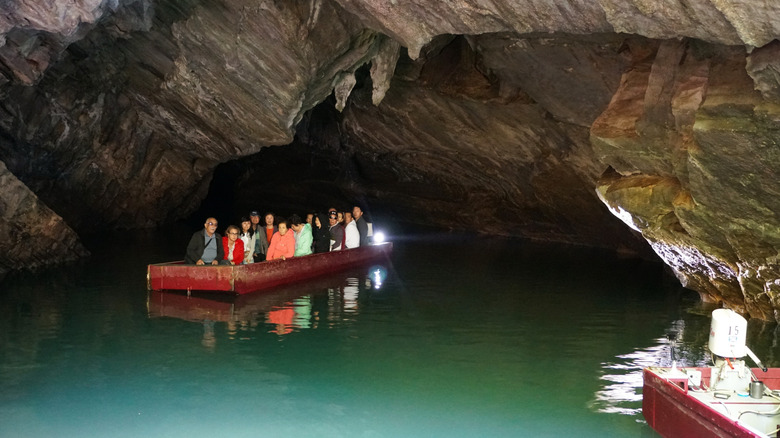
Imagine what it was like, back in 1885, when brave tourists sat down in boats and floated into the dark. As a guide steered the vessel slowly into Penn's Cave, Victorian visitors admired the damp limestone walls and stalactites by lamplight. Long before recreational caving hit the mainstream, Penn's Cave was a rare opportunity to see underground rock formations up close, all thanks to a boat ride. This site helped introduce generations of visitors to the underground world of geology, and in turn, the cave became a profitable business for brothers Jesse and Samuel Long.
Well over a century later, the 45-minute boat tour through Penn's Cave remains a magical experience for visitors, drawing thousands each year to the rural borough of Center Hall. With minor exceptions — motorboats and LED lights to illuminate features, most notably — the attraction has changed very little since it first opened to the public, and this underground world of limestone formations doubles as a unique wildlife park. Yet a significant change could be in the works: The for-profit venture could transform into a Pennsylvania state park.
"This has been a very difficult decision for us, obviously," said Russ Schleiden, CEO of Penn's Cave, during an interview with Pennsylvania TV station WJAC on July 9, 2026. Schleiden's family has owned the cave for four generations, and the potential transition promises to be emotional. The transition wasn't official at the time of writing, but Schleiden and his daughter Jeanine Watson have publicly supported the idea. Penn's Cave and its 1,400 acres would become the Keystone State's 126th state park.
A new era for Penn's Cave?
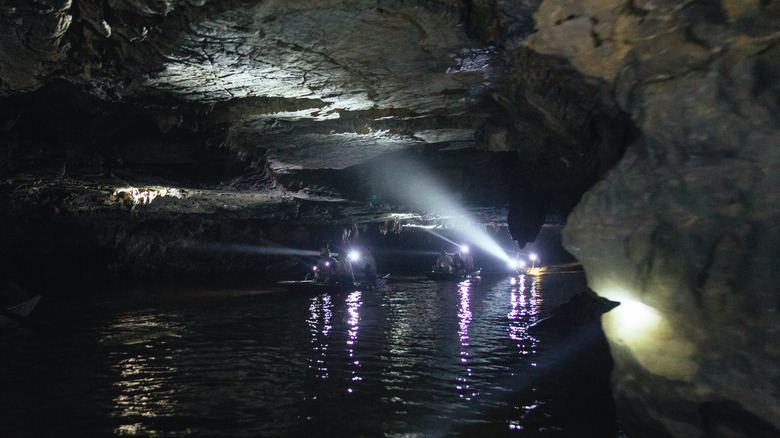
Becoming a state park would be the latest chapter in the colorful story of Penn's Cave. The limestone surfaces were first hollowed out as long as 30 million years ago, creating the underground chambers and passageways visitors explore today. The Seneca people were said to use parts of the cave for shelter, and they allegedly punished a French trapper for a forbidden love affair by casting him into the cave. When the Long brothers turned the site into a destination, it became the only cave tour in the United States conducted entirely by boat. They built a three-story hotel, a historic building which still stands today. The 60-minute Farm-to-Nature Wildlife Tour was added later, showcasing diverse native animals. Penn's Cave has a sizable gift shop and cafe, and just outside is a sluice where kids can pan for gemstones.
News reports haven't explained exactly why the family has decided to make the transition, but it can be assumed that drawing tourists so far afield is a monumental task. The estate is located smack in the middle of Pennsylvania, hours from any major city, and adult tickets for the cave tour cost $26.50 each, which can add up for big groups. There's also competition from Laurel Caverns, Pennsylvania's largest cave located just south of Pittsburgh.
It's also hard to say whether Penn's Cave's new status would change the experience for tourists. Pennsylvania is rich in state parks and has historically ranked eighth in the U.S. for having the largest number. Change may be hard for the generations who have floated through, but becoming a state park could shift the focus from a privately operated attraction to a publicly managed park. For Keystone State park enthusiasts, be sure to check out the most-visited state parks in Pennsylvania.