
Rick Steves Says This Town Is The Best Place To Escape Lisbon, Portugal, For A 'Mix Of Natural And Man-Made Beauty'
Lisbon is a dreamy destination for many, with quality cuisine, historic sites, and near-perfect weather for strolling its hilly cobblestoned streets. Fortunately for those looking to get outside the City of Light and see more of southern Portugal without traveling too far, there are many options. Few come with a higher recommendation than Sintra, about which travel guru Rick Steves says is "the perfect place to escape from city life." Tucked in the mountains, its proximity to the capital and higher elevation meant Sintra was once a cool summer escape for Portuguese royalty and their wealthy friends. That's why the town is famously dotted with castles dating back to the Middle Ages, palaces with immaculate gardens, the ancient walls of Moorish fortresses, and more.
Sintra's centuries-old status as a royal holiday spot makes it an ideal destination for those who love history, architecture, noble extravagance, or breathtaking vistas from castles perched atop mountains. Historic palaces might be the main attractions, but the gardens surrounding the estates, the natural park southwest of town, and the nearby oceanfront add the wilderness elements that impressed Rick Steves with their "mix of natural and man-made beauty."
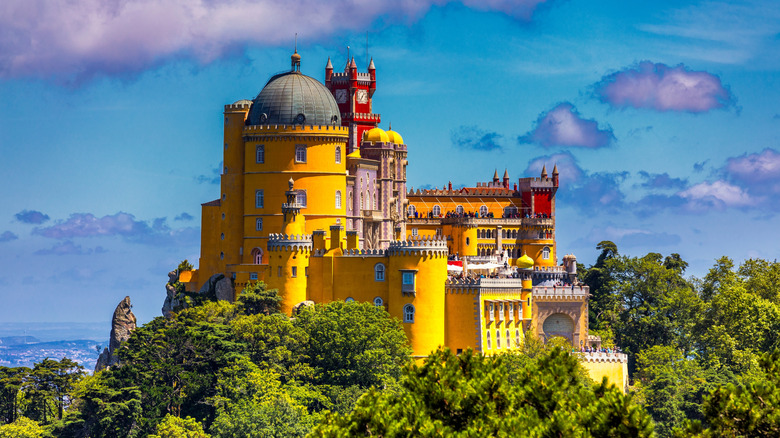
That balance elevates Sintra to something special. Places like Pena Palace (pictured above) represent the equilibrium well, with its unique, brightly colored facades from the 1800s, ornate rooms, and ancient paths weaving through it all. Only 15 miles from Lisbon, Sintra makes for a great day trip from the Portuguese capital. But with so many spots that deserve a decent amount of time, spend a few nights in town for the best immersive experience.
Sintra's royal castles and historic sites
There are several prominent sites in Sintra worth visiting. The oldest royal palace in Portugal is located in the center of town. Fittingly named the National Palace of Sintra, it housed the country's royalty for 500 years and is still used by the government for formal gatherings. As a royal residence, it has the ornate ceilings, beautiful tile work, and all-around luxury one would expect from a place of its stature. Visitors can enter the palace for a small fee or wander the property's gardens for free.
A representation and reminder of the Islamic influence on the Iberian Peninsula is the Castle of the Moors. Constructed in the 8th and 9th centuries, it features winding stone walls and an ancient tower atop a peak. Another place worth stopping at is the Palace of Monserrate. Part of the UNESCO World Heritage Site that is the larger Cultural Landscape of Sintra, it was the summer residence of Queen Maria II before becoming a museum. The palace's intricate details inside and out have inspired visitors for centuries, and the gardens are a major draw, showcasing well-manicured flora from around the world.
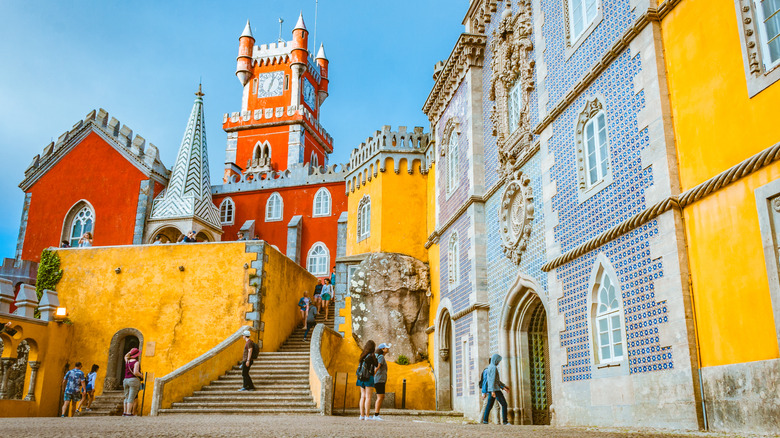
As mentioned, the marquee destination in Sintra is Pena Palace. The vibrantly colored structure sits atop the Serra da Estrela mountain range, and its bright, contrasting color scheme fits with the castle's many historical layers and architectural styles. At the top of 200 steps, the palace offers guided tours or self-guided strolls through the elegant rooms and buildings of the estate, with sweeping views of the countryside below. And the park just outside the castle walls gives visitors that Sintra balance of nature and history.
Enjoying Sintra's natural beauty
Surrounding Pena Palace (one of the most fairytale-like hidden castles in all of Europe) are Portugal's most important botanical gardens. Spread over 85 hectares, the Park of Pena offers trails through its tall trees and various gardens, featuring plants and flowers from around the world, such as Asian camellias that have become a well-known winter sight in Sintra. From the park's terraces, the ocean sits on the horizon, beckoning with more nature a short distance away.
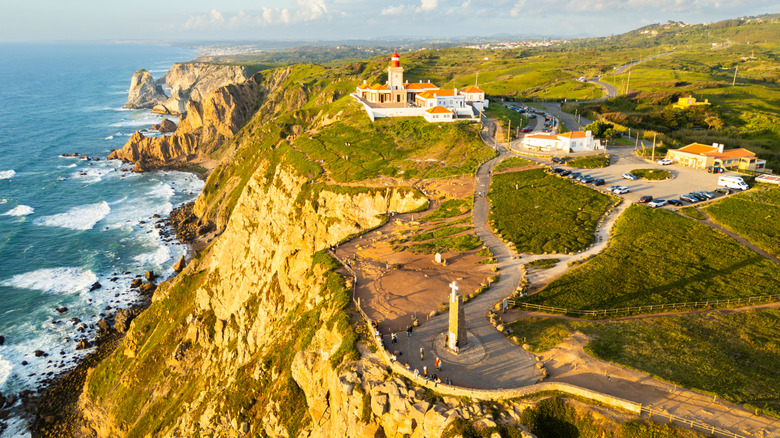
That expansive view from atop the hill overlooks Sintra-Cascais Natural Park, which stretches westward to the Atlantic and covers over 17,000 hectares. There are many hiking trails through the forests, across the dunes, and along the rocky coastline, some of which are doable from Sintra proper, while others along the coast are accessible by car. Cabo da Roca lighthouse (pictured above), for example, sits nearby at the westernmost point in continental Europe and is what Rick Steves describes as "a pleasant side trip to your side trip." You can check out the lighthouse and cliffs, or go along the shore to find the many beaches in the park.
While Rick Steves says to skip some European coastal escapes due to crowds and admits that Sintra can be busy, the city remains beautiful and worth a visit despite the crowds. Being popular and just outside of Lisbon also means there are plenty of hotels and easy 40-minute trains from the city. In town, there's a shuttle bus that loops from the Sintra train station up the hill to Pena Palace. Biking is also an outdoorsy travel trend taking over vacations, and e-bike tours are available from Lisbon to Sintra-Cascais Natural Park, making it even easier to enjoy this great escape from the city.