
Japantown Is Proving There's More To San Jose Than Its Boring Reputation
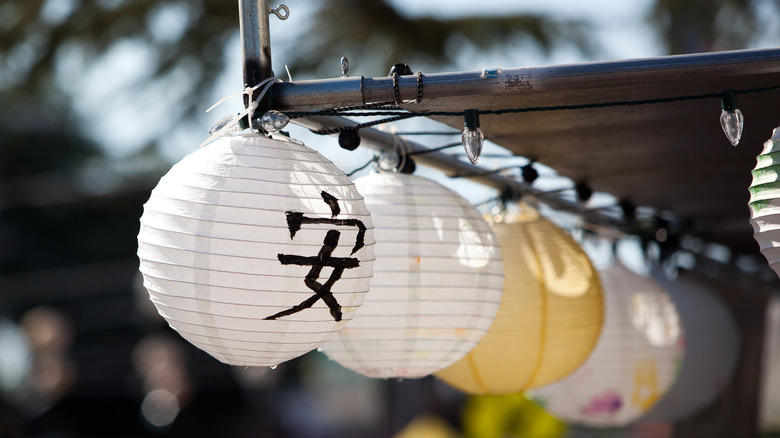
San Jose, California, is the heart of Silicon Valley, a major tech and computer innovation hub about an hour south of San Francisco. It's home to major businesses like Cisco, Hewlett Packard, and Adobe, and it's not really a place that's top of mind to visit when you're in Central California if you're looking to have fun and experience something new. In a word, it's often thought to be boring. As one person on Reddit put it: "San Jose has a colorful history, great wealth, tech, and education [...] It is surrounded by beautiful nature. And boy is it boring. Downtown is small and dull, and is surrounded by faceless suburbs." But if you know where to go, you'll find plenty of ways to have fun in San Jose. One such destination is Japantown (or "Nihonmachi"). Here you'll find fantastic food, fun shops, and a rich cultural history.
It's an approximately 10-block neighborhood, centered around North 5th and Jackson Streets, and it's developed over 100 years. In the 1890s, first-generation Japanese immigrants (known as "issei") came to the area and settled first near the city's Chinatown. By the start of the 1900s, Japanese immigrants established their own community in the blocks next to Chinatown. Chinatown declined starting in 1931, but Japantown continued to thrive. You can still see one of the original Chinatown buildings in Japantown: the one-story stucco building at 6th and Jackson Streets dates back to the late 1800s. Spot the original brick with a peek in the alleyway on 6th Street.
For more in-depth history, visit the Japanese American Museum of San Jose. It's an underrated spot where you'll learn a lot. As one Yelp reviewer noted: "this is an absolute gem for San Jose and more people need to know it's there!"
Shopping and traditional dining in San Jose's Japantown
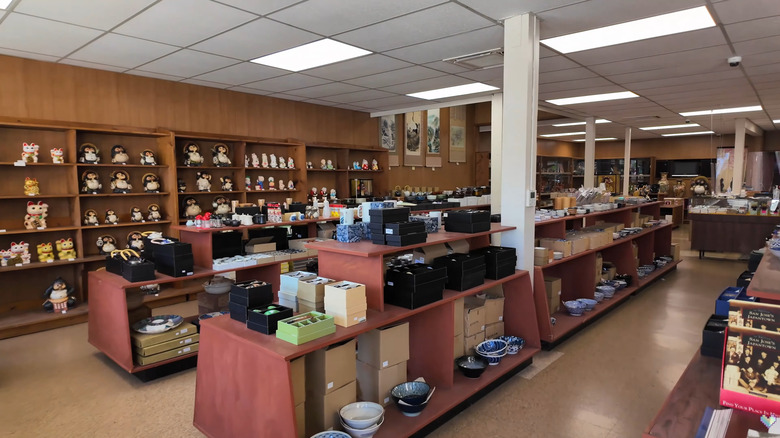
For a Japantown souvenir, stop by Kogura Gifts. First opened in 1928 by Kohei Kogura, it's the oldest business in the neighborhood. "It's always sold Japanese products," Richard Kogura, Kohei's grandson, told NBC Bay Area. "So I kind of look at the products here and it's very similar to what grandpa Kogura sold." You can find a range of housewares and gifts, including origami paper and "maneki-neko" aka the beckoning cat. You may want to leave some room in your suitcase if you're going to stop by. "Hard to resist buying things here," one Yelp reviewer said. "Everything is beautiful ... Lots of treasures to be found."
If you want to enjoy traditional Japanese food in Japantown, Minato is a family-run spot that has been in business since 1957, and it's known for quick service and good food. Kaita is another popular spot. It's a small place, but the dishes are big on flavor. For a sweet treat, Shuei-do Manju sells traditional Japanese sweets like chichi dango, yokan, manju, and mochi. "The mochi was incredibly soft with the perfect chewy texture, and the filling inside was so smooth," one Yelp reviewer raved, and their pro tip was to make sure to get there early as the treats can sell out.
For karaoke, stop by 7 Bamboo, a veritable institution in the neighborhood. It doesn't have private rooms, but this dive bar does have a stage where you can sing your heart out or just enjoy the performances by the regulars. Wednesday night is wig night, and you get a free sake shot if you show up in a wig.
Annual events and cultural highlights in San Jose's Japantown
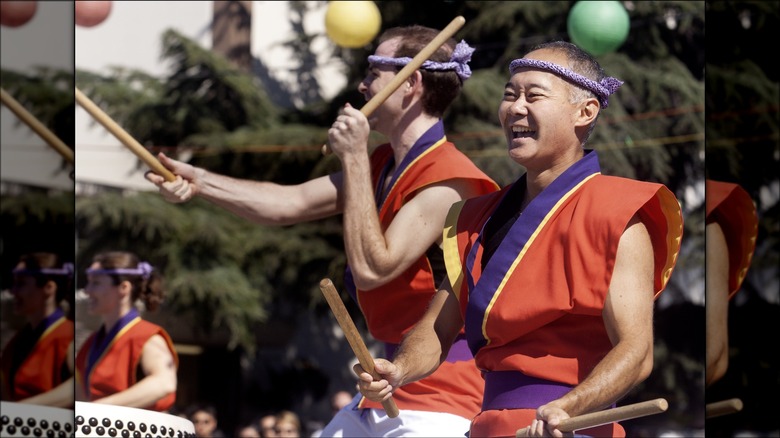
San Jose's Japantown hosts a number of popular annual events. The Nikkei Matsuri festival first stated in 1978, and it celebrates all things Japanese-American. Held every April, it features traditional dance and music performances, a marketplace with handmade goods, and all kinds of yummy Japanese food. The Obon Festival, a traditional Buddhist celebration, is held in July. It's the largest festival of its kind in the country, and highlights include performances by the San Jose Taiko (a renowned drumming ensemble) and Obon Odori (dancing). The Contemporary Asian Theater Scene (CATS) puts on the Silicon Valley Asian Pacific Film Festival every October.
Throughout Japantown, you can find art and exhibits that celebrate the area's culture. The 36-foot-long granite "Issei Voices" features a timeline of important events for Japanese-Americans, and the "Issei Pioneer" stone is from Injuima Island, a small island in southern Japan. Next to the stone is the Nikkei Lantern. LED lights run along the center of this 36-foot-tall white steel structure, and it commemorates the challenges faced by and the resilience of Japanese Americans. Seeing these homages to history adds another layer of meaning to your exploration of this dynamic neighborhood.
The San Jose neighborhood is just one of three Japantowns remaining in the U.S., all of which are in California. San Francisco's Japantown is a vibrant neighborhood that dates back to 1906. Then there's Little Tokyo, one of the best downtown Los Angeles areas. While you're in San Jose, if you're looking for another fun thing to do, the Winchester Mystery House is a bizarre architectural marvel that many think is haunted. It's open for tours, and it's about 15 minutes from Japantown.