
The World's Best City To Visit In 2026 Is A North American Beauty With A Vibrant Culture And Colorful Architecture
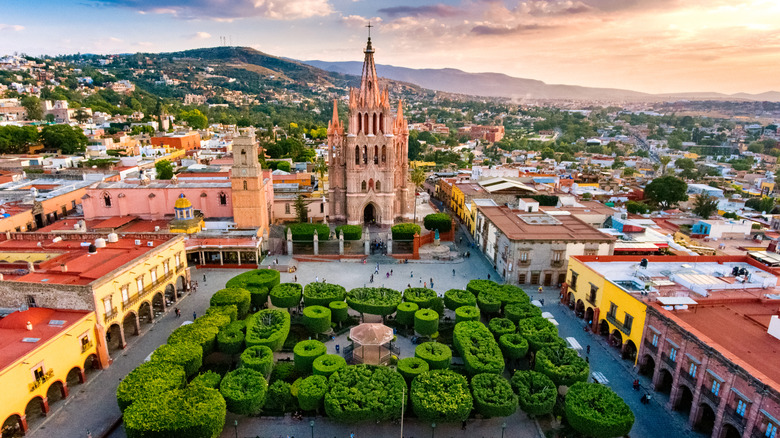
The world's best travel destination isn't necessarily the largest, busiest, or most famous. Case in point: San Miguel de Allende took the top spot in Travel and Leisure's World's Best Awards 2026. It's a compact colonial city of just under 180,000 people, located in Mexico's Central Highlands. It earned the top spot globally in Travel and Leisure's survey based on votes from over 200,000 people for its combination of historic architecture, food, and shopping. On top of that, part of the city is designated as a UNESCO World Heritage site for its melange of unique buildings and historic role on the Royal Route — a perfect way to experience centuries of history on foot.
San Miguel de Allende may not have iconic landmarks vis-à-vis an Eiffel Tower or Chichén Itzá, but it has some exceptional architectural treasures, nevertheless. Towering over the city is the Parroquia de San Miguel Arcángel, with pink-hued neo-Gothic towers that easily rival more famous cathedrals. Visitors can climb to the El Mirador (The Viewpoint) for panoramic views over the city's colorful rooftops or browse artwork at Fábrica La Aurora, an artsy workshop and exhibition space housed in a historic mill. Meanwhile, at the city's main square, you might catch live street performers or a procession of sacred icons during Holy Week. As one of Mexico's safest cities (especially for solo female travelers), the city is approachable whether you go alone or with a partner. With Querétaro International Airport about a 1.5-hour drive away, international travelers can easily reach a city where world-class architecture, food, art, and local festivities unfold in a historic center.
Centuries of history in San Miguel de Allende's architecture
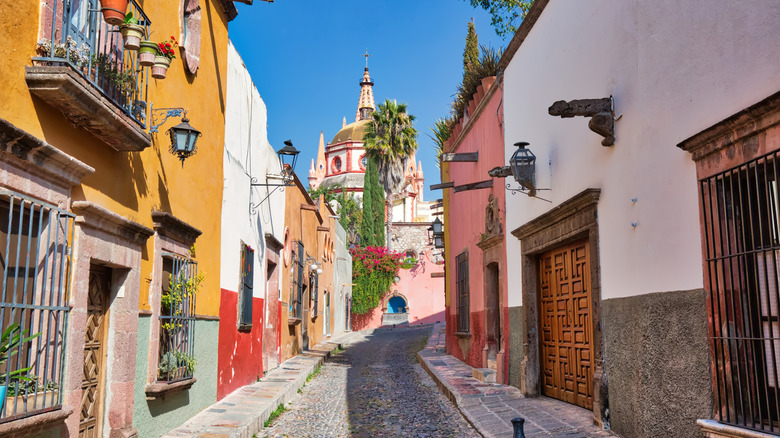
San Miguel de Allende's UNESCO-protected historic center is defined by hilly cobblestone streets, brightly painted façades, and colonial mansions. Initially inhabited by Indigenous Americans, the city was later founded by Spanish colonists in the 16th century. The city's layout integrates elements from across centuries and cultures: Catholic churches neighbor aristocratic mansions along streets that host Indigenous dances and crafts. Walk down one of its historic streets like Calle Aldama, and you'll see highly photo-worthy stone walls, climbing flowers, and ornate courtyards.
Following Calle Aldama, the pinnacle of Parroquia de San Miguel Arcángel looms overhead. The church is arguably the city's most recognizable landmark and a microcosm of the different influences on the city. It originally stood in the 16th century, then was rebuilt with a Baroque layout, and a neo-Gothic facade was added in the 19th century, according to Mexico News Daily. The stone used for the facade comes from a nearby volcano and gives the church its pink hue — similar to the quarried stone that lends Mexico's Morelia its "pink city" architecture. You can go inside the church for free, too, and see the folk art adorning its walls. Note that it's an active parish: "Unlike most of the churches in Europe, this one really felt like an active church. Visitors were quiet and respectful," a visitor writes on Substack.
Where San Miguel de Allende's culture thrives
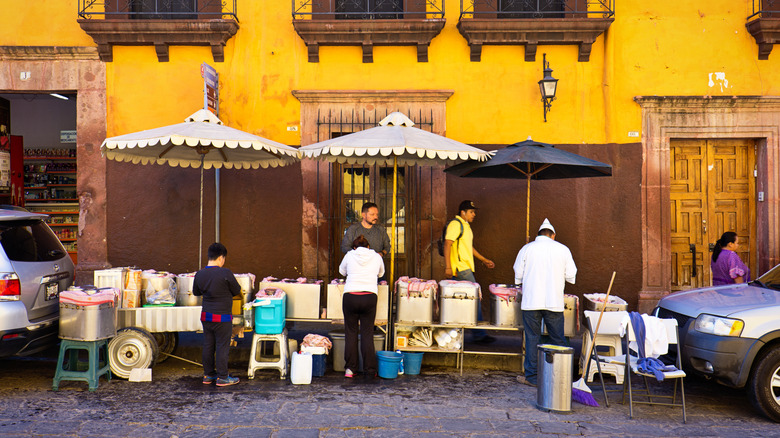
While the Parroquia de San Miguel Arcángel defines San Miguel de Allende's skyline, the garden square just next to it shows how the city actually lives. Jardín Allende, known locally simply as El Jardín, is a tree-filled central square with manicured hedges and benches. Food vendors, families, and street performers alike share the square. Meanwhile, at its borders, you'll find more historic buildings and restaurants.
For a taste of San Miguel de Allende's arts scene, head to Fábrica La Aurora, a 15- to 20-minute walk beyond the central square. It's a former textile factory converted to a cultural center, with brick walls and industrial relics. The complex houses numerous galleries, artist studios, and cafés, with a focus on local artists. Unlike walking through a traditional art museum, here, you have the chance of actually running into the artists and seeing them at work. The center is open every day, and it's free to explore.
You can take a piece of San Miguel de Allende's artistic spirit home with you at one of its markets. The Mercado de Artesanías has rows of vendors selling embroidered textiles, brass goods, and traditional Mexican ceramics, taking place daily in the city center. It might help to learn a few Spanish words and phrases before your vacation to greet vendors and ask about prices. Meanwhile, Mercado Ignacio Ramírez is a sprawling food and farmers' market that has been running for over 100 years, according to Discover San Miguel de Allende. Stop here for tortas or gorditas, two staples of San Miguel de Allende street food.