
The UK's Largest Freshwater Lake Is A Once-Thriving Irish Beauty That's Sadly Dying
Lough Neagh, the United Kingdom's largest freshwater lake and the main source of drinking water for Belfast and 40% of Northern Ireland (per BBC), is on its way to extinction. Beyond the lake's importance to the communities it supports, it also has tremendous historical significance to the region. Ireland's oldest human artifacts, dating back some 8,600 years, were found along the River Bann, which flows through Lough Neagh, likely making it one of the longest-inhabited regions in all of Ireland.
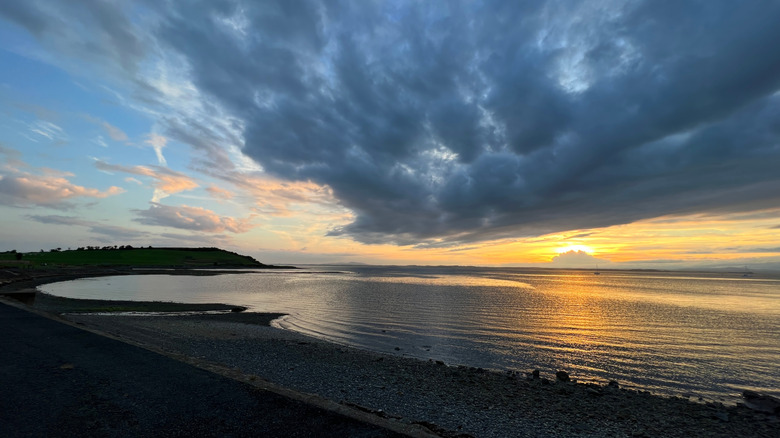
Perhaps it was first inhabited long ago because of its notable beauty that has inspired poetry from the likes of Thomas Moore and Nobel Prize winner Seamus Heaney. Vast Lough Neagh once reflected stunning Irish sunsets on its mirror-like surface, with a diverse ecology and impressive biodiversity that helped support the communities that settled on its shores for millennia. But since 2023, the lake has sadly been languishing away.
Outspoken groups and nonprofits are attempting to protect this vital regional resource. Myriad generations have fished the lake over the years, its waters providing a livelihood for many families. Goods were transported and traded throughout the province of Ulster via the river and lake for centuries. And yet, due to a number of factors, blue-green algae have carpeted Lough Neagh, and it's so thick that it can be seen from space. Algal blooms are generally toxic to humans and animals, rendering this lake largely unusable in its current state.
What happened to Lough Neagh?
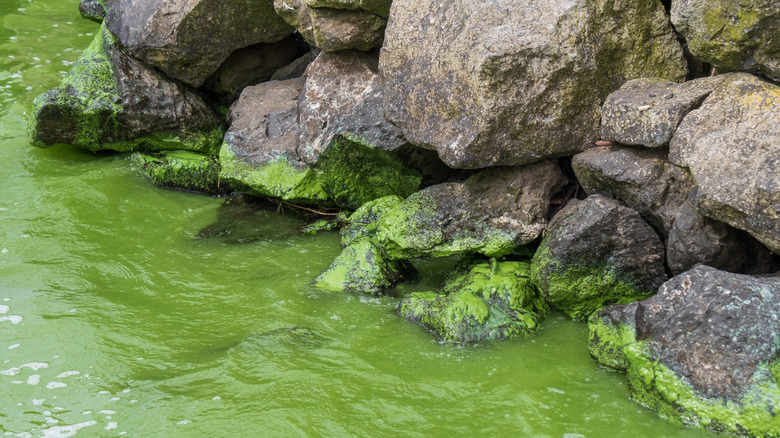
Located approximately 20 miles from Belfast, Northern Ireland's capital, Lough Neagh covers about 153 square miles. While England's largest lake, Windermere, is a beauty to visit, the largest in all of the U.K. has been overtaken by thick algae called cyanobacteria, resembling pea soup. These algal blooms are caused by an excess of nutrients, including nitrogen and phosphorus (which are found in fertilizers, sewage, and industrial run-off), as well as warm and stagnant waters. The Guardian notes that Lough Neagh is also being damaged by invasive zebra mussels that are overwhelming the native mussels, plus years of dredging the lake's sandy bottom.
A series of agricultural and wastewater missteps over the decades includes septic tank leakage, fertilizer runoff from surrounding fields and farms, and animal waste, creating the ideal environment for these harmful algal blooms. Seeing green deposits like those in Lough Neagh is one of the red flags that should make you turn around before getting into any lake. And people are heeding those warnings.
Swimmers are finding other waters to frequent, small businesses that relied on the lake are shuttering, and locals are no longer drinking the tap water. The deep-green growth is climbing up the rocks, making both humans and waterfowl struggle to traverse them. Phys.org reports a stinky sludge overwhelming the lake can be smelled for miles and has become a repellent to people who once made a living from the lake, such as a paddleboard business and the largest eel fishery in Europe.
What can be done for Lough Neagh?
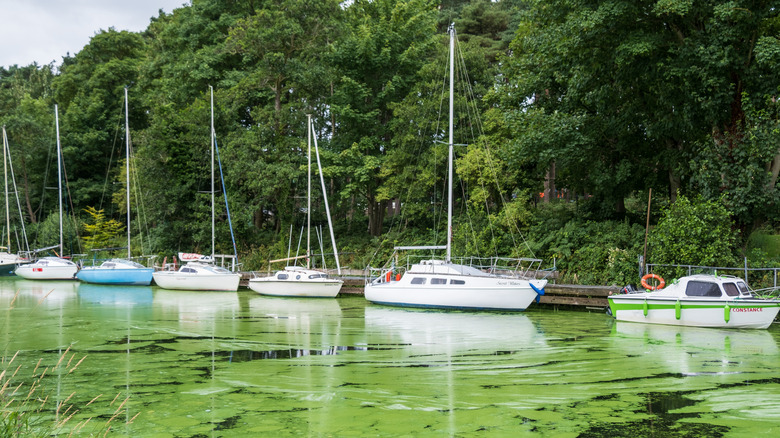
Similar to the dirtiest lake in America, Florida's Lake Okeechobee, Lough Neagh has a thriving ecosystem being adversely affected by the cyanobacteria. The lake has long been a breeding ground for some species of birds, such as swallows and warblers, along with a habitat for ancient fish like the pollan and the endangered European eel. Birds and fish feed on invertebrates such as the Lough Neagh Fly, plus the plant life both in and around the lake contributes to its species-sustaining biodiversity.
Tests by the U.K.'s Food Standards Agency have shown that the lake's fish flesh contains toxins, and signs around the lake direct visitors to contact the Department of Agriculture, Environment and Rural Affairs if dead birds are spotted. Some locals are concerned that, without a safe, clean water supply, tourism may be impacted in Belfast and other areas relying on Lough Neagh.
Thankfully, Lough Neagh has teams of supporters trying to salvage its once-thriving waters. Nonprofits such as Lough Neagh Partnership and Friends of the Earth are combating further pollution and fighting to clean up the lake's current state. Sometimes, the organizations resort to extreme measures to bring awareness to the cause, including staging a wake for the lake and declaring the Northern Ireland Environment Agency a crime scene. Facebook groups like Save Lough Neagh have thousands of members, rallying support to save Lough Neagh. In 2024, a 37-point action plan was approved by the government and is currently being implemented, albeit slowly, in the face of political disagreement, according to Green Horizons. However, hope is long overdue for Lough Neagh, and it's a positive sign that progress may be made soon.