
Kentucky's Former Military Fort Is Now A Lesser-Known Park With Historic Charm And Woodland Trails
Less than an hour from Louisville, the remains of a Civil War fort sit perched quietly on a hill overlooking the Ohio River. While this historic site is easy to miss, it has been carefully preserved by volunteers, who diligently maintain the trails and informative signs for visitors to enjoy. A visit to Fort Duffield in the town of West Point, Kentucky, offers a chance to peek into history along with miles of shaded, forested trails.
Construction on Fort Duffield began in late 1861, when the Union Army needed a way to watch traffic on the Ohio and Salt Rivers and the road leading to Louisville. The fort was finished a few months later, but by December of 1862, the Union Army had abandoned the site as the war shifted to other regions. Despite the fort's brief time in service, the hard work of the laborers who constructed it remains, as seen through the earthworks still visible across the site. What at first glance seem to be small hills lining the ridge are actually defensive barriers constructed by soldiers over 160 years ago.
Finding history at Fort Duffield
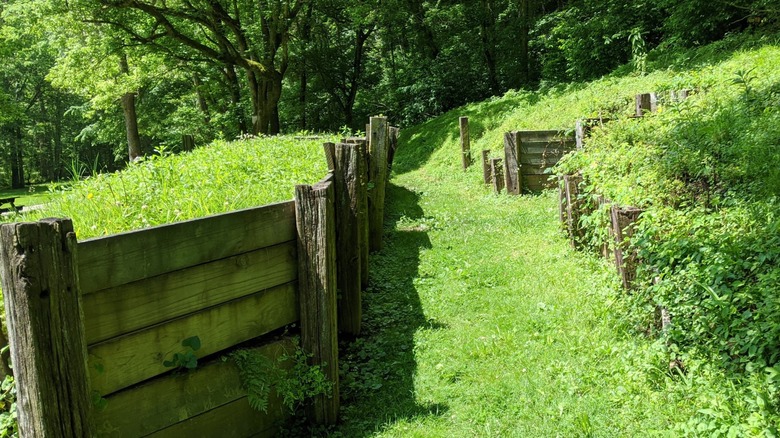
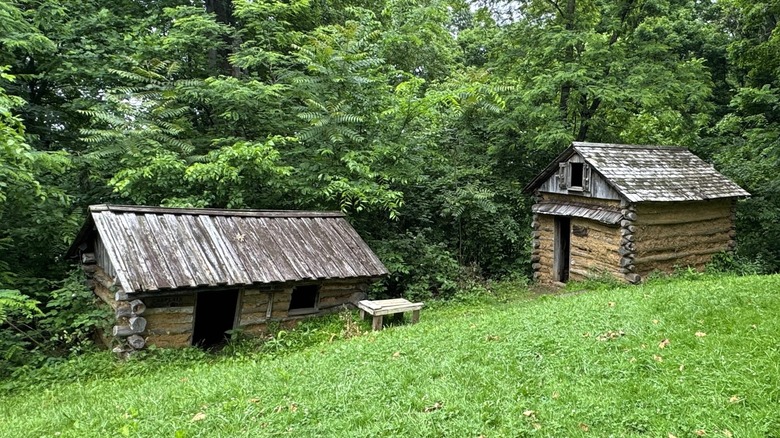
The climb to the top of the ridge on which Fort Duffield is located draws visitors into the history of the site. The self-guided walking tour is punctuated by interpretive signs detailing the functions of the gate area, the wall, and the vantage points from which guards would keep watch for opposing forces. While the earthworks are the only original structures remaining, the central area of the fort, where the majority of the soldiers lived and worked, features reconstructed cabins as a glimpse into military life in the 1860s. One of the most notable features of the fort is the overlook at the top of the ridge; with a broad view of the Ohio River and the surrounding landscape, the scene allows visitors to envision how soldiers would have kept an eye on the area.
Fort Duffield was preserved by the U.S. Army before being given to the town of West Point. Today, the site is run largely by volunteers who have carefully combed through primary sources related to the fort to provide information to visitors. History buffs can visit Fort Duffield's website to find maps, diaries, and letters dating to when the fort was in use. The nearby town of West Point was occupied by Union soldiers during the war and offers a historic walking tour, and travelers may also want to make the 35-minute drive to visit the historic sites of Elizabethtown as well as its unique shops and tasty eateries.
Exploring the trails at Fort Duffield

While visitors to Fort Duffield can choose to walk the quarter-mile paved road straight up the ridge to reach the main historic area, many prefer the 2.3-mile trail that winds up to the fort and through the surrounding woods. Because the path can be rough in places, the fort's website warns visitors to wear sturdy shoes and keep an eye out for poison ivy along the trail. Reviews note that the trail is extremely steep, and hikers who want an easier experience might prefer to make the 30-minute drive to the fairytale-like forest of Bernheim Arboretum.
The winding trails throughout the property also attract mountain bike enthusiasts. There are three marked mountain bike trails, with red as the easiest, blue being moderate, and yellow noted as the most difficult trail. Because some of the bike trails have rocks, roots, and jumps, helmets are essential. Bikers note that the trail markers are unclear at times and suggest paying close attention to stay on the route.
Admission to Fort Duffield is free, and there are picnic tables available for visitors as well as an outhouse-style toilet at the top of the ridge. The steep climb required to reach the site is not handicap accessible, but accessibility arrangements can be made through the fort's website. Travelers hoping to grab a bite to eat after their visit can make the 25-mile drive to Louisville or head to Mt. Washington, a Louisville suburb with local restaurants and boutique shops.