
Drivers May Want To Avoid One Of Utah's Most Scenic Canyon Routes With An Iconic Zion Stretch
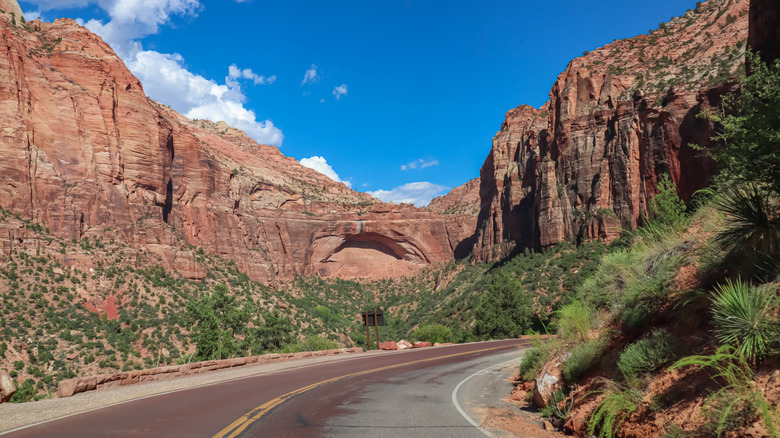
Considering all of its offerings — checkerboard mesas, narrow canyons, and hikes to Angels Landing — it can be hard to choose what to include on a Zion National Park itinerary. However, for many visitors, there's one iconic stretch that's a Zion must-do: the Zion-Mt. Carmel Highway, a scenic route that's part of SR-9. This winding red asphalt road covers 10.7 miles from Canyon Junction to Zion's East Entrance. Besides its jaw-dropping canyon views, the road's 1.1-mile Zion-Mount Carmel Tunnel features unique windows (called galleries) that allow you to see the landscape as you drive through.
But in recent years, some drivers have started adding this scenic canyon route to the top of their "don't-do" list, as they're finding the slow and heavy traffic at odds with their national park experience. Large vehicles have had to stop traffic at the tunnel to pass through, while many drivers slow down to a crawl to snap photos of the epic landscape. Besides that, sharp curves and steep drops also make it dangerous. A number of crashes have happened on this road, particularly in and around the tunnel.
In June 2026, Zion National Park implemented new regulations that prohibit certain large vehicles — like RVs, cars with trailers, and tour buses — from taking this historic road in order to protect it and alleviate the traffic. No matter your reason for avoiding the route, here's what you need to know about the new rules for and alternative routes to the Zion-Mt. Carmel Highway.
Restrictions of large vehicles on the Zion-Mt. Carmel Highway
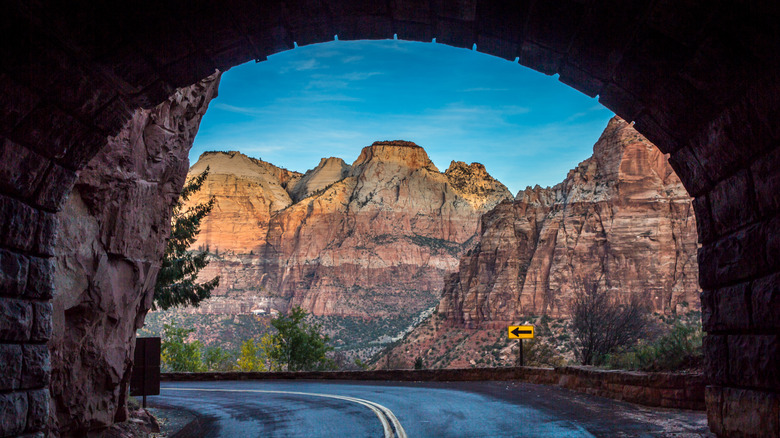
When the Zion-Mt. Carmel Highway was completed in 1930, the world looked quite different. Cars were smaller, and only about 55,000 people visited the park that year (via NPS' Integrated Resource Management Applications). Now, with nearly 5 million visitors per year and counting, Zion is one of the United States' 10 most-visited national parks (second to the Great Smoky Mountains, according to the NPS).
This highway and its narrow tunnel were not made to accommodate today's large RVs, buses, and trucks, nor were they made to handle a high number of heavy cars. For years, large vehicles needed an escort to lead them through the tunnel, so they could drive through the center to avoid the low sides. Other cars had to wait on either side until the escort finished, causing delays of 40 minutes to nearly an hour around the tunnel (via SF Gate). Even with these precautions, some tour buses still got stuck in the tunnel.
So, as of 2026, certain large vehicles can no longer drive the section of the Zion-Mt. Carmel Highway from Canyon Junction to the park's East Entrance (i.e., not just the tunnel). This permanent change will maintain the road's structural integrity, make it safer, and reduce delays. This restriction applies to vehicles taller than 35 feet, 9 inches; heavier than 50,000 pounds; taller than 11 feet, 4 inches; or wider than 7 feet, 10 inches. Combined vehicles like trucks with trailers that exceed 50 feet total (with a limit of 26 feet from hitch to rear axle) will also be prohibited. Most Sprinter vans should be fine to continue taking this route, although if you're not sure about your vehicle, you can check the size requirements here.
Alternatives to the Zion-Mt. Carmel Highway
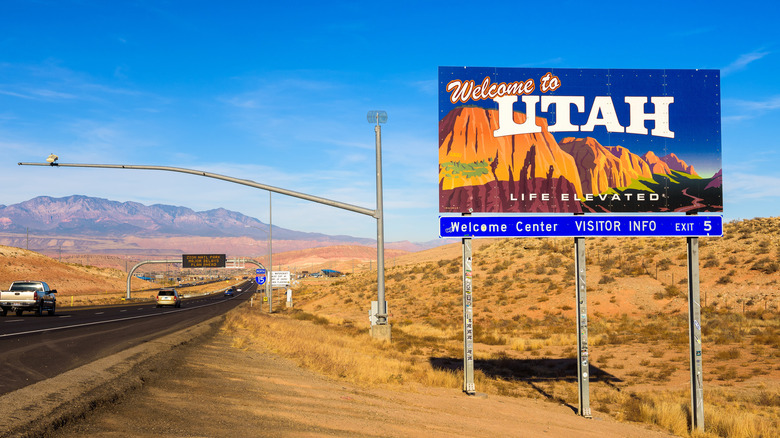
The Zion-Mt. Carmel Highway is part of the "Grand Loop" that connects Zion with Bryce Canyon and the Grand Canyon (via NPS). If you have to avoid it, you can take the state highways, like the I-15, that link to these locations and to Zion's entrances. If you don't take the Zion-Mt. Carmel Highway, it's about 40 minutes extra to Bryce Canyon and 10 to the Grand Canyon North Rim. Some drivers may consider the scenic SR-14 to Bryce Canyon as an alternative route, but it is quite winding and steep. Neither that nor SR-143 are suggested for RVs.
Those with large vehicles can enter Zion through the South Entrance and continue on if they're parking in the large vehicle lot next to the Zion Visitor Center, have a Zion Lodge visitor pass, are doing the Zion Canyon Scenic Drive during the shuttle off-season, or are camping at Watchman or South campgrounds. If you're exploring Zion with a tour bus, you'll be transferred to a smaller vehicle that will cross the Zion-Mt. Carmel Highway, before returning to the bigger bus. This may increase costs, but it also offers a more personal, intimate experience to see this impressive highway. Some guests prefer to ditch their vehicle entirely at Zion and opt for the free shuttle during their trip.
Although drivers are avoiding some of the country's most scenic routes because of traffic, there are ways to mitigate the issue. If you want to avoid traffic, consider going on a weekday, off-season in December and January (during non-holiday times), early morning, or later in the evening. Even if you're just driving this stretch without stopping, you'll have to pay the Zion entrance fee to access it, since it goes through the park. Check for status updates too, since there is occasionally construction on the highway, which can add delays.