
Hidden In California's Lost Sierra Is A Wildly Underrated National Forest With Recreation Rivaling Lake Tahoe
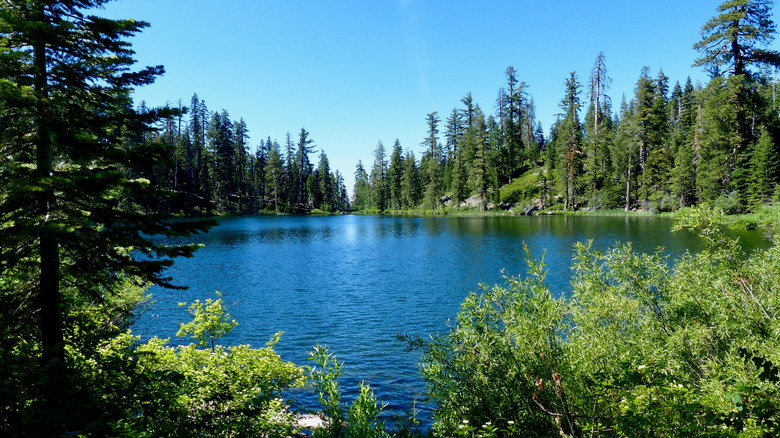
California's Sierra Nevada mountain range is known for its rugged landscapes, making it an ideal destination for outdoor adventurers. It's also famous for one of the state's most well-known year-round mountain playgrounds: Lake Tahoe. But, while Lake Tahoe tends to hog the spotlight, the region is actually home to many more places to go and things to do, some of which are completely underrated and underappreciated. One such spot, Plumas National Forest, deserves much more than a simple nod. It's tucked away in what is known as the Lost Sierra (also commonly referred to as the Secret Sierra), and is known for mountainous terrain marked by peaks and valleys, serene lakes and wild rivers, and so much outdoor recreation that it gives Lake Tahoe a run for its money.
The forest is home to numerous towns and cities, including Oroville, Quincy, and Bucks Lake, along with mile after mile of wilderness to explore, no matter what time of year you visit. Unlike the Lake Tahoe Basin, which has enacted a stewardship program to help mitigate the damage from overtourism, you find peace and serenity in the Plumas National Forest. It sits south of the Cascade Mountain Range and west of the Lake Tahoe Basin and can be accessed year-round by US Highway 395.
That much acreage means there's plenty of room for exploring, and the versatile landscape gives you lots of ways to have fun, depending on what time of year you go. However, unlike other mountain hotspots, including Lake Tahoe, you should find this slice of the world uncrowded and virtually untouched by the crowds that can make it hard to enjoy nature.
Plumas National Forest has plenty of cold-weather recreation
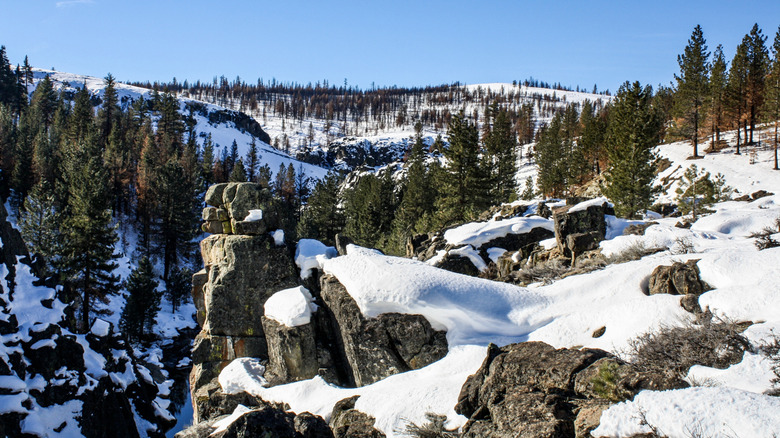
Pop culture may portray California as a place with year-round beach weather (and it is in some places), but the state sees its fair share of winter weather too, especially in Plumas National Forest, where people have been enjoying winter sports since the 1800s. Sure, there are more than a dozen ski resorts to choose from in Lake Tahoe, but Plumas spans more than 1 million acres, which means lots of open space for winter sports, including snowmobiling, snowshoeing, and cross-country skiing along groomed trails as well as in the rugged backcountry. Plumas County sees an annual average of 64.5 inches of snowfall, and the higher elevations of the forest are typically covered in snow from December to March, which means plenty of fresh powder for cold-weather adventures.
With more than 1 million acres of wilderness, you have plenty of crowd-free spots to choose from for outdoor fun — especially if you want to try your hand at ski mountaineering, a sport that gained popularity thanks to the 2026 Winter Olympics. Snowshoeing and cross-country skiing can be done just about anywhere in the forest, with places like the McGowan Lake Cross-Country Ski Recreation Area offering trails for all skill levels. For snowmobiling, head to Bucks Lake, which has almost 100 miles of trails. A dedicated website provides trail maps and updates.
While snow-covered landscapes and winter sports without the crowds sound pretty appealing, visiting Plumas in the winter isn't without its challenges. Heavy snowfalls can force road closures and avalanches, so take precautions, including keeping others up to date on your plans and paying attention to weather forecasts and updates from the U.S. Forest Service.
Warm weather is where it's at in Plumas National Forest
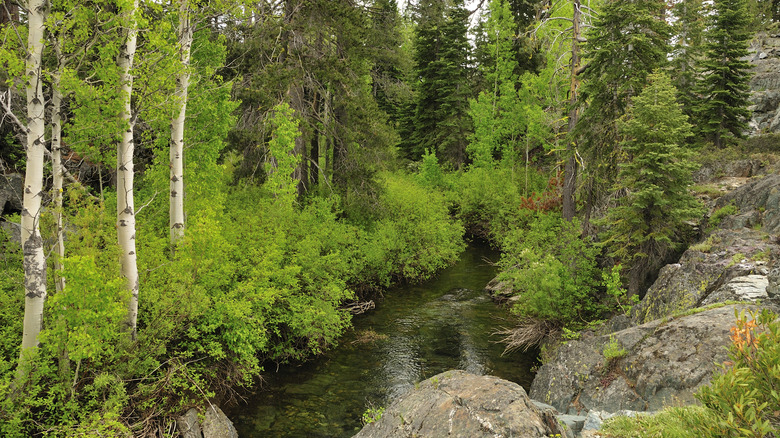
Playing in a snow-covered winter wonderland is always fun, but Plumas National Forest really comes alive once the snow melts. There are nearly 300 miles of trails to explore on foot, on bicycle, or on horseback, and they give you epic views of everything from mountains to canyons and all the beautiful terrain in between — and, unlike Lake Tahoe, you don't fight throngs of tourists to get the best views. One of the best ways to explore is by taking the Feather River Scenic Byway, which takes you along a 130-mile tour of the Feather River, one of the nation's first designated Wild and Scenic Rivers. The river also has great boating and fishing, as do over 100 lakes throughout the region.
There are plenty of places to book a room (there are way more options in summer than winter, when several are closed) but there are also great options for camping. The Feather Falls National Recreation Trail and Campground gives you direct access to the wilderness and all the adventures you can have there, whether you're into hiking, biking, fishing, wildlife viewing, or simply exploring nature among the trees and wildflowers. Some parts of the forest are so remote that you probably won't get cell service, which means you get raw California mountain wilderness and all the beauty, wildlife, and adventure that comes with it. So, plan ahead, be prepared, and be ready to enjoy California's wilderness at its finest.