
Arizona's Secret Mountain Wilderness Has Sweeping Desert Views, Rock Climbing, And Cathedral-Like Caves
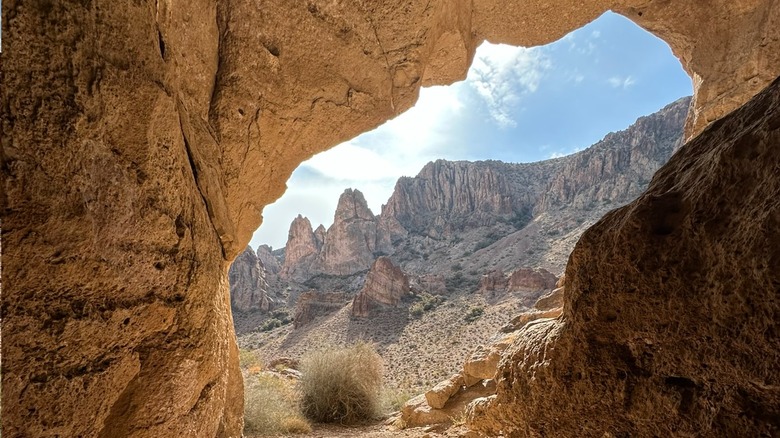
If you're on a National Parks tour heading for the Grand Canyon after a visit to Death Valley (or vice versa), you might find yourself craving some desert solitude far from the crowds that flock to those spectacular destinations. If so, there's a secret desert wilderness conveniently located about halfway between the Grand Canyon and Death Valley that offers up unique desert scenery and abundant wildlife with no entrance fees and no crowds. The 28,000-acre Mount Nutt Wilderness in Arizona's Black Mountains is a little-traveled wonder brimming with spectacular scenery and incredible geological formations, including arches, rock spires, spring-fed valleys, cool, hidden caves, and soaring mesas.
The Mt. Nutt Wilderness is full of dramatic vistas, yet somehow feels intimate in scale, with options for off-trail hikes that deliver a variety of sights in relatively short distances. Situated entirely on BLM land, it's also surrounded by free wild camping, and there are several promising spots that are accessible to your average car-camping rig (vehicles aren't allowed within the wilderness itself, although you can backpack and tent camp there).
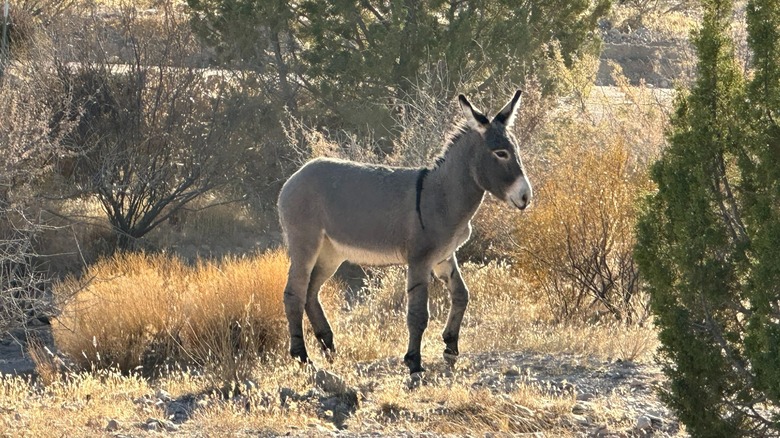
You can hike to viewpoints, check out the local peaks, and explore cool caves. When navigating on or off trail here, you're likely to encounter prickly foliage and ankle-twisting rocks, so you'll be grateful for long pants and ankle-high trail runners here. Brutal summer temperatures mean this landscape is best explored in the shoulder seasons and winter, and you'll need to carry lots of water year-round, as the dry desert air causes you to sweat more than you might realize. With few visitors, odds are high you'll encounter wildlife here, including coyotes, wild rabbits, bighorn sheep, and roaming herds of burros descended from the pack animals brought to the area by prospectors during the Gold Rush.
Hikes in the Mt. Nutt Wilderness
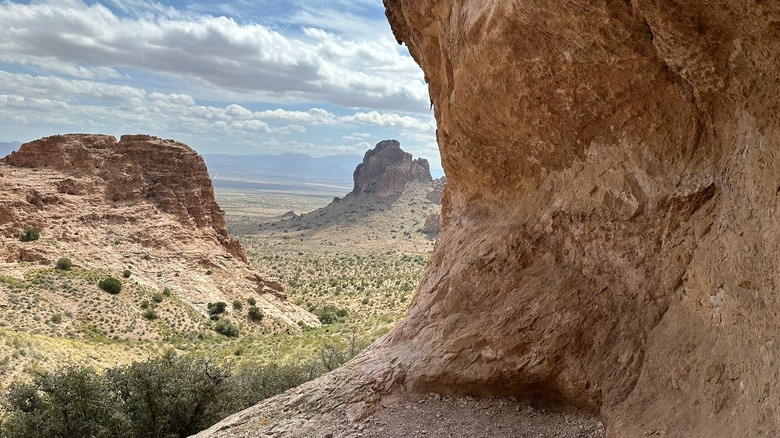
The easiest point of entry to the Mt. Nutt Wilderness is the Cave Spring Trailhead, accessible via a short drive on a well-graded dirt road suitable for any passenger car. The 1.2-mile (per AllTrails) out-and-back hike offers a modest 350-foot elevation gain but yields sweeping views overlooking Golden Valley, with unusual rock formations in the foreground. Multiple caves in the area invite exploration, but are easy to miss if you end your hike where the official AllTrails track ends. Poke around the cliffside near where the trail disappears, and you'll find the entrance to an impressive cavern hidden behind some brushy trees. To see another spectacular but unmapped cave that soars overhead, follow this user-created AllTrails track.
There is much more to see here if you're willing to venture off trail and take some creative routes. The desert landscape is wide open and easy to navigate, with clear sight lines and easily identifiable landmarks. While human-created trails are few, numerous game trails lead you reliably along the contours of the hillsides. Created by the area's wild burros and bighorn sheep, these distinctive tracks are everywhere you look. Examples of cross-country hikes you can complete in 2 to 4 hours include user-created AllTrails routes like this one, or this one.
The Mt. Nutt Wilderness also comprises a major portion of one of the country's newest thru-hikes, the 625-mile Mojave-Sonoran Trail, which stretches from Nevada's Valley of Fire all the way to Lake Havasu. The trail's creator, Eric Poulin, filmed an entire YouTube series on his inaugural 2021 thru-hike of the trail, and much of Episode 6 is devoted to the Mt. Nutt Wilderness section.
Where to camp, climb, and see wildlife in the Mt. Nutt Wilderness
Sandwiched between Laughlin, Nevada (an underrated Las Vegas alternative) and the alluring Route 66 town of Kingman, Arizona — around half an hour from each — the Mt. Nutt Wilderness is remarkably easy to reach despite being so remote and unexplored. The wilderness' Black Rock Climbing Area is less than a mile from the Cave Spring Trailhead, and boasts five climbing walls with over 65 routes, ranging from 5.7 to 5.12 in difficulty. Most are considered sport-climbing routes. At the base of a prominent mesa, this spot conveniently gets early afternoon shade — but don't forget to bring lots of water (one of several important tips for staying safe while hiking).
While you can tent camp anywhere in the Mt. Nutt Wilderness' 28,000 acres, motorized vehicles aren't allowed within its boundaries. To car camp nearby, the best access is right off Highway 68, around 8 miles East of the Colorado River, along the Old Kingman Highway. This disused road, on either side of the highway, is passable with care by most vehicles. Along the Mt. Nutt Wilderness' western boundary, the 12-mile Secret Pass OHV Trail is a popular off-roading destination that also lends itself to hiking via the 9.5-mile Secret Pass Loop. This hike through slot canyons can be shortened to six miles if you park further along the dirt access road, another great place to camp.
If you have a 4x4 vehicle, your camping options expand. On the Eastern side of the Wildnerness, you can follow signs for the Arizona Peace Trail (a 700-mile, mostly off-road loop through western Arizona) to the end of Bolsa Rd. Turn left briefly, then drive through a metal gate and continue on a sandy, rutted dirt road to find plenty of camping and hiking opportunities.