
12 Park Ranger Tips For Staying Safe While Hiking
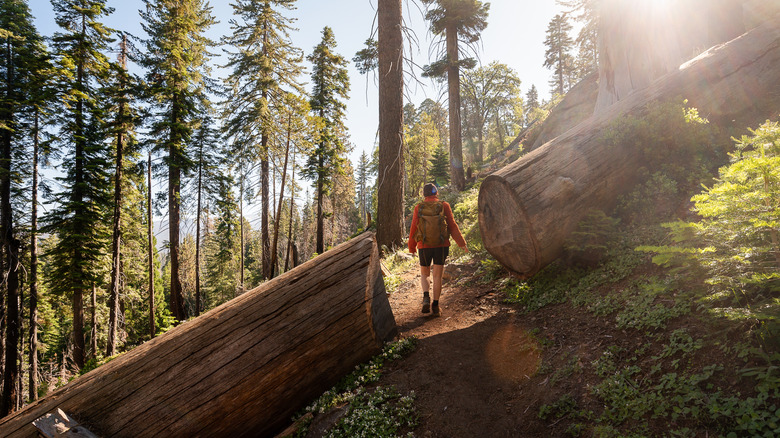
Hiking is a popular and rewarding activity in U.S. parks, with a huge diversity of terrain and thousands upon thousands of miles of trails. Hikes are one of the best ways to escape the throngs of tourists that flock to major iconic landmarks like Old Faithful at Yellowstone, for example, or Going-to-the-Sun Road in Glacier. Some trails, of course, are hugely popular themselves, such as Angels Landing at Zion National Park, which has gotten so crowded that a permit is required at all times. But there are also virtually endless other trails to choose from nationwide, from casual nature trails to multi-day backcountry treks. The caveat? Hiking is inherently risky, especially if you go solo, and preparation is key.
Rangers are the eyes and ears of our parks, and through their very hands-on jobs, they learn a lot about what visitors do well — and not so well. Veteran rangers have plenty of tips for making the experience an enjoyable one, but most importantly, they're committed to safety. This goes for you, others in the park, and the vulnerable landscapes home to a huge array of wildlife. Below, browse 12 excellent tips shared by a number of rangers who have worked in different parks across the country, touching on best practices and important things to remember.
To compile this list, we've drawn on several interviews, articles, Reddit and Quora discussions, and a podcast where rangers of different backgrounds have shared their insights and advice about hiking. The author has drawn on her own experience hiking in numerous parks around the country, and we've also consulted resources about safe hiking practices published on NPS.gov and FS.USDA.gov.
Bring the 10 essentials
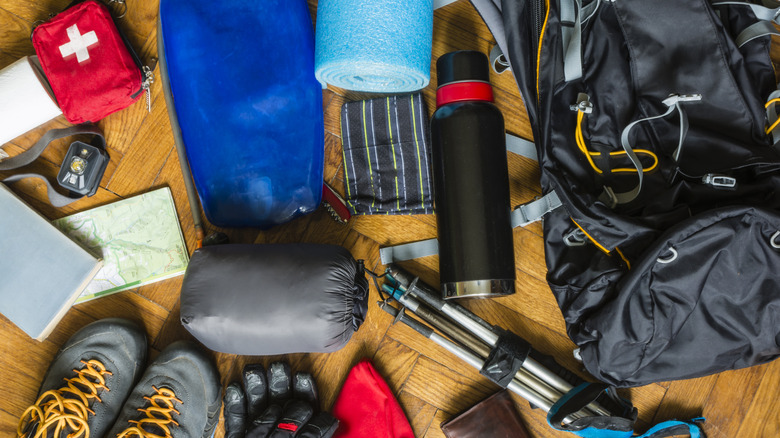
Every hiker has heard, "Remember to bring enough water!" or "Pack an extra layer!" But did you know that the National Park Service actually has a really easy way to recall the essential items every hiker should have when they head out? Danielle Jackson, who has worked as a ranger at both state and national parks, shares in an article on Business Insider that one of the mistakes she notices most frequently is that hikers didn't prepare properly. "I always tried to educate visitors on what the National Park Service calls the 10 essentials," she says.
The NPS 10 Essentials list consists of: navigation aids, sun protection, extra clothing layers, a first aid kit, lights and extra batteries, matches and/or fire starter, repair tools, extra water and food — especially salty snacks — and a lightweight tent or tarp for shelter. Consider them the foundational packing list for any jaunt.
You might be thinking, "Why would I need to bring a tent along on a five-mile hike? You may not need to, but you might consider bringing a small tarp and perhaps some twine. That way, if you make a wrong turn, get injured, or it gets dark earlier than you expect and have to spend the night, you've at least got a little leg up.
Bring more water than you think you need

Water may be one of the 10 essentials, but it deserves a shoutout all its own. Interpretation ranger Christian Delich at Joshua Tree National Park emphasizes how important it is to stay hydrated: "We recommend two gallons of water per person per day if you're going to be hiking all day," he tells Reserve America. Delich is also careful to point out that snacks, especially salty ones, are important for maintaining electrolytes and keeping your energy up. "If you're drinking a whole bunch of water and not eating anything, it can cause an imbalance between water and salt, and this can cause you to go into shock," he says. "People have actually died in national parks from this."
Canyonlands National Park law enforcement ranger Sara Shoemaker reiterates the importance of managing your water intake during an interview on "Dear Bob and Sue: A National Parks Podcast": "The other thing we get is that the people who do bring enough water, they ration it too much. So, they start having heat problems because they're not drinking enough." Pay attention to what your body needs and remember to take plenty of breaks to hydrate and refuel.
Tell someone where you're going — and stick to the plan
One especially useful way to ensure that you're taking precautions on a hike is to let others know where you're going and approximately when you'll be back. At the trailheads of backcountry routes, parks often place registry books, where hikers are encouraged to sign in and out. It's a helpful bit of intel for rangers in case they need to look for you in an emergency. It also never hurts to chat with a ranger for advice about the trail, although they won't be keeping close tabs. "Sometimes we remember conversations we have with visitors and that can help in a search and rescue situation," shares an anonymous ranger in a Reddit discussion. "Plus, it's good to get the most information to have a successful, fun hike."
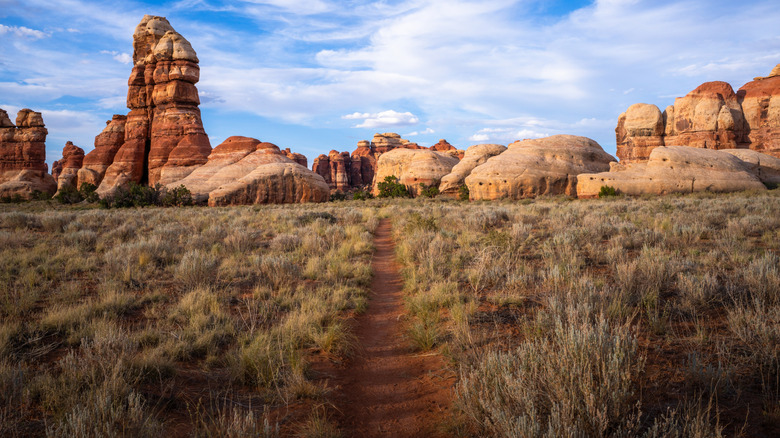
There are some helpful safety tips to know before your first solo hike, including that you may want to pop a note on the dashboard so others at the trailhead can see when you plan to be back. This comes in handy especially if there isn't a trail registry. If your car is still sitting there a few hours after your note says you'll return, people will be encouraged to call for help. And loved ones who were notified that you planned to return around a certain time will also be able to alert park staff that you're overdue. Sara Shoemaker tells "Dear Bob and Sue": "One thing that's really important is that, if you're gonna leave that note and say you're going to Chesler Park, don't go to Druid. Go to Chesler Park!"
Watch your footing near ledges
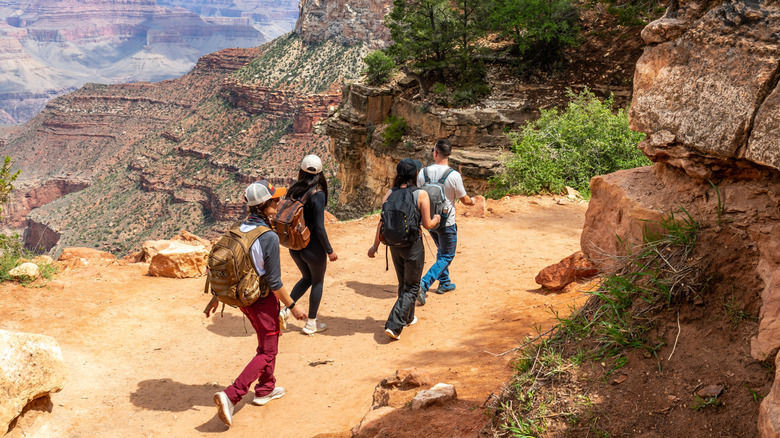
District supervisor Dave Bieri at New River Gorge National Park & Preserve notes in an interview with 59 News that because of the steep drops throughout the area, hikers need to be conscious of where they're stepping. That goes for any trails with steep drops. And rock climbing is also very popular in that park. Bieri says that "chances are, if you are up at the top of a ledge, there might be someone climbing underneath, and just dislodging a rock and knocking it off of the side of the cliff is something you should be concerned about."
In the age of TikTok and Instagram, there's been an uptick in people taking unnecessary risks to capture the "perfect" picture. Mind where you step, and don't get too close to the edge, as people have died after losing their footing while trying to take a selfie and tumbling down hundreds of feet. If you're paying attention to your camera, you're not paying attention to your surroundings — you can't watch your phone and your feet at the same time. This goes for being conscientious about wildlife, too!
Getting into dangerous situations puts others in danger
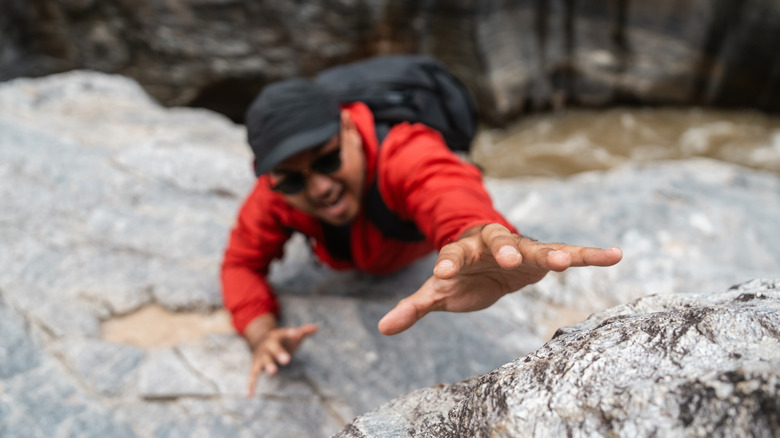
Sara Shoemaker tells the "Dear Bob and Sue" podcast that most of the hikers who set out to hike around the stunning sandstone structures of the Needles district of Canyonlands National Park come well prepared — but some don't. It makes matters worse when visitors get themselves into precarious situations because they're not prepared and the park's rangers and resources may already be stretched. "If we respond and have to rescue someone — I've never done it, but we can write a citation to them for creating a dangerous situation," Shoemaker says. "Say one of our staff talked to them and said, 'You should probably only do the Slick Rock Trail,' or something, and they go ahead and do Druid Arch, and then we gotta go out and rescue them at 2 p.m. on July 5 at 106 degrees, that's putting our lives at risk as well, even though we're trained to do that."
If you find yourself in a spot of trouble or encountering something unexpected that will change your plans, take a moment to practice the STOP principle, an easy mnemonic that could save your life if you get lost while hiking: Stop, Think, Observe, and Plan. For extra peace of mind, especially in areas where cell phone service is spotty or nonexistent, consider bringing along a personal locator beacon (PLB) such as a Garmin InReach.
Don't bring your dog

There are a lot of dog-friendly national parks and monuments in America, such as Shenandoah, Acadia, Scotts Bluff, and even the Grand Canyon. But even at these storied destinations, dogs are only allowed in specific places, and most national parks have very limited access for pets — sometimes hardly any at all. Desert parks are especially tough on dogs because the heat can get so intense, and leaving them in the car is not an option. Even on a comfortable, 70-degree day, the inside of a car parked in the sun can reach over 110 degrees Fahrenheit within an hour. But overheating outdoors can also be a big risk, which a hiker found out in July 2026 when her Great Pyrenees perished of heat exhaustion in Utah, according to ABC4.
"National parks aren't friendly places for dogs, because you're going to be limited with what you can do," Christian Delich points out. In addition to the potential that dogs could spread diseases or pests, such as fleas and ticks, they also can be disruptive to wildlife. Even if they're leashed, where they may still harass wildlife, they'll mark territory and leave scents that other animals may perceive as predatory or competitive. To keep everyone happy and calm, leave Fido at home or scout out a kennel nearby. Gateway towns around many parks are great places to look for local boarders and day care.
Get a backcountry permit
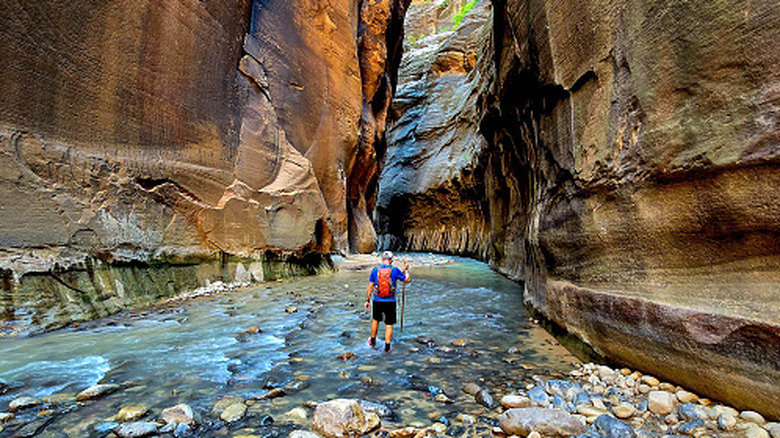
A backcountry permit is often required in parks that have wilderness access, in order to provide a record of who's traveling there and to help prevent overcrowding in otherwise wild areas. In this way, the landscape is protected, and visitors are able to experience the solitude and "out-there-ness" that many of us seek when we head beyond the major tourist attractions. It's important to remember, though, that the permit is essentially just a permission slip. "When you're visiting a park, you are on your own," says a ranger on Reddit. "We will not be keeping an 'eye' on you unless we are notified you are overdue or you have a permit and we notice you are overdue." That said, the permit does come in handy if you are overdue.
The National Park Service, in particular, takes permits pretty seriously, and if you're caught in the wilderness without a permit, you may be cited or even banned from the park. Sara Shoemaker notes that the park is generally aware of where vehicles are parked and which ones are supposed to have backcountry permits. "So, if a car is there the next day that didn't have a backcountry permit that we're aware of, then we start to do a little more digging into that," she says. If something goes wrong and someone is missing, this helps to narrow down the potential search area and understand where the person may have headed.
Use only pre-existing backcountry campsites
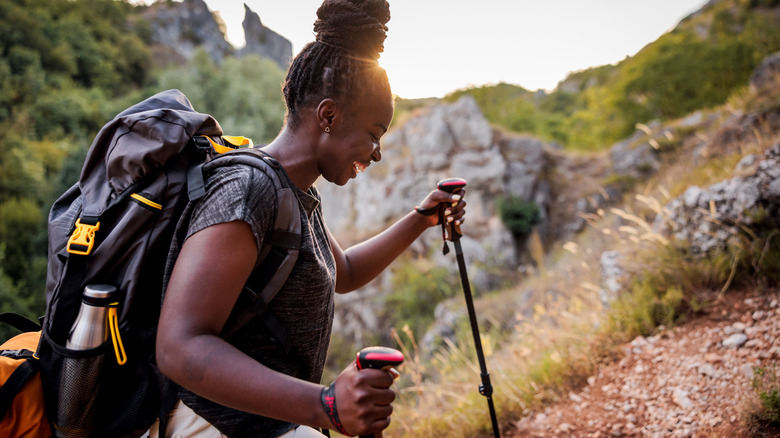
In addition to permits, preparation for an overnight wilderness trip also involves making sure you have a place to stay. Several under-the-radar backcountry trails in Yellowstone are dotted with campsites, but it's important to always make camp where others have stayed before. This is not only for conservation reasons but also because if there's a problem, rangers will know where to look first. Rangers will be able to help you figure out where the designated primitive sites are, so it's well worth asking for advice and checking out a map when you register for your permit or stop by the visitor center.
Of course, national parks are all about being able to experience vast landscapes and a bit of wilderness, but there's a right way and a wrong way to do this. "You never want to make a new campsite," says Christian Delich. "If you see an existing site, that's the one we'd prefer you use. We don't want people to create their own sites and crush vegetation with their tent."
Stay on designated trails — but not social trails
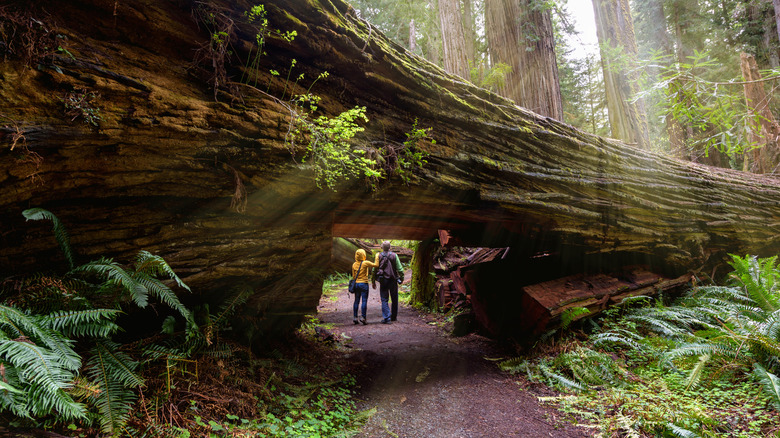
In city parks, those well-worn paths across lawns are known as "desire paths" because they often reflect a more direct route than the pavement provides. But in a park, trails are designated areas that are meant to keep people from trampling plants or getting too close to dangerous features, such as cliff edges or hydrothermal features. Yellowstone National Park district ranger Tara Ross tells Xanterra Travel Collection: "Social media has had an impact. People post risky behavior on Facebook and make it seem acceptable." But people have died at the park because they got too close to hot springs and fell in. The busy paths may be crowded — "Around Old Faithful, it's like a superhighway," Ross adds — but sticking to them is important.
Unofficial and user-created paths in parks are referred to as social trails. However, the NPS is quick to point out that they're "not for socializing." As much as possible, they shouldn't be used at all. In an ideal world, they wouldn't even exist. "Unfortunately, as a park ranger, I saw folks jumping off the designated path all too often," shares Danielle Jackson, who noticed visitors straying from marked routes around the Blue Ridge Parkway. "Many visitors don't realize that trail markers are there for their safety, as well as for the safety of the park itself."
Research your trail ahead of time — and know how to use a map
One of the most important 10 essentials is a navigation aid. This can mean a few things, which experienced hikers often use in tandem: downloaded digital maps from apps like AllTrails, Komoot, or Gaia GPS, plus paper maps, and yes, an old-fashioned compass — not the one on your phone. The paper map serves as a backup if your phone power fails, and the compass will help you navigate using the map, which should show which direction is north. "The thing with a paper map," says Sara Shoemaker, "is that it's really important to know how to use it." That said, these are the items you have with you when you're already on the trail. Don't forget to do your due diligence before you even head out.
There are a lot of ways to research where you're going ahead of time, and there are also some helpful questions to ask yourself when looking for trails, whether you're looking for an overnight backpacking route or a day hike that's just a few miles long. How experienced of a hiker are you? What kind of shoes or boots will you need? What is the climate like? What is the weather forecast? These are just a few. Using an app like AllTrails will provide user reviews, which is especially helpful if they're really recent, as you'll get a sense of whether an area has recently been affected by flooding, for example, or there were lots of bugs. But it can also lead you in a different direction than the official park map because it's user-driven, so pay attention.
Calculate your experience and ability level realistically
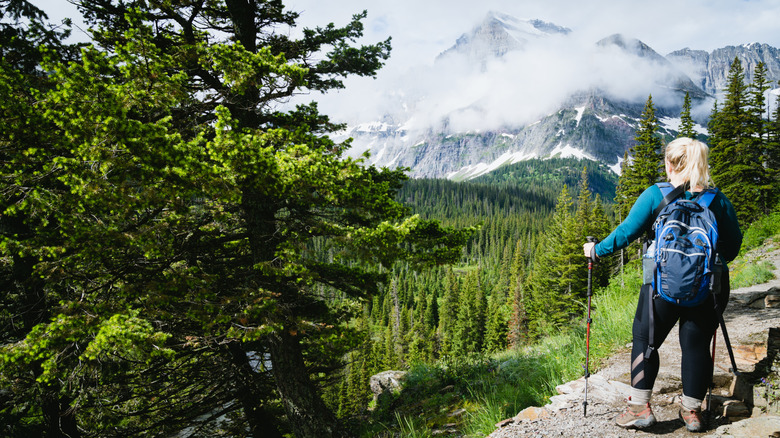
Getting advice from a ranger about different hikes at the park you're visiting is a great way to wrap your head around the options. Sara Shoemaker notes that rangers at the visitor centers may ask some key questions to get a sense of how to direct you, and some of these are good to ask yourself, too: "We try to ask questions like, How far do you usually hike? Where do you hike? 'I walk around my neighborhood' is a lot different than 'I go to Mount Rainier every weekend,'" she says. Consider what altitude you're used to hiking at — do you usually walk at a lower elevation? Have you been in the backcountry before?
If it's the first time you've ever hiked in the desert and you're at an altitude of 5,000+ feet but you're usually used to walking around flat terrain at about 400 feet above sea level, this is something to seriously factor in. Rangers may be able to provide you with alternative ideas for an enjoyable trek that may be easier but still rewarding. Shoemaker also emphasizes that most hikers come prepared, and that's because, she says, "They arrive early. They carry water. They have snacks. They know where they're going."
Be prepared for wildlife encounters
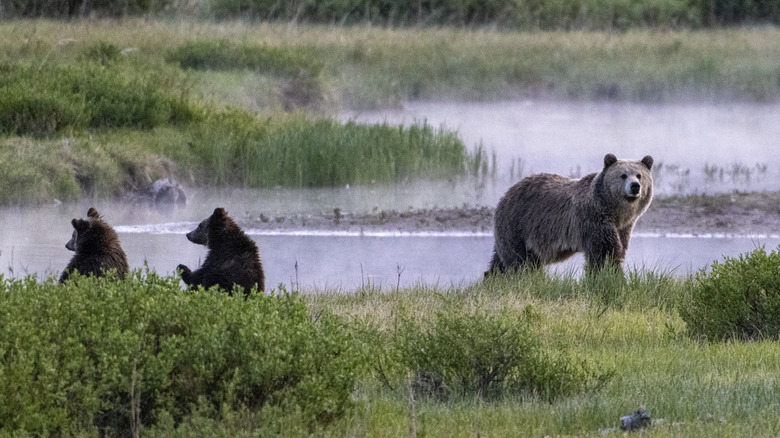
Wildlife encounters can happen anywhere in a park, and geography determines what kinds of creatures you'll see. The Everglades are home to both crocodiles and alligators — it's actually the only place on the planet where both live side-by-side — while the Rocky Mountains parks are home to grizzlies, mountain goats, bison, moose, and more. Park rangers want to keep wildlife and developed areas separate as much as possible, especially bears. "We don't want bears to lose their natural fear of people," says Christian Delich. "When they lose that fear, they become very comfortable around people. They'll break into vehicles, and they'll break into campsites and steal your food."
Hiking trails are where people are more apt to come face-to-face with the animals that call our parks home. The National Park Service strongly encourages hikers to take bear spray on adventures in the Rocky Mountains. Getting away from the animals should always be the first priority, but as three biological technicians learned firsthand at Yellowstone during a hike, sometimes you don't notice until the bear is already charging at you. "Travel in groups, make noise, carry bear spray, and know how to use it," says a ranger in an official Yellowstone National Park video.