
4 Unwritten Rules Of Asian Street Food American Tourists Break Within The First 10 Minutes
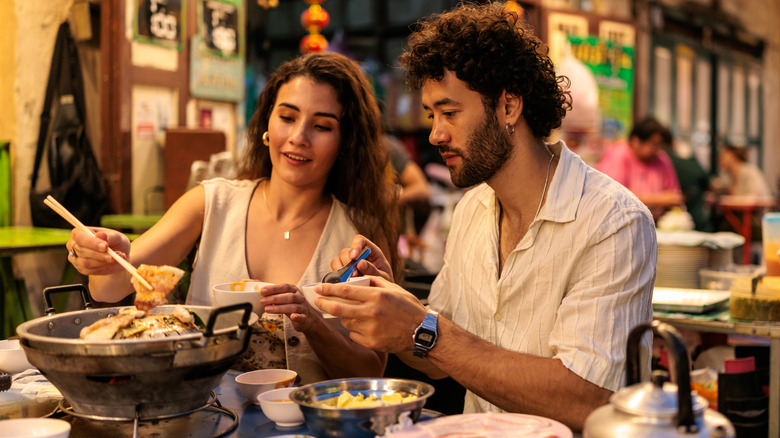
Asia's street food scene is full of diverse dishes and unique sensory experiences for the curious, adventurous traveler. Few things offer a more visceral insight into a country's culture than standing shoulder-to-shoulder with locals in a crowded food street, surrounded by the wafting aromas of food cooked street-side. Beyond the culinary thrill, navigating a foreign street food scene is a test of how well you can blend into a new cultural landscape — and follow its unwritten rules.
Planning to queue outside a hawker center in Singapore or slurp a bowl of noodles at a roadside stall in Vietnam? This is your cue to adjust some of those hardwired American culinary habits. The exorbitant tipping, the high expectations of wait staff, and the customer-is-always-right mindset don't translate to an open-air cart or stall — and that's just the beginning. The quicker you learn this, the easier it will be to sidestep the culinary faux pas that most Americans make within the first 10 minutes of a new eating experience.
Unsure of how seat-saving works in a crowded food court or the etiquette around eating with your hands? We've compiled a handful of unwritten rules shared by food bloggers, travel guides, and firsthand accounts (including those of this writer) that will keep you from earning a wary side-eye from locals during your next street food adventure in Asia.
Tables are meant to be shared with other diners
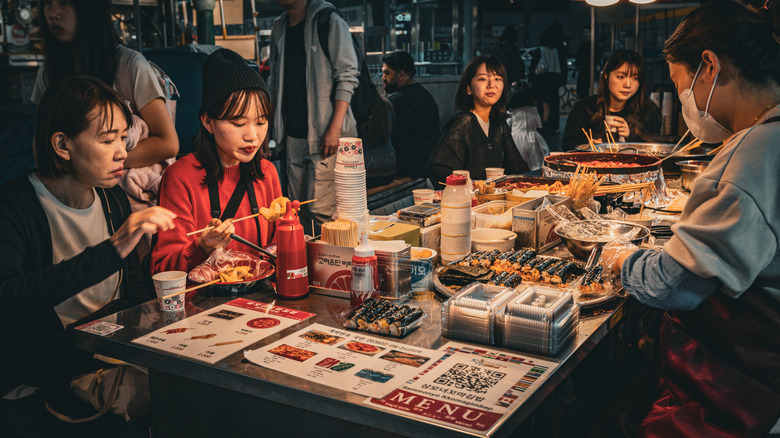
According to a 2024 YouGov survey on American restaurant etiquette, 41% of surveyed American adults said they considered communal seating in restaurants unacceptable — a mindset that needs adjusting when it comes to dining at Asian street food centers, where tables are treated as precious real estate. Forget a private table: Seated street food destinations mean sharing your table with other diners.
In Hong Kong, table-sharing even has its own term: daap toi. Come lunchtime, office workers descend from high-rise buildings for cheap and filling meals at the city's popular street food stalls — and shared seating allows eateries to seat as many diners as they can during peak hours. Refusing to share a table with a hungry local simply because you're unfamiliar with the custom is a surefire way to mark yourself as a tourist.
The same rule applies in Mainland China. I've eaten solo meals wedged between delivery drivers, families, and office workers at street-side eateries, with nothing but the clink of chopsticks and the slurp of noodles breaking our companionable silence. It's perfectly acceptable to join a table of people in the food kiosks of Fukuoka, Japan's friendliest city with one of the most underrated food scenes. Singapore follows the same template but with a unique workaround: the chope system, where objects like an umbrella, a water bottle, or a pack of tissues on an empty table signal that it's been claimed by someone else. If a table is free of any objects, consider it up for grabs. So, the next time someone randomly sits beside you at a food stall, take it as a compliment — you've just been welcomed into the street food culture.
Get familiar with chopstick etiquette
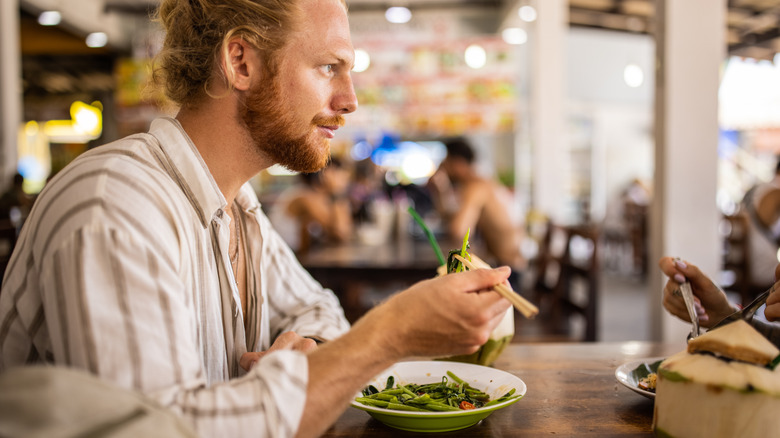
So you've mastered the technicalities of wielding your chopsticks, but how well versed are you in the unwritten rules that come with them? As one of the most ubiquitous utensils in Asia, chopsticks come with a handful of rules that would escape most uninitiated Americans. A seemingly innocent chopstick maneuver could cause offense to locals — so in food-obsessed Asia, brushing up on chopstick etiquette goes a long way, especially in a social food scene like a street food market.
A chopstick-related dining faux pas too many tourists make is sticking chopsticks upright in a bowl of rice — which Vietnamese tour company Street Food Adventure deems "perhaps the most serious mistake a foreign guest can make," since it simulates a traditional funeral rite in countries like Japan, Vietnam, or China. Using your chopsticks to stab or dig at food, or tapping them against tableware, is also frowned upon.
Passing food from your chopsticks to someone else's or serving yourself from a communal bowl with your personal pair is considered unhygienic. Keep an eye out for designated serving chopsticks — and in their absence, use the bottom ends of your chopsticks to help yourself to a serving. In Singapore's hawker centers, be mindful of the appointed cutlery for halal food stalls. "Don't go to a halal stall nearest to you out of convenience, to take their cutlery and use it on a non halal dish," advised a Redditor, who witnessed an upset food staff snatch halal-appointed cutlery away from a tourist committing this faux pas.
Don't hold up the line, and order with conviction
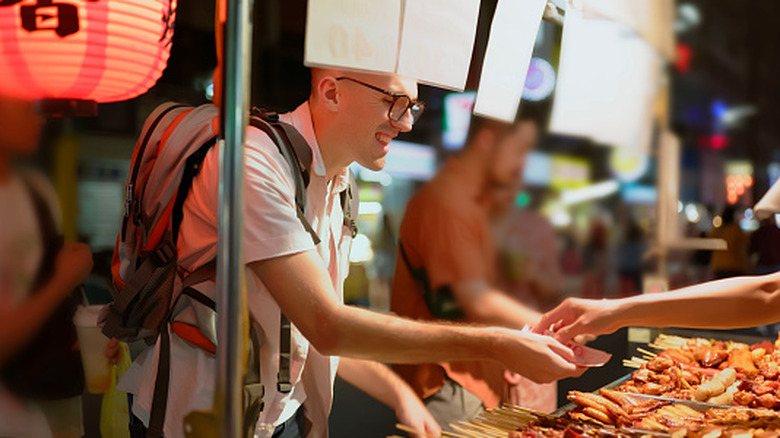
Street food markets attract the crowds, but lunch rush hour brings a different kind of pressure, especially with a queue of hungry people behind you. Unless you want to be known as the tourist holding up the food stall line, be quick and decisive when it's your turn to order. Even the Michelin Guide agrees, noting that some Hong Kong street stalls expect you to quickly state your order and tolerate no add-ons or customizations.
Indecision isn't the only hurdle most tourists face when ordering food — the language barrier plays a big part as well. If you aren't able to read the menus or speak the language, get an idea of your potential order by surveying what other patrons are ordering and eating beforehand. Otherwise, point to the laminated pictures of dishes certain food stalls will have on display. My tried-and-tested trick around China is snapping photos of the picture menus displayed outside Chinese roadside food stalls and showing them to the food staff once I've been seated.
A little assertiveness when it comes to ordering gets you in the spirit of the Asian food market experience. If you find yourself in a stall with no line, make sure you've got your order and payment ready before attempting to make eye contact with the vendor. "If you hesitate, someone will jump ahead of you, but if they hesitate, you can jump ahead of them and they won't get upset," shares one Reddit user. And if you really aren't able to communicate your order properly, take another Redditor's sage advice: "When in doubt, order the #1. It's most likely the restaurant's specialty."
Use your right hand when eating without utensils
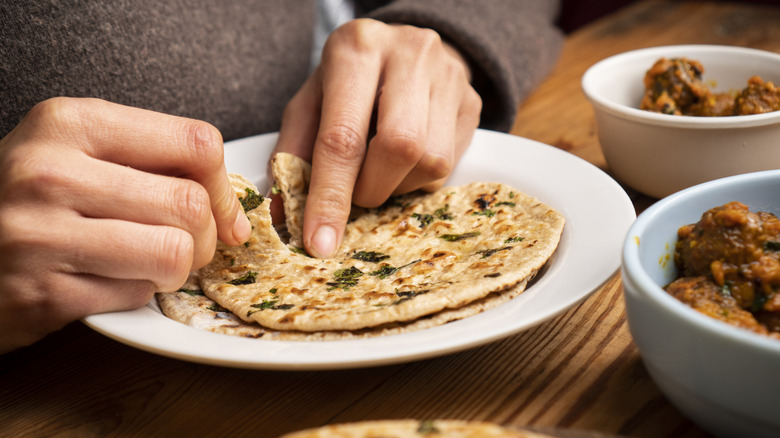
Eating with one's hands is a practice across South and Southeast Asia that can be quite an intimidating culinary experience for Westerners, and you may be tempted to opt out and ask for silverware. Fortunately, the rules of eating with your hands come with a far simpler playbook than mastering chopsticks. There's really only one rule to follow: The right hand is always used for eating.
With cleanliness being the top priority, eating with your hands starts with hand-washing. Different eating-by-hand techniques reign in India, whether it's using three or four fingers, making use of the thumb, or only scooping up food with the tips of the fingers. Contrary to lifting a fork or spoon up to one's mouth, people in countries such as Sri Lanka dip their heads closer to the plate instead when eating by hand.
In the Philippines, eating with one's hands — a custom deemed old-fashioned or provincial — has swung back into vogue in the form of large, festive communal meals heaped over banana leaves. So, if you find yourself in an affordable, adventurous street food destination seated at a stall sans cutlery, do as the locals do and dig in — even lefties are trained to use their right hand to observe the custom, so there's no excuse not to try.