
Between Baltimore And Pittsburgh Is Pennsylvania's Scenic Natural Area With Mountain Springs And Forest Trails
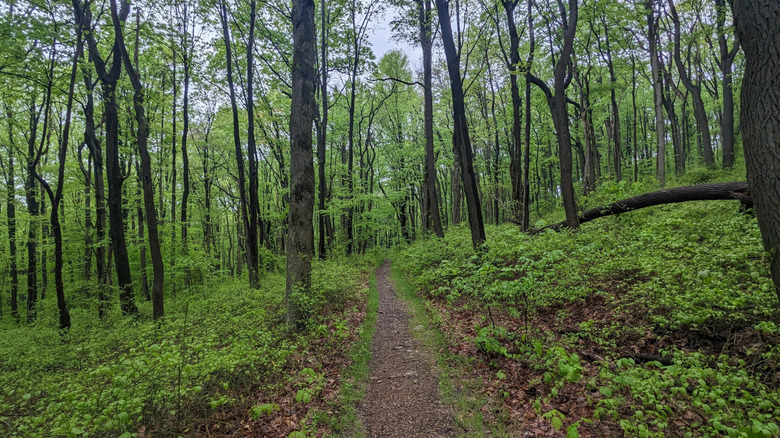
Within reach of Pittsburgh but far removed from the city's bustle, Roaring Run Natural Area is a picturesque escape in the hilly Laurel Highlands. The 3,500-acre area stretches out around Roaring Run, a mountain stream fed by several natural springs. The surrounding trails wind through second- and third-growth forests, along old logging roads, and past scenic overlooks on the slopes. Hikers, fishers, and wildlife watchers alike will find something to appreciate in Roaring Run.
The woodlands of Roaring Run Natural Area reflect the transformation of Pennsylvania's forests. According to the Pennsylvania Department of Conservation and Natural Resources (DCNR), the area was logged heavily in the early 1900s, as well as in the 1960s. As a result, the trees blanketing the hillsides vary in age and species, from strips of chestnut oaks to newer hardwood trees. Add in the gurgling stream and some rocky outcrops, and the area lends itself to a peaceful, photogenic hike. "This is a quiet, beautiful place to take a walk in the woods!" one Google reviewer said. It's an easy trip from Pittsburgh — about a 90-minute drive away — with Baltimore roughly three-and-a-half hours beyond.
Follow the waters of Roaring Run Natural Area
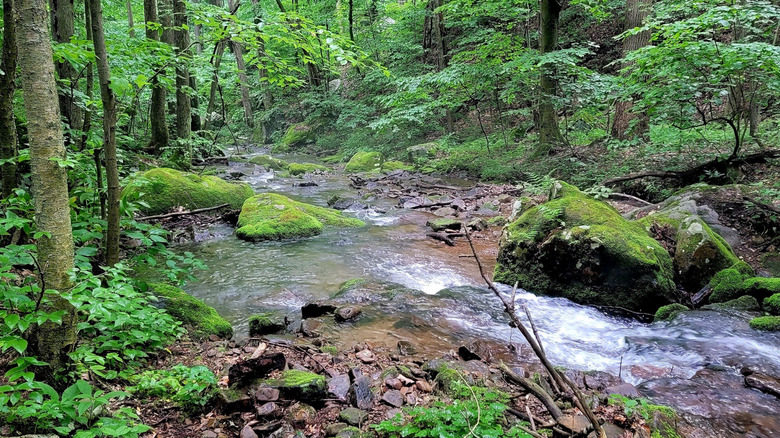
The heart of Roaring Run Natural Area is its namesake stream, which descends for 5 miles down the western slope of Laurel Ridge, per the DCNR. It's formed by springs high up on the ridge, and eventually flows into Indian Creek in Champion, a trendy eastern town known for its mountain vibes. The natural area protects the entire length of Roaring Run, which is designated an Exceptional Value Stream for its pristine water quality.
Anglers also enjoy the spring-fed stream for its abundance of brook trout. It's classified as a Wilderness Trout Stream, a label that the Commonwealth of Pennsylvania gives to high-quality streams with native trout in areas with minimal human disturbance. Roaring Run's wild character means you can expect to do some scrambling to find a good fishing spot, with uneven banks and forested surroundings creating a more rugged experience than, say, a pond with a pier. Fishing areas are only accessible on foot, and anglers aged 16 and older must have a valid Pennsylvania fishing license, which are available to purchase online.
Hike the forest trails at Roaring Run Natural Area
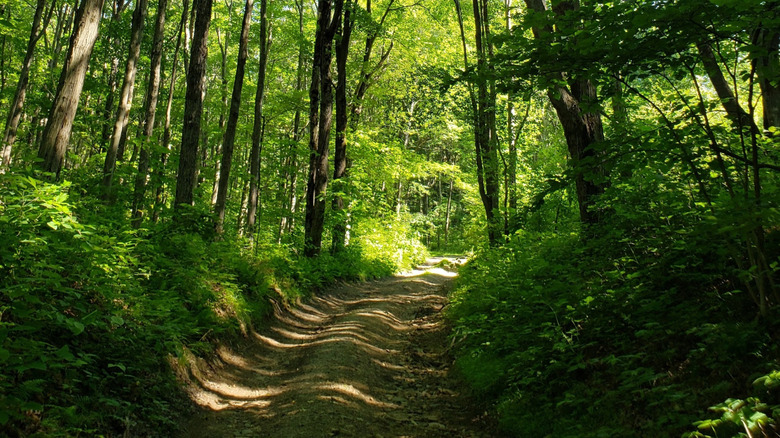
The hiking trails at Roaring Run pass through a variety of landscapes, from lush valleys to rocky Laurel Ridge vantage points. Several of the routes trace old logging roads — the 4.5-mile North Loop even has remnants of railroad grades and skid trails. Wildlife encounters are also common on the trails. Black bears, coyotes, rattlesnakes, red spotted newts, and various songbirds are known to inhabit the area, according to the DCNR.
The 1.8-mile Painter Rock Trail is an especially scenic option that climbs up to a high point on Laurel Ridge. This hike is only accessible from the Roaring Run and McKenna Trails, putting the total length of the journey at over 5 miles, according to AllTrails. The elevation gain on Painter Rock is over 1,000 feet, with panoramic views of Roaring Run Valley at the top. Another picturesque hike is the Birch Rock Trail, which spans 3.5 miles round-trip and covers sections of two other trails along the way. At the high point of this trail, hikers may be able to spot Seven Springs Mountain Resort, another gorgeous day trip destination from Pittsburgh.
There are several trailheads with parking lots throughout Roaring Run Natural Area, so it might be a good idea to consult the map and plan your route beforehand. For example, if you're coming from Champion, the Roaring Run Trail is the closest and may be the most convenient starting point. Champion also serves as a great base for exploring nearby destinations, such as Laurel Hill State Park, a family-friendly getaway for camping about a 20-minute drive from town.