
These Abandoned Quarries South Of Cleveland Are Now A Gorgeous Ohio Park With Trails Through Scenic Ravines
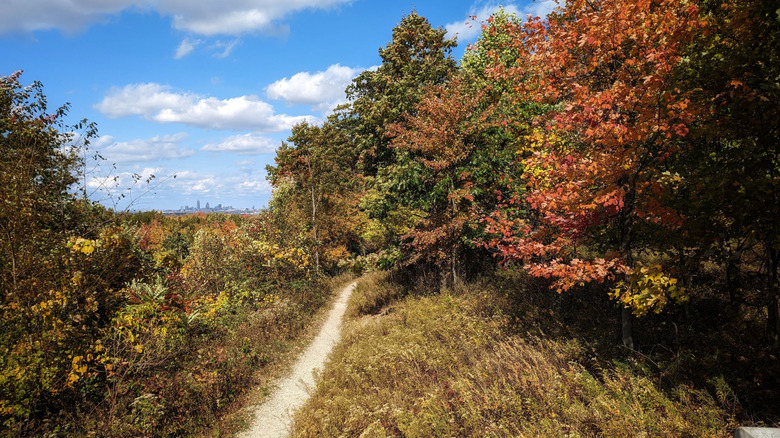
In the 1950s, Cleveland was the seventh-largest city in the United States — and also among the most polluted. The environmental degradation was so bad that the Cuyahoga River famously caught fire at least 12 times by 1969. But Cleveland today is a far cry from the industrial powerhouse of the past. The city has gotten progressively greener as its economy has shifted away from manufacturing, and former industrial sites across the region have been restored into natural spaces. West Creek Reservation is a prime example of this trend.
You'll find West Creek Reservation about 10 miles south of downtown Cleveland, on the eastern edge of the suburb of Parma. There were once so many quarries in the area that it was called Quarry Creek, and the stones from them were used in everything from local home foundations and the Ohio Canal to structures like the Brooklyn Brighton Bridge. Efforts to restore the natural landscape started in the late 1990s, and in 2006, it officially opened as part of the Cleveland Metroparks system. Today, West Creek Reservation covers almost 600 acres of forested hills, restored wetlands, and peaceful ravines where visitors can hike, spot wildlife, and take in this important watershed's rebeautified landscape.
Trails and nature in West Creek Reservation
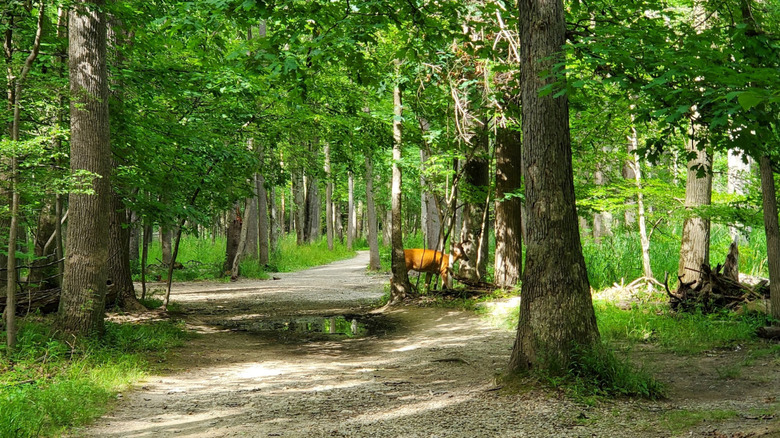
There are 2.5 miles of single-track mountain bike trails, a 1.8-mile all-purpose trail, and several shorter hiking paths running through West Creek Reservation. All of these trails are part of a connected network, with the All-Purpose Trail being the spine, which you can access near the Watershed Stewardship Center. The Watershed Stewardship Center is an educational facility with science- and nature-based programs for both kids and adults. The park's most secluded hike is Skinner's Run Trail, a 1.8-mile out-and-back route that follows the ravine along West Creek to the Dentzler Trailhead in the south.
The variety of habitats in West Creek Reservation attracts many species of birds. Year-round residents include bluebirds, woodpeckers, American Goldfinches, and nesting populations of screech owls and red-tailed hawks. In the spring and summer, you can also spot migrating birds like Scarlet Tanagers, Orchard Orioles, Indigo Buntings, and flycatchers, while October is the best month to spot rare LeConte's or Nelson's sparrows. You can see many species right from the Monarch Bluff Picnic Area near the Watershed Stewardship Center parking lot if you don't feel like hiking. The best spot for birdwatching is the Bluebird Point Overlook, at the intersection of the All-Purpose Trail and Bluebird Point Trail. Here, a one-time landfill has been restored into a meadow with birdhouses that attract cavity-nesting birds like swallows and bluebirds.
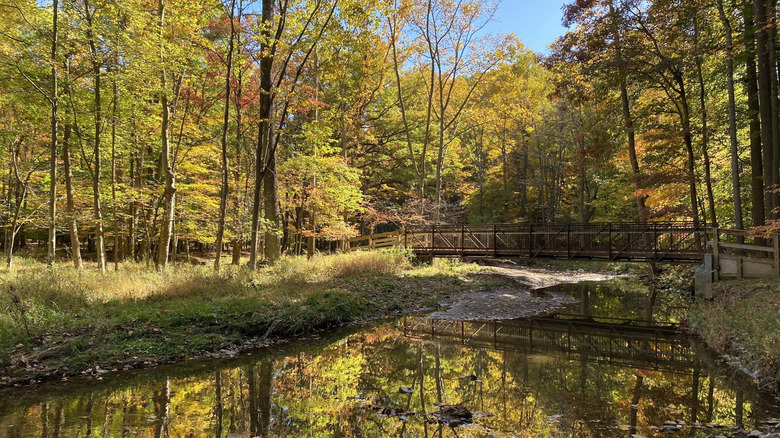
There are other overlooks in West Creek Reservation for visitors seeking vistas. The Grassroots Gorge Overlook is a bridge over West Creek where you can see the shale cliffs of the creek's ravine. You can continue from here along the Gateway Trail to connect to West Creek's mountain biking loops. For more urban views, head to the Skyline Overlook on the Skyline Trail in the northern part of the park, where you'll find elevated looks at the underrated city of Cleveland.
Find traces of the past in West Creek Reservation
Some of the reclaimed land in West Creek Reservation bears no visible marks of its former use. The meadow at Bluebird Point Overlook is a prime example. It's hard to imagine that this area was once filled with trash when you see it blooming with colorful wildflowers in the spring. But, similar to the once-thriving village hidden inside Cuyahoga Valley National Park or the 19th-century landmarks in Mill Creek MetroParks, you can find remnants of the area's past in and around the park. The quarries that once operated here were the area's first major industry and still give their names to local streets like Rockside Road and Kuenzer Drive, the latter of which was named after a former quarry owner. While these abandoned quarries are not marked, what's left of them is within the reservation, so keep an eye out for the steep rock walls left behind after quarried stone was removed.
If you want to see a more recognizable landmark from the area's quarry days, head about two miles north of West Creek Reservation to the Philip Henninger House on Broadview Road. This home belonged to the owner of Parma's most significant quarry, the Henninger Quarry, and was built in 1849 using stone from the land. It is now included on the National Register of Historic Places and recognized as Parma's oldest house.