
Forget Banff — Visit Canada's Scenic Park With Turquoise Waters, Fewer Crowds, And Ethereal Lake Trails
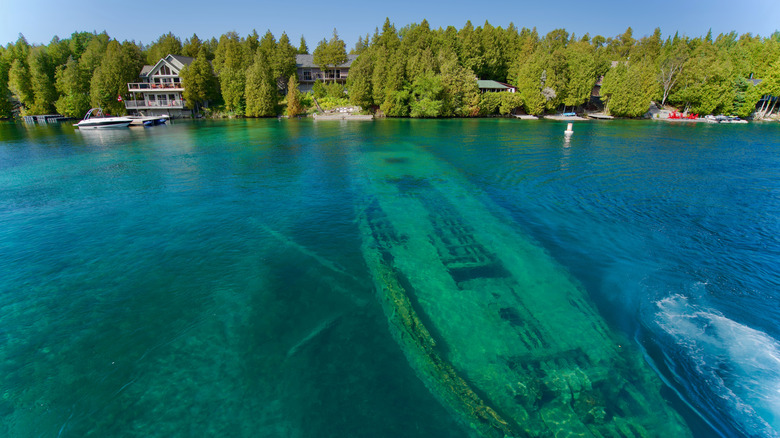
For more than 130 years, a wooden schooner named Sweepstakes has rested on the floor of Lake Huron. Generations have passed since this sailing ship struck a large rock, rupturing her hull and causing the hold to take on water. You'd think that these timber decks would have long decayed since 1885, when the vessel's 18-year career was brought to a tragic end. Yet much of the Sweepstakes (pictured above) remains intact, looking almost fit enough to sail again. And it's not the only one: More than 20 historical wrecks are located in Fathom Five National Marine Park in Ontario, Canada, attracting divers from around the world.
Fathom Five occupies the tip of the Bruce Peninsula, nearly 200 miles northwest of Toronto. Established in 1987, Fathom Five was the first national marine conservation area designated in Canada. (Today, you'll find five across the country.) Like its terrestrial siblings — including the famous Banff National Park in Alberta — Fathom Five is operated by Parks Canada and is designed to protect and celebrate the nation's natural spaces. Unlike most national parks, Fathom Five is largely water; its 43 square miles cover a diverse swathe of lake and islands. Fathom Five also receives far fewer visitors than Banff (although it can get busy during summer weekends), making it a quieter getaway for travelers visiting outside of peak times.
What you notice right away is the water: During the day, the color tends to turn a distinctive turquoise. This shade is caused by a perfect recipe of sunlight, shallow water, white rocks, and very little plankton. It's beautiful on its own, and this unique area can feel magical — and haunting — for many other reasons as well. If you're on the lookout for the most enchanting lake islands across North America, consider taking the long drive to this Great Lakes escape.
What to do in Fathom Five National Marine Park
Divers are the ones who will get the most out of Fathom Five National Marine Park. Clear waters and an abundance of underwater archaeology will thrill scuba enthusiasts, and the lack of tides, sharks, and commercial traffic should come as a relief to anyone with an air tank and flippers. Most of the wrecks have tragic origins, of course — these shores are known for their dolomite cliffs and submerged boulders, which were a constant threat to reckless captains.
The name "Fathom Five" is quite tragic itself, as it comes from William Shakespeare's play "The Tempest," when the character Ariel sings about a man lost at sea. Indeed, Fathom Five encompasses the largest concentration of shipwrecks in North America — an astonishing feat, considering nearby Michigan's unique "shipwreck alley" offers a historic underwater sanctuary prime for exploring. Some of these vessels sank in such shallow waters that you can see them clearly from the deck of a boat.
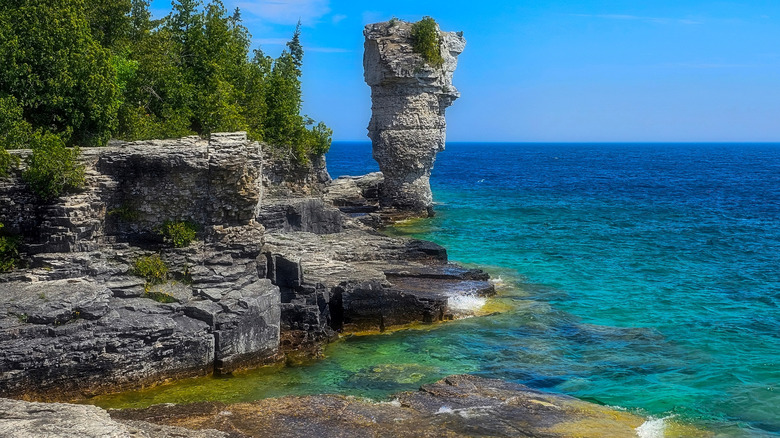
But there's a lot for landlubbers to enjoy, as well. One of the most remarkable sights is Flowerpot Island, a small landmass with giant pillars of rock shaped much like vases (pictured above). These formations look otherworldly on Lake Huron, though you'll have to motor out to this island to see them. Two different tour companies carry curious travelers by boat across the 4 miles of water. A 2-mile trail loops around the eastern half of Flowerpot, where the jaw-dropping monuments seem to have waited eons to pose for a picture. The route isn't long, but it's an Escher-like course of boardwalks, stairways, and cliffs. You'll also find a few trails back at the Visitor Centre, including short stretches that roll through scenic forests. Burnt Point Loop is a popular choice, as the 3.3-mile path grants you wonderful views of Georgian Bay and nearby limestone cliffs.
Getting to Fathom Five National Marine Park and where to stay
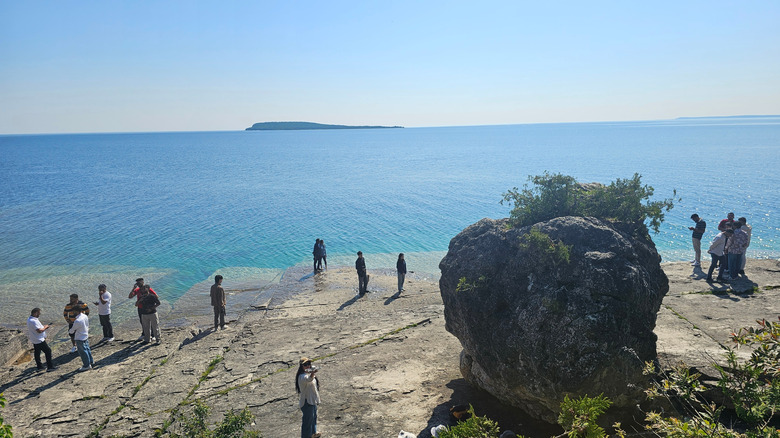
Fathom Five National Marine Park takes some effort to get to, but this usually means fewer crowds. There's no mass transit option to get here, so you'll need a car, and it'll take about 4 and a half hours to drive from Toronto, the closest Canadian city. If you're coming from the U.S. side, it's an hour longer from Detroit. The shipwrecks have typically drawn about 175,000 visitors each year, but this is a fraction of Banff National Park's 4.5 million in 2025.
The park's anchor is Tobermory, a town of roughly 4,000 residents, which functions as Northern Bruce Peninsula's "port of call." Tobermory is renowned for its boating scene — including powerboats and clear-bottomed kayaks — as well as stately lighthouses. Tobermory is also the northern terminus of the Bruce Trail, a time-honored, 600-mile hiking system that was first completed in 1964 and stretches from Niagara Falls to this little lakefront town.
Tobermory knows how to treat a guest right: The little town has more than a dozen inns and hotels. Prices and availability can vary depending on the time of year. For example, overnight stays might be difficult to book during the summer, but those visiting outside of the busy peak season can find stays for $100 to $200 a night. You'll find an equivalent number of restaurants, which range from Tandoori Nation Indian Restaurant on the outskirts to the surfer-style Coconut Joe's Harbour Bar right on the water. If you're already on a road trip to see Ontario's most scenic lakes, towns, and historic sites, Tobermory and Fathom Five are a delightful addition to the itinerary.