
Between Sacramento And Oakland Is A Once-Thriving Mining Area That Now Has Historic Charm, Camping, And Trails
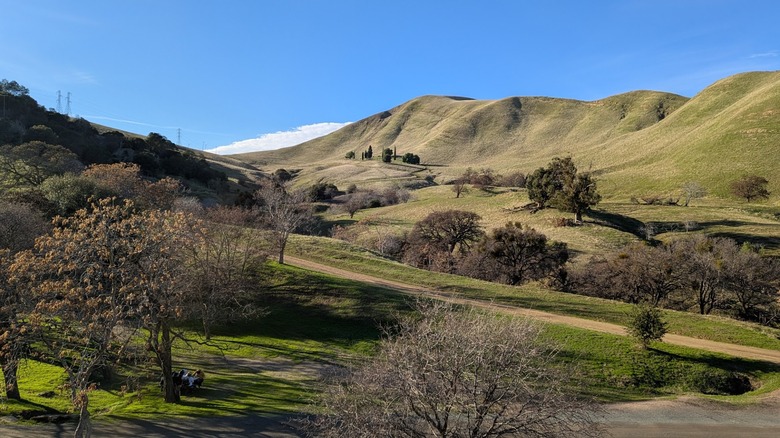
When most people think of Northern California's pioneering past, the Gold Rush probably comes to mind. But coal helped fuel the region's early industrial growth, too, as evidenced by the Black Diamond Mines Regional Preserve. This 8,533-acre park is tucked away in San Francisco's East Bay region in the foothills of Contra Costa County. The preserve sits near Highway 4 just outside of Antioch, about 40 minutes from Oakland and 1.5 hours from Sacramento.
Some of the preserve's land was once part of the Mount Diablo Coal Field. Home to a dozen or so mines, the place was the state's largest coal-mining district in its heyday. From the mid-1800s through the early 1900s, the coal field churned out millions of tons of the "black diamond" and spawned a handful of settlements for coal miners and their families. The boomtowns are long gone, but you can still find heaps of the coal field's history around the preserve today, hidden amongst the scenic trails and primitive campsites.
Many residents from the old townsites are interred at the historic Rose Hill Cemetery, situated in the heart of the preserve. And the remnants of coal mines, along with some of the sand mines that were in operation from the 1920s through the 1940s, can be found scattered around the park. You can learn more about what life was like for miners at the Greathouse Visitor Center, which is open select hours on Fridays, Saturdays, and Sundays. The facility is housed in an underground room dug by sand miners in the mid-1920s and has a variety of old photos and artifacts on display worth seeing before venturing out into the preserve.
Wander the hills of the Black Diamond Mines Regional Preserve
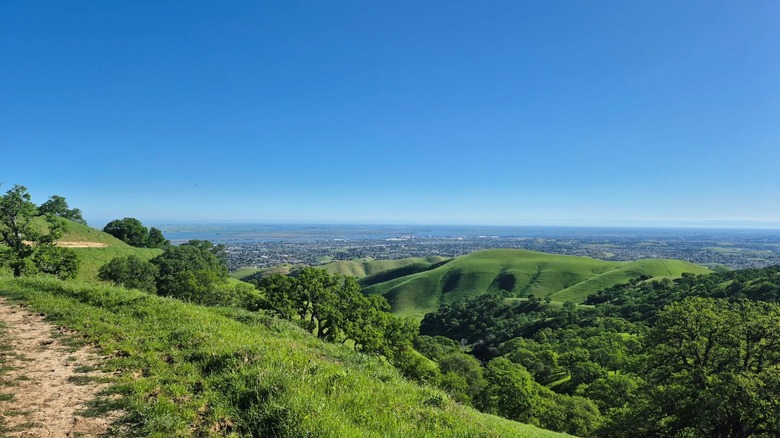
The Black Diamond Mines Regional Preserve hosts a variety of programs that let you delve deeper into the former coal field's past, including guided underground mine tours, which must be booked in advance. You can also experience the area's history along one of the many hiking paths. Roughly 65 miles of scenic trails wind through the park's diverse terrain, made up of grassy meadows, shrubby chaparral, and patchy woodlands.
The preserve could rank among the best places to see California's iconic wildflowers as the rolling hills come alive with colorful blooms in the spring. You can also spot a variety of flora planted by coal miners back in the day, namely black locust, almond, and pepper trees. Many of the trails are multiuse and open to hikers, bikers, and horse riders, while some are for ramblers only. The 6-mile Nortonville and Black Diamond Loop takes you by some of the preserve's historic sites, including the old cemetery and air shaft, which once stretched down 150 feet to ventilate the coal mine. You can also see "Jim's Place," a little underground abode hidden away among all the sandstone canyon scenery.
The Old Homestead Loop is another popular, moderately challenging trail in the preserve, covering just over 4 miles of ground through the grassy knolls. You may see a few cows grazing along the trail. Keep an eye out for other critters, too. Deer, bobcats, mountain lions, coyotes, and foxes call the area home, along with a slew of bird species. Several rare species have also been spotted in the park, including Alameda striped racer snakes and California tiger salamanders. A portion of the 6,800-mile American Discovery Trail, a coast-to-coast scenic cross-country adventure, also runs through the preserve.
Stay the night at the Black Diamond Mines Regional Preserve
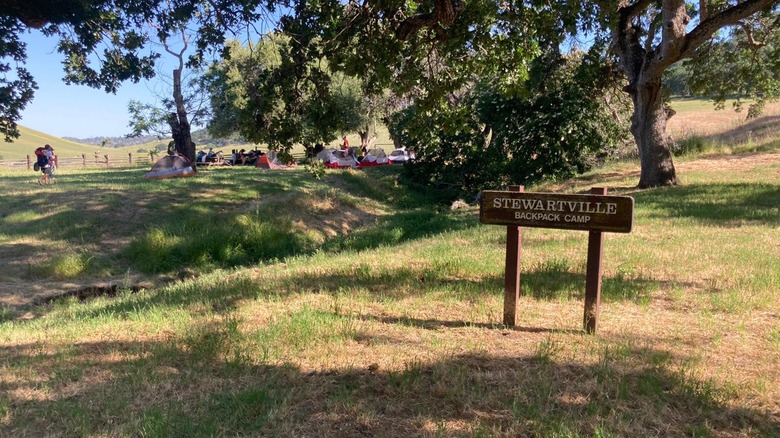
If you want to stay the night under the Northern California stars, the Black Diamond Mines Regional Preserve has two campgrounds situated on the southern end of the park. The Star Mine Group Camp Area is only open to educational groups, such as organized school classes and Scout troops, and can fit up to 35 people. The second campground, Stewartville Backpack Camp, is open seasonally to all visitors. The site can accommodate a maximum of 20 people and allows animals, including dogs and horses.
As its name suggests, you'll have to trek a bit to get to the Stewartville Backpack Camp, as the campsites are just over 3 miles away from the parking area. Both campgrounds, which require reservations in advance, are fairly primitive, but they do feature picnic tables and a pit toilet. There is no drinkable water available at either campground. Campfires and barbecues are prohibited, but you can cook on a camp stove. If you're looking for more scenic campsites in the area, there are a few more group campgrounds at Briones Regional Park just outside of San Francisco, which is only about 20 miles away from the Black Diamond Mines Regional Preserve.