
Nestled In Savannah, Georgia, Is A Scenic Wildlife Refuge With Fishing, Trails, And Beach Beauty
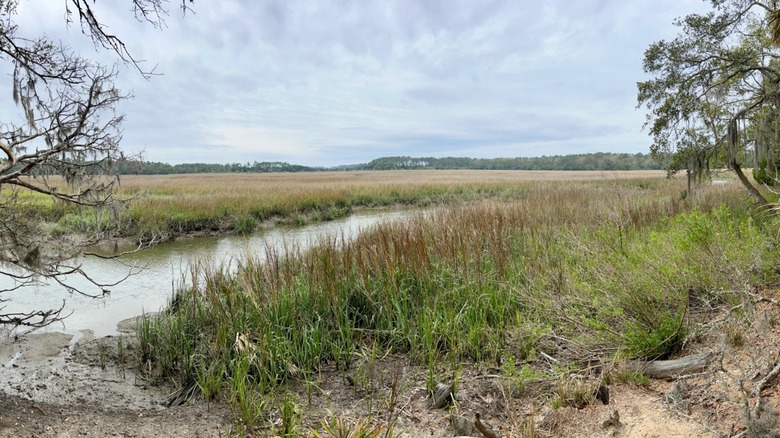
14 major barrier islands and hundreds of smaller ones separate the Atlantic Ocean from mainland Georgia. These islands provide a vital ecosystem for wildlife, and they help keep the strongest winds and waves from reaching the mainland. Some of these islands are home to resorts and golf courses, and others remain in a more natural state. You'd be hard-pressed to find one that's more natural than the islands that make up Wassaw National Wildlife Refuge (NWR). Off the coast near Savannah, the refuge protects more than 10,000 acres of predominantly undeveloped, wild land, primarily on Wassaw Island. It's billed as "one of the most pristine on the entire eastern seaboard." And it's a place where you can hike, fish, play on the beach, and immerse yourself in natural beauty.
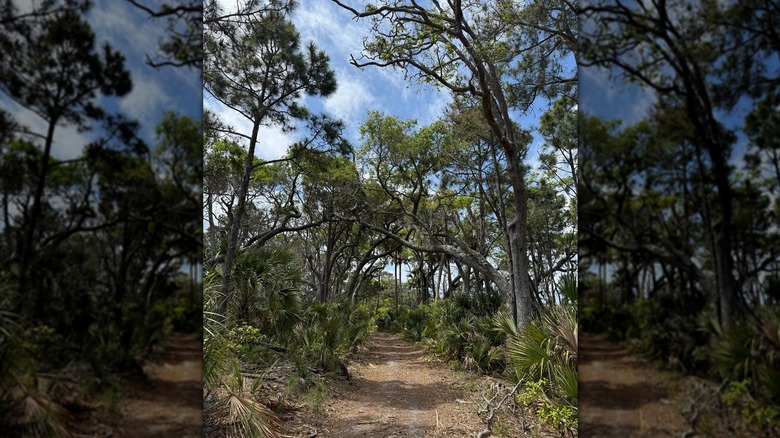
Most of the refuge is tidal salt marsh, but you can also find sand dunes and miles of beaches, as well as an old-growth forest of cedar, magnolia, oak, and palm trees. Other Georgia barrier islands had their trees clear-cut, but uniquely, Wassaw Island's trees still remain. The refuge is only about 30 minutes from Savannah, but it does take some planning since you can only get there by boat — both Skidaway Island and Isle of Hope have marinas where you can get on board to visit this special place. You can also take a guided kayak tour to the refuge with outfitters out of Savannah.
One popular activity here is saltwater fishing; there's no freshwater fishing in any of the refuge's ponds. Find a spot on the beach or from your boat to cast your line; you might catch spotted seatrout, flounder, striped bass, and bluefish. Make sure to have the required Georgia fishing license and Saltwater Information Program (SIP) permit.
Trails and beaches at Wassaw National Wildlife Refuge
Much of Wassaw NWR is protected and off-limits to visitors, but there are 20 miles of dirt roads within about 7 miles of beach that function as public trails for hiking and biking. The roads were built by George Parsons, who bought Wassaw Island and the surrounding land in 1866. Along with the roads, he built a housing compound for his family. The Parsons put the land into a trust to protect it from development, and in 1969, the Wassaw NWR was formed with promises to keep it wild and never build a bridge to it.
If you need inspiration on where to go, the Savannah Coastal Refuges Complex has an app with a self-guided tour of Wassaw NWR's highlights, including the top of a sand dune that accumulated through hurricane winds, a view of the Parsons' housing on a private part of the refuge, and Battery Morgan, a gun battery built in 1898 at the northern end of the island during the Spanish-American War. It's roughly 4 miles one way from the dock to the battery.
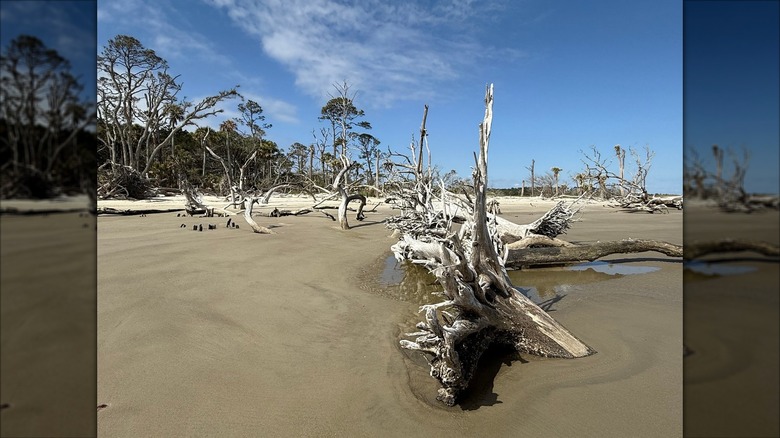
Along with the roads, the miles of beach at Wassaw NWR are open to explore, and you may have it all to yourself. As one past visitor said on Tripadvisor, "The island is a fabulous place to enjoy nature and get away from people. I was dropped off on the island by Bull River Marina, had the beach to myself for a couple hours before I saw anyone else on it." There's a tree "boneyard" along one stretch of sand — the weathered tree trunks make for some dramatic photos. During summer, you might see turtle tracks in the sand; loggerhead (and sometimes green) sea turtles lay their eggs at night on Georgia barrier island beaches.
Hunting and birdwatching at Wassaw National Wildlife Refuge
You can help protect the sea turtles on your visit to Wassaw NWR. The Caretta Research Project uses volunteers on week-long excursions from May to September to help protect the turtles that lay eggs here. Volunteers stay in non-air-conditioned bunk cabins. It's not glamorous, but it's a way to see another side of the refuge that most visitors don't get to see since the refuge is open from sunrise to sunset. The only other way to stay overnight here is if you're hunting. Deer hunting is open for a few days each November, and camping is available only during managed hunts.
Wassaw NWR is also a great place for birdwatching, as it's home to more than 250 species. While you can see birds year-round, it's particularly lively during spring and fall as migrating birds pass through by the thousands. Depending on the season, you could see loons, white and brown pelicans, roseate spoonbills, endangered piping plovers, sandpipers, and ducks, geese, and gulls of all kinds. Ospreys and bald eagles nest in the trees, and a variety of shorebirds make their nests on or near the beach — add it to the list of the best places to birdwatch in the U.S.
One thing to keep in mind is that the tides can fluctuate by up to six to ten feet. You don't want the beach to disappear on you, so consult tide charts before you visit. While you're exploring Georgia's barrier islands, the neighboring Skidaway Island offers trails and salt marsh magic. It's about a 30-minute boat ride from Wassaw NWR. And north of the refuge is Tybee Island, an affordable beach resort getaway with casual dining and turtle nesting.