
This Dining Faux Pas Americans Make Overseas Is Nowhere Near As Bad As People Make It Seem

The way people talk, you'd think tipping a server in Europe is enough to get you blacklisted from the whole continent. Maybe people imagine a mustached garçon in Paris overreacting when an American tips him for his hospitality. His brow furrows; his eye twitches. "SACREBLEU!" he exclaims, his voice cracking with revulsion. "How dare you give me extra money! This is an insult! You are never again welcome in France!" But, don't expect that to happen. Waitstaff around the world know that tipping is a common U.S. custom, and the odds are high that they'll graciously accept the extra cash.
Tipping in Europe is more nuanced than a lot of Americans realize. Leaving a 5% to 10% tip is absolutely normal, especially for good service: It's Rick Steves' best advice regarding tipping in Europe. To even call tipping in Europe a "faux pas" is a little melodramatic; at worst, the practice might feel awkward, because servers don't expect to receive tips, let alone tips equivalent to 20% of the bill. You probably won't see a tip jar by the café's cash register or an empty horizontal line at the bottom of a check. Still, even with an occasional exception, waitstaff almost certainly won't get upset about a kind (and well known) gesture. Why would they?
The art of tipping in Europe
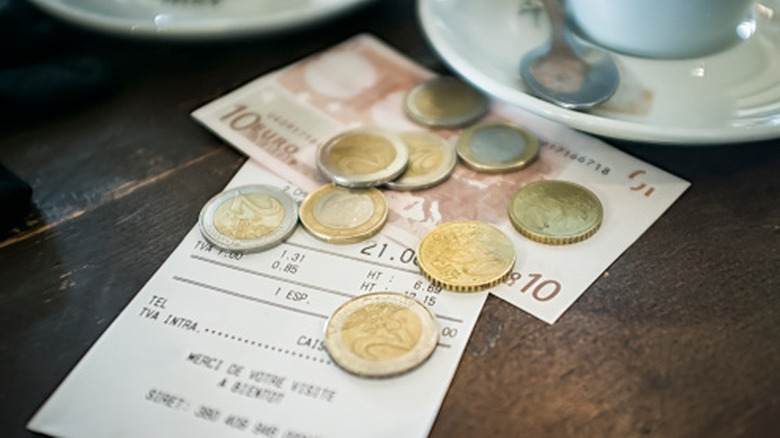
The subject comes up a lot in online travel forums, and for obvious reasons. "I've never known a restaurant worker anywhere getting annoyed because they got a tip," writes David Townsend, a British expat on California, on Quora. "People who work in pubs in the UK often turn down tips since it['s] not the custom in the UK, they might prefer to accept a drink instead of a tip, but they don't get annoyed or offended."
"It's never rude to tip in Europe," adds Masty1992 on a Reddit forum (caution: some strong language). "Some areas where American tourism is huge the staff have gotten used to being tipped by Americans and will grow to expect it but it still wouldn't be rude if you didn't." Indeed, many Americans weighed down by 'tip fatigue' deliberately visit countries where gratuities aren't expected. The presumption — which is largely true — is that waitstaff across Europe make a living wage, which includes healthcare and other benefits, so no one is going to starve if you just pay the bill and leave. This contrasts starkly with U.S. servers, who may earn as little as $2.13 per hour in base wages, and health coverage is far from guaranteed.
Another reason you might decide not to tip is the "service charge," which is normal in restaurants across the continent. You shouldn't be surprised if your dinner bill in Europe has this sneaky extra charge, and Americans might have mixed feelings about it. Some could say it's wrong, because the service might be lousy, and why should you reward sub-par efforts? Others might appreciate the service charge, because you don't have to publicly assess the waitstaff's performance; if you really don't a like the hospitality, just don't come back.