
Seattle's Largest Park Is A Coastal Beauty With Trails To See Scenic Beaches, Wildlife, And A Lighthouse
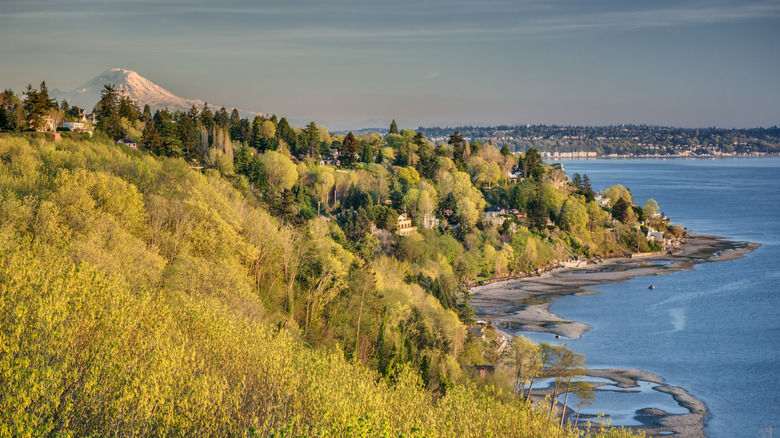
Seattle could fairly be described as a city of parks. It has a lot of them — 850, according to the Trust for Public Land — and 99% of the population lives within 10 minutes of greenspace. The largest, and undoubtedly one of the finest, is Discovery Park, a 560-acre expanse of beaches, dunes, meadows, and atmospheric woodland, overlooking Puget Sound.
Discovery Park engulfs Magnolia Bluff, the former site of Fort Lawton, a turn-of-the-20th-century infantry post. The park is easy on the eyes, whether you're wandering its densely wooded trails, watching the sunlight splitting the canopy, or gazing across the sound from its protected tidal beaches. Depending on where you are in the park, you'll get views of Washington's great mountain ranges — the Cascades in the east and the Olympic Mountains in the west — and the pretty West Point Lighthouse, which is still active after 145 years of service.
Wildlife is also abundant in the park, with deer and mountain beavers in the forests and meadows, marine mammals — including river otters, whales, and sea lions —sometimes spotted near the beaches, and as many as 300 bird species calling the area home. Miles of trails web the park, connecting its major points of interest and guiding you between the different wildlife habitat zones. Additionally, the park is home to the Discovery Park Environmental Learning & Visitor Center, which is set to reopen in 2027 after renovations are complete.
Discovery Park's trails and beaches

Hiking is the best way to see how this area, which was once home to 900 military buildings, has been rewilded and turned into the park you see today. The 2.8-mile Loop Trail is the longest single hiking route in Discovery Park. You'll navigate forests and meadows before arching over the bluff, where you'll be rewarded with views of the seascape and the Olympic Mountains across the sound. The loop trail also connects to smaller sub-trails like Wolf Tree Nature Trail, the Hidden Valley Trail, and the South Beach Trail.
The 0.7-mile South Beach Trail descends towards Discovery Park's South Beach, where the iconic West Point Lighthouse sits, guiding ships safely along the sound. At low tide, you can then join the North Beach Trail from here, which runs for just over a mile and includes a raised viewing terrace overlooking the coast. The coastal areas of the park are particularly beautiful around sunset; find a spot on the beach — known for its glaciated sand — near the lighthouse and watch the sun go down as waves lap on the shore.
For a longer hike, consider the Discovery Park and Lighthouse Loop, a combined trail that takes in the circumference of the park, both beaches, and the lighthouse. It's the top-rated trail on AllTrails, with a score of 4.8 stars. Reviewers praise the quality of the trail and the epic views, with some spotting Mt. Rainier, the "Crown of the Pacific Northwest," on clear days. Download a trail map from the Friends of Discovery Park website or scan the QR codes on the park's trail markers.
Birding and wildlife watching in Discovery Park
Because the park comprises different habitats — meadows, forests, beaches, wetlands, saltwater seas, intertidal land, and freshwater ponds and streams — there's startling diversity in its wildlife. Around 300 species of bird have been spotted in the park — some as permanent inhabitants and others that are traveling along the Pacific Flyway migratory route.
Woodpeckers, including the crimson-mohawked pileated woodpecker and the red-breasted sapsucker, are common sights along Discovery's trails. You might also spot owls, flitting between the conifers and towering Douglas firs, or hawks and eagles searching for sustenance near the coast. Other birds are seasonal, using the park as a pit stop on their multi-thousand-mile migrations. Rufous hummingbirds, Townsend's warblers, and western tanagers all travel immense annual distances between North and Central America, using Discovery Park as a place to recharge their batteries and beguile human visitors.
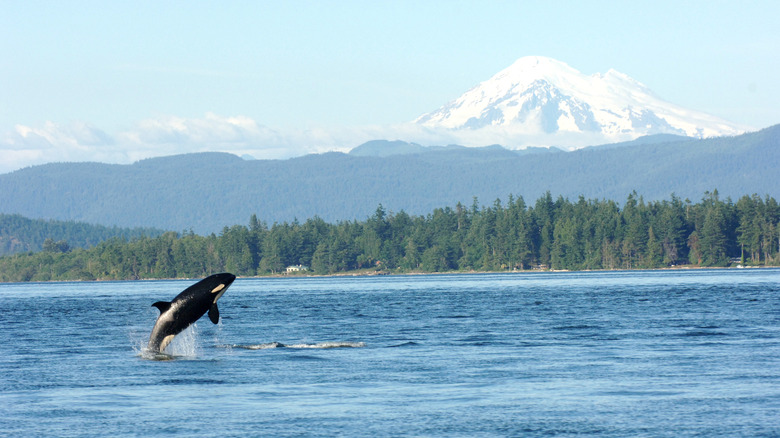
There are also hundreds of non-bird species throughout the park, including snakes, deer, coyotes, chipmunks, colorful butterflies, and a variety of beetles. Perhaps the most impressive nature experience in Discovery Park is whale watching. Humpback, pilot, and gray whales have all been seen here, while pods of orcas sometimes swim through the sound looking for seals and other marine mammals to feast upon. The best spot to look out for whales is around trail markers 10 and 12 on the Loop Trail, up on the bluff overlooking South Beach and Puget Sound. It's hard to believe all of this is only a 15-minute drive from downtown Seattle. Then again, Seattle was named America's most "outdoor-friendly" city. There are plenty of other green spaces in Seattle worth visiting as well, like the Olympic Sculpture Park, which has stunning sculptures and a scenic trail.