
Forget Lake Tahoe, Visit California's Secluded Blue Beauty With Mountain Views And Top-Notch Fishing
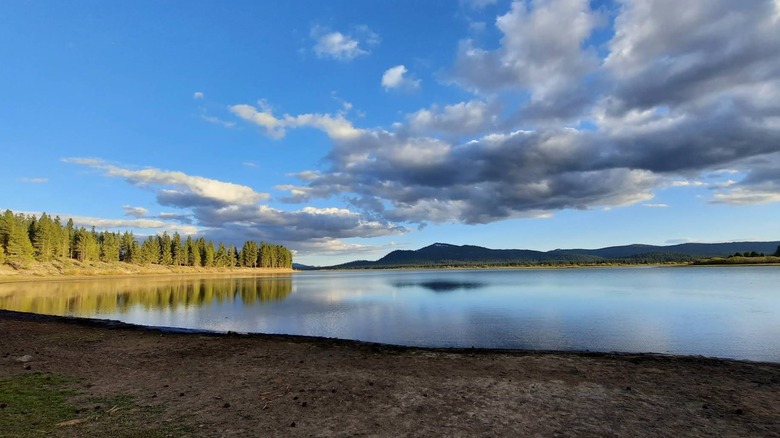
Anglers ambling around the shores of Lake Davis high in the hills above Portola, California, rarely have to make up fish stories. Created in 1967 to boost recreation options in the Northern California region known as the "Lost Sierra," Lake Davis has become a year-round freshwater-fishing fantasy land. Resting at an elevation of 5,800 feet in the Sierra Nevada mountains, the artificial reservoir is tucked into the dense firs and pines of the Plumas National Forest and regularly stocked with rainbow trout.
Located 68 miles from Lake Tahoe, Lake Davis has far more than trout to entice fishers – largemouth bass, pumpkinseed, and brown bullheads are also prevalent in its waters. It's a popular destination for fly fishing each spring into fall, as well as ice fishing each winter. Even better, it's a more peaceful place to drop a line in than other area lakes, including Tahoe, since waterskiing and jet-skiing are not allowed here.
Whether angling for dinner or simply basking on the beach, Lake Davis is an idyllic getaway when seeking tranquility. It feels pleasantly removed from the rest of the world, 7 miles from humanity deep in the forest. Fed by annual snowmelt from the high Sierra peaks and largely algae-free, the waters are crystal blue and mirror-like on calm days.
Freshwater fishing for trophy trout
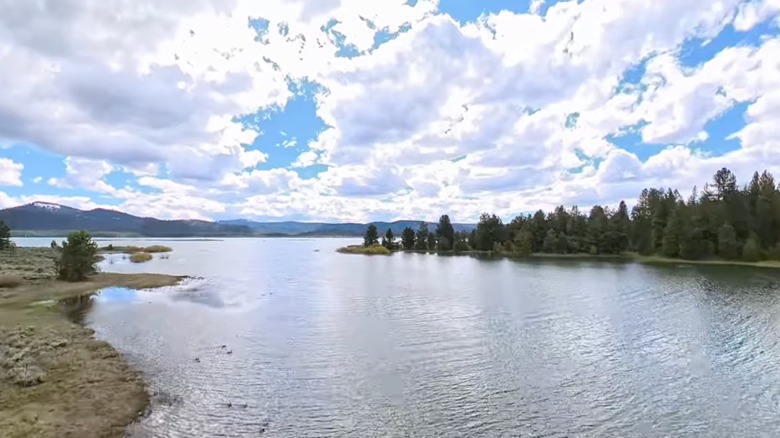
Break out the strong line if fishing at Lake Davis, because those trophy-sized trout are tough to reel in. Healthy from a nutrient-rich diet of insects that proliferate particularly well in the lake's freshwater ecosystem, trout caught in Lake Davis have weighed in excess of 7 pounds, according to Lost Sierra Fly Guide. However, the typical size ranges from 16 to 20 inches and up to 4 pounds.
Just over 30 miles from Frenchman Lake, another pretty mountain lake with camping and fishing, Davis has a far larger biomass, which makes for fantastic fishing. In fact, Lake Davis has the largest biomass of any freshwater lake in California. For anglers, this means that it's easier to take home a catch, as the lake is simply teeming with trout.
Beyond the bunches of fish in Lake Davis, Plumas County is also home to the wildly underrated Plumas National Forest with recreation rivaling Lake Tahoe. Fragrant fir trees waft forest-fresh air and the occasional scent of butterscotch from the local Jeffrey pines toward lake-goers. On the west side of Lake Davis, Smith Peak soars nearly 7,700 feet above sea level, offering expansive panoramic views of the reservoir and the surrounding forest from a fire lookout at the crest. On clear days, you can see Mount Lassen from the lookout. Surrounding the lake, other Sierra summits serve as breathtaking backdrops, including Crocker Mountain and Grizzly Peak.
Discovering Lake Davis in the 'Lost Sierra'
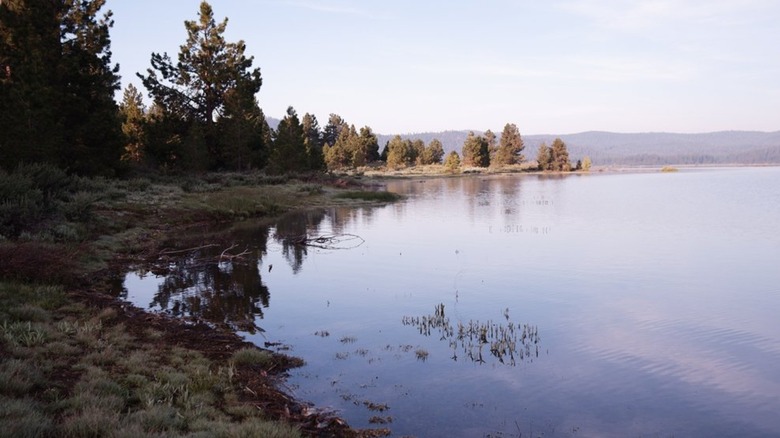
In the northern Sierra Nevada are many overlooked mountain lakes, such as Mountain Meadows Reservoir and Lake Davis. Part of the Lost Sierra's intrigue is that nearby, visitor-heavy Lake Tahoe often overshadows the region. Therefore, it can be a sublimely scenic alternative.
Fish aren't the only creatures found in and around Lake Davis. Bald eagles and ospreys are also aware of the fine fishing at this reservoir. Spot blue herons, Canada geese, and tundra swans swooping by as well. On land, keep your eyes peeled for deer, coyotes, bobcats, and black bears roaming the surrounding shores and mountains.
The easiest way to discover Lake Davis is to fly into the Reno-Tahoe International Airport (RNO) and drive 56 miles northwest. Largely a direct route, the drive will take you through some arid Nevada landscape before revealing the Plumas National Forest. Or, for a far more scenic drive, take State Route 89 from Tahoe's north shore about 68 miles through the mountain range, lush forest, and several former mining towns of the Gold Rush era.