
Tourists Ignored Denmark's Peaceful 'Sunshine Island' For Years — Now It's Getting The Attention It Deserves
For most visitors exploring Northern Europe, the tranquil Scandinavian country of Denmark evokes imagery of relatively flat lowlands, rolling hills, and the picturesque capital of Copenhagen. Although the Jutland Peninsula's plains are scenic and occupy the largest area of the country, Denmark's 400-plus islands offer a surprising variety of colorfully diverse terrain and absorbing culture. One such pearl, which was previously overlooked by tourists, can be found in the Baltic Sea and goes by the name of Bornholm Island.
Imagine the following: dramatic coastlines, Nordic forests, fishing villages offering a plethora of surprising culinary marvels, and the largest castle ruins in Northern Europe. Although it measures only a humble 227 square miles (and is actually closer to Sweden than to the Danish mainland), Bornholm is worthy of a visit for many reasons. While outsiders may picture Scandinavia and the Baltic Sea as a constant of gray weather, rain, and long winters, Bornholm is a pleasant exception. With an annual average of 1,700 to 1,800 hours of sunshine, the island's temperate climate marks it out as one of the country's sunniest regions. It has therefore duly earned its warm nickname, "Sunshine Island."
There is no shortage of reasons for Danish tourists to visit this isle; however, it was a culinary phenomenon that put Bornholm on the international tourism map. Kadeau, opened in 2007 as a simple shack sourcing local ingredients for its meals, caught the attention of the Michelin Guide after it expanded to Copenhagen. Bolstered by Kadeau's newfound recognition, Bornholm began to draw crowds from afar, many of whom were seeking an elevated gastronomic experience on the island. Beyond its notable restaurants, Bornholm's distinct landscape warmed by the sun, relaxed lifestyle, and fascinating history are other factors that continue to attract an average of 600,000 visitors every year.
A small island packed with history
Begin your tour of Bornholm from its largest town, Rønne, where you'll get a feel for the Nordic island's lengthy history. Long before flocks of tourists and foodies seeking out niche Michelin experiences began planning their visits here, Bornholm hosted guests ranging from Vikings to Soviet soldiers. An excellent, condensed summary of the island's history can be found in the highly-rated Bornholm Museum of Cultural History, typically open daily from 10 a.m. to 5 p.m. (with differing seasonal and holiday hours). Within its informative exhibits, you'll find artifacts spanning from the Stone Age through to the Cold War.
In the southern part of the island lies Rispebjerg, an ancient archaeological site where you can explore 5,000-year-old sun temples while enjoying peaceful scenery. The site also includes a remarkable ring fort dating back to the Iron Age, with some of its inner wall still intact.
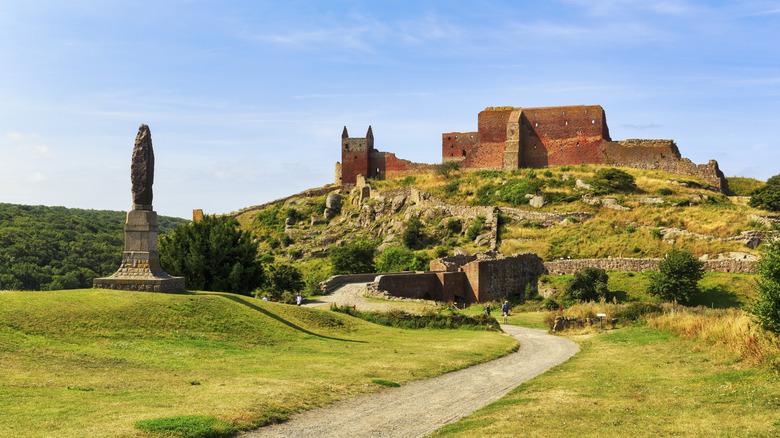
Arguably the most stunning historical landmark on Bornholm is the Hammershus Castle, located in the island's north. Visiting this medieval fortress is both a history lover's delight and a scenic reward for anyone hoping to take in the gorgeous surrounding coastal vistas. Dating back to the late 13th century and a silent witness to various besiegers, rulers, and noble prisoners, this grand castle now primarily welcomes tourists. Head to the visitor center, which includes exhibitions, a cafe, and panoramic views of the area. The site is around a 30-minute drive from Rønne, and it's open year-round without any entry fees. It may lack the opulence of Frederiksborg, the "Top Castle in Scandinavia," according to travel expert Rick Steves; but its unique character and history more than make up for it.
Bornholm Island's serene beaches and trails
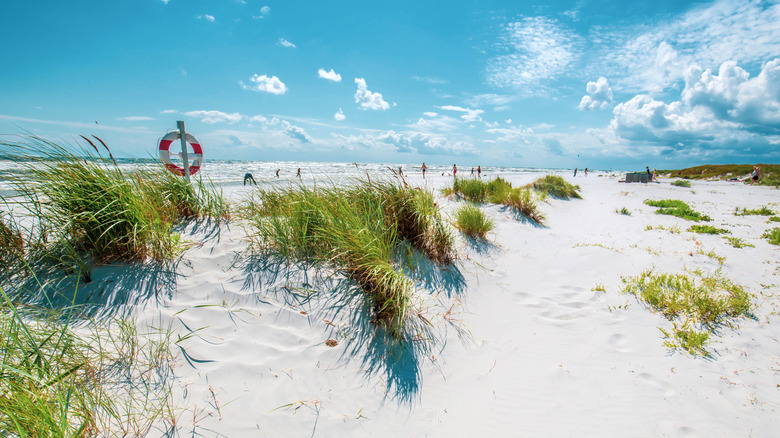
While crystal-blue waters and white, sandy beaches are usually associated with the Caribbean, surprisingly, Denmark is home to some of the best beaches in Europe. And Bornholm offers beautiful shorelines, too. Located on the southern tip of the island, Dueodde Beach is a liberating and airy invitation to take in some fresh air along the Baltic coast. The most convenient parking areas can be found on Fyrvejen and Skrokkegårdsvej streets. Once you've parked, two lengthy ramps lead you away from all traces of civilization to the sea.
Bornholm also provides ample opportunites for the intrepid hiker or the leisurely stroller. The popular Kyststien, or Coastal Path, wraps around Bornholm for 75 miles, meandering through the ever-shifting landscape of granite cliffs, sandy dunes, forests, and picturesque fishing harbors. Whether you're planning a week-long excursion or a day hike, the island's BAT bus system is nearby to take you back to base.
There are shorter paths as well, ranging from exploring the town of Nexø, the island's largest fishing port, on a 2.6-mile city walk, to visiting the heart of the island in Ekkodalen. The name translates to Echo Valley — and its 10-mile-long gorge, which completely immerses you in woodlands, steep cliffs, and grassy meadows, certainly echoes. Hiking boots are recommended, along with a windbreaker for comfort, even during the warmer months of May through September. After exploring Bornholm, should you wish to extend your Baltic summer holiday further, you can join the Swedes further north in Gotland, a sweet summer island getaway with a charming, lively capital. Whether you are flying in from Copenhagen or ferrying over to the docks at Rønne from Ystad, Sweden, you're sure to fall in love with this sunny Scandinavian spot.