
Tucked In Death Valley National Park Is California's Scenic Trail With Ethereal Canyon Views And Wildlife
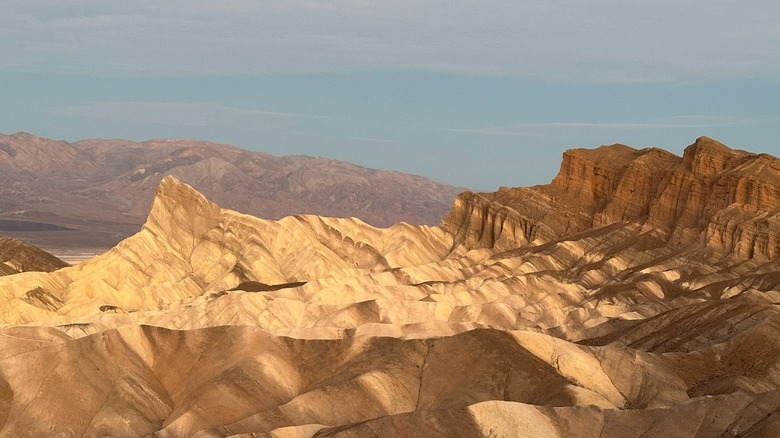
Death Valley National Park's dramatic landscapes are known for their otherworldly qualities, presenting vistas you can see nowhere else on earth. There's the blindingly white expanse of the Badwater Basin salt flats, the ethereal pastel hues along Artist's Drive, and the rippling, velvety expanse of the Mesquite Flats Sand Dunes that glow in the setting or rising sun. All of these highlights can be seen on a scenic driving tour or via a short stroll to a well-signed viewpoint, but you won't really get a feel for the breathtakingly remote desert without taking at least one hike out into the park's lonely yet starkly beautiful canyons.
If you were to budget time for just one day hike in the park, one of the most iconic is the trek through the aptly named Golden Canyon, just off Badwater Road, 3.6 miles from the Furnace Creek Visitor Center. The ethereal golden-yellow landscape you'll see here is unlike any other place on this planet. If it reminds you of the fictional planet Tatooine, Luke Skywalker's home, that's because George Lukas filmed scenes for "Star Wars: Episode IV: A New Hope" right here in Golden Canyon.
The hike into Golden Canyon can be as long or as short as you like, as there are multiple options for extending your route. Just remember you'll be in full sun the entire way, so keep it short and sweet and start out early if you're visiting between April and October, when the National Park Service recommends being off the trail by 10 a.m. If you spend the night at the recently refreshed Inn at Death Valley, a "True American Oasis," and then hike Golden Canyon early, you can be in Las Vegas, just two hours away, in time for lunch.
Long and short hikes through Death Valley's Golden Canyon
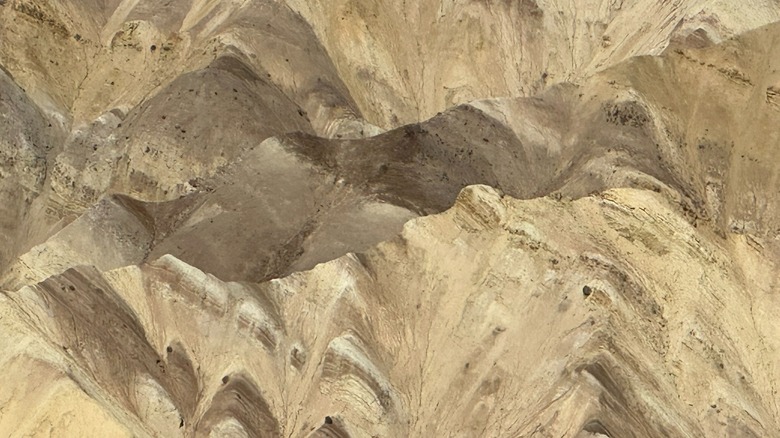
The scenic hike through Golden Canyon can be tackled as a short out-and-back of between 0.9 miles (per AllTrails) and 2 miles (per the NPS) if you just want to get a taste. If you're up for a longer excursion, you can continue on to Red Cathedral, a stunning natural amphitheater with soaring walls that blaze red against the blue sky, for a total of 3 miles. As you hike up Golden Canyon, you'll see stunning rock formations so rich in detail and pattern that they look like ornate tapestries. Photographs can scarcely capture the scale and majesty of this desert landscape, which is so much about the volume of space around you. Be sure to put down the camera while you're here, and really take it in as a first-person experience.
The hike can also be extended into a longer 4.3-mile loop by including Gower Gulch. For maximum impact, hike clockwise to take in the best Golden Canyon views early while you're fresh, as the last portion down Gower Gulch, a sandy and gravel-bottomed wash, can feel like a bit of a slog. If you're choosing between including the Red Cathedral or making the Gower Gulch loop, the cathedral is the more scenic option.
Another route that involves significant elevation gain and loss, with views to match, is to make the hike a 6.4-mile lollipop loop from Zabriskie Point, with one of the best sunset views in all of California. Sunrise isn't too shabby, either, and that's an even better time to hike, allowing you to get an early jump on the canyon — just be aware that the steepest part of your hike will come at the end when the sun is overhead.
How to stay safe and spot wildlife in Death Valley's Golden Canyon
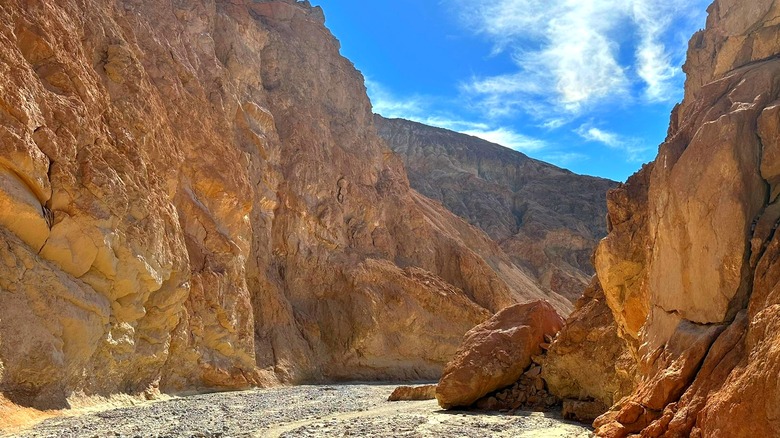
Death Valley's record-breaking temperatures can soar over 120 degrees in high summer, so this hike is best done between November and March. Even then, the midday sun can be brutal, so you'll want to bring plenty of water. The rule of thumb for Death Valley hiking is to carry at least two liters per person for a short winter day hike and a gallon per person for anything longer or in hotter months, per the National Parks Service. Wearing a long-sleeved sun shirt is a good idea as well. Another highly effective sun strategy is to carry a reflective sun umbrella, which can help you feel around 10 degrees cooler. Hiking in the early morning or near sunset can also help you avoid the hottest part of the day.
Whatever the season, there's another excellent reason to hike early or late, and that is to catch the magic hour in Golden Canyon, those moments near sunrise or sunset when the low, slanting sunlight bathes everything in rich, gold, pink, and purple hues. It's also the best time to increase your odds of seeing the canyon's elusive wildlife, like bighorn sheep, lizards, rattlesnakes, kit foxes, tortoises, jackrabbits, road runners, and rodents like the kangaroo rat. These tend to hide out where it's cool during the day, but roam freely as the sun rises or sets. These species are remarkably adapted to the extremes of the planet's hottest environment. Tortoises hibernate all summer, while bighorn sheep can go days without drinking, remarkably losing up to 30 percent of their body weight to dehydration. Kangaroo rats are able to get all their moisture from grazing on plants and never touch a drop of water their entire lives.