
Atlanta Isn't Georgia's Worst Major Airport For Flight Cancellations

In 2025, 9.8 billion passengers traveled by plane, and over 106 million of them went through Hartsfield-Jackson Atlanta International Airport (ATL), according to the Airports Council International. However, despite being the world's busiest airport every year since 1998 (excluding 2020), Atlanta isn't the worst major airport in Georgia for cancellations. Instead, that title goes to Georgia's second biggest hub, Savannah-Hilton Head International Airport (SAV), based on the percentage of cancellations.
There are more opportunities to travel than ever before, and this means that there are just as many ways for things to go wrong. Weather events, climate change, staffing shortages, and government shutdowns have all affected airports big and small in recent years. While an airport as busy as Atlanta does experience a high number of cancellations, its position as a major hub actually protects it more than a smaller airport like Savannah-Hilton Head.
In 2025, Savannah was No. 10 on the list of most flight cancellations in the U.S., with 2.07% canceled, according to Insure My Trip. Atlanta, meanwhile, was No. 27, with a 1.55% cancellation rate. The Bureau of Transportation Statistics (BTS) database shows how Atlanta's percentage of canceled flights has been lower than Savannah's nearly every year from 2021-2026. However, while Savannah's cancellation percentage is higher, its total number of canceled flights is much lower than Atlanta's, because of the vastly different operating capacities of the two airports. For example, in 2024, Savannah had 114,986 flights, while Atlanta had 796,224. The question remains: What's causing these high percentages of cancellations at Savannah?
Why does Savannah-Hilton Head have so many cancellations?
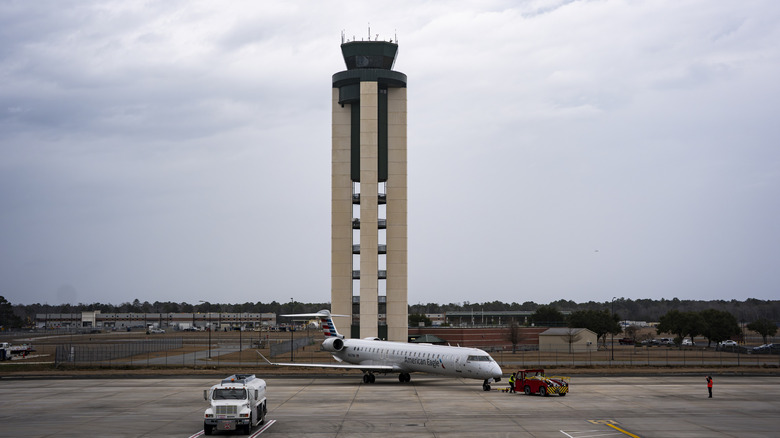
Weather is a significant factor behind Savannah's flight cancellations, particularly since this coastal location is subject to changing weather patterns and frequent storms. Of course, humans also often affect flights. The 2025 government shutdown drastically reduced crews in the United States. Even though Savannah wasn't on the list of 40 airports required to cut 10% of their flights during the shutdown, its relationship with major hubs like Philadelphia and Atlanta — which were all on that list — made it vulnerable to the wave of cancellations that happened.
This situation shows why Savannah generally has a higher percentage of canceled flights than Atlanta. If flights in a big hub are affected by weather, crew shortages, or technical issues, those cancellations trickle down to smaller airports like Savannah that depend on flights from bigger airports. They not only affect departure and arrival slots, but airlines then have to prioritize which destinations to serve with more limited flights. They'll often choose a major hub like Atlanta over one like Savannah.
So, even when the airlines cause issues, Atlanta's cancellation rate isn't as affected as Savannah's, because it doesn't rely as much on connecting flights. For Savannah, low-cost carriers are essential. When Spirit shut down in May 2026 and Frontier stopped serving Savannah in October 2025, there wasn't as much of a cushion to bear these blows. Savannah has fewer flights, averaging 24,000 per year versus Atlanta's 2,100 a day, which makes Atlanta more efficient and robust when it comes to cancellations. Delta is the main airline that serves both Savannah and Atlanta, so when it cancels hundreds of flights — as it did in 2026 because of its operating system and crew shortages — the effects are felt more in Savannah, even though both airports get affected.
What to do if your flight gets canceled
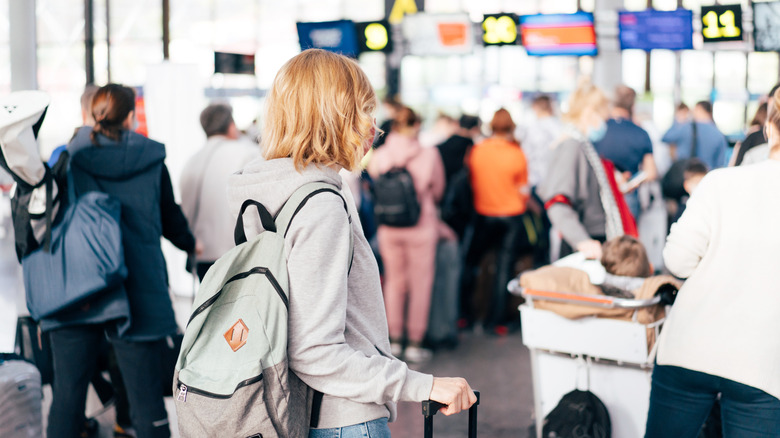
If you're worried about your flight getting canceled, there are several things you can do to ease that anxiety. First off, know that if you're traveling between Savannah and one of its major connection points like Dallas, Nashville, or Minneapolis, there may be a greater chance of cancellation, due to the rippling effect of issues from big hubs. If your flight is to or from one of these places, you may want to give yourself a longer connection window in case of possible delays, especially during peak seasons or times when weather may disrupt travel.
Gate2Gate assesses the risk of missing flights based on connections, while FlightAware tracks live delays and cancellations. These tools can help with your trip planning. Either way, it's always wise to keep an eye on your flight status, especially within 24 hours of your departure. Enable status notifications to make sure you're up to date on all relevant info. If your flight gets canceled, there are a few steps you can take. The Department of Transportation Customer Service Dashboard has a list of all that airlines offer in case of a cancellation, plus a list of which airlines provide accommodations, so check or bookmark these to pull up the info easily.
If your flight gets canceled, the best thing to do is to be proactive, instead of making the time-wasting mistake of waiting in line. Make sure you have the airline's app downloaded, since most have the option to rebook when your flight is canceled. If there's a reason you can't get another flight, call the airline (try one of their international numbers to reach an agent more quickly) or contact them on social media, which may be faster than calling or speaking to someone in person.