
5 Unique Washington, D.C., Neighborhoods I Love As A Local
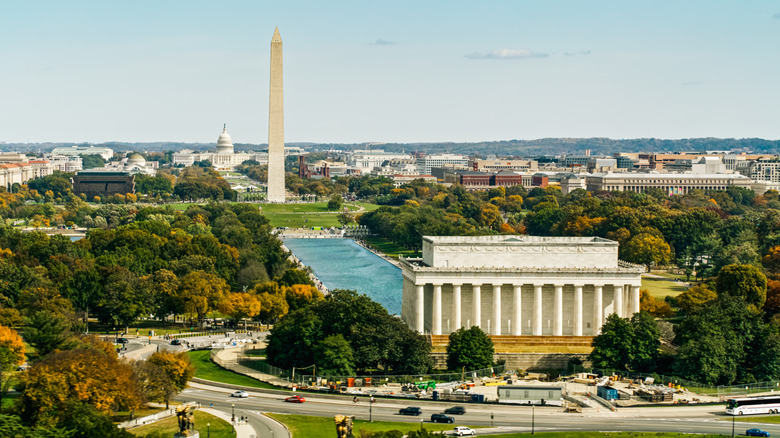
Washington, D.C., is, of course, the capital of the United States. However, beyond the storied halls of Congress, the White House, and the seats of American government, sits an actual city where people live their lives. Even outside the famed National Mall and its iconic monuments and Smithsonian Museums, D.C. has plenty of secret spots that tourists often miss. And happily, these secret spots often overlap with the district's unique and vibrant neighborhoods.
Having lived in the area for several years, I have had plenty of time to explore the city's many diverse neighborhoods, ones that rarely get airplay on political shows or D.C.-centric media. What has always struck me about these neighborhoods is how well they reflect the district's status as an actual city, not just a seat of governmental power. In particular, many neighborhoods here have been forged by the city's long-time African American communities, and, more recently, D.C.'s extensive immigrant communities. The result is a cultural fondue of communities that wear their cultural influences on their sleeves and are fun places to spend an afternoon.
The "best" neighborhoods in Washington, D.C. will always be subjective. Having lived here for a while, however, I've grown familiar with many of the city's trendiest neighborhoods and their specific appeals. While this list is partially based on my own preferences as a resident, it also touches on real cultural vibrancy found in these diverse neighborhoods. These five Washington, D.C. neighborhoods offer a unique, fun, and memorable time for anyone looking to get out in the district.
NoMa and Union Market
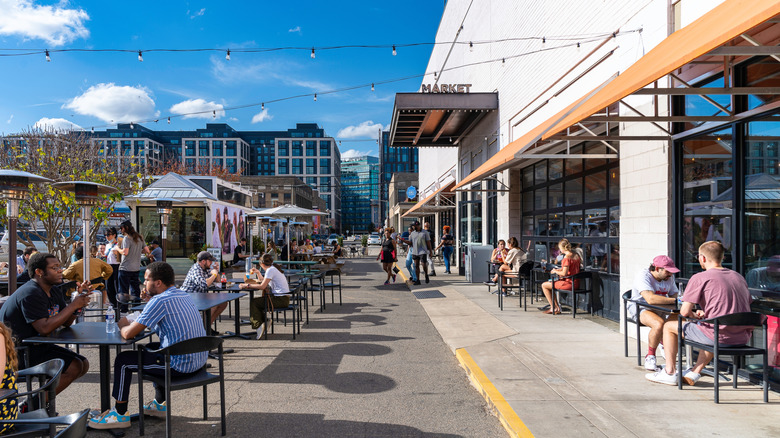
D.C.'s vibrant NoMa neighborhood (short for "North of Massachusetts Avenue") has long been a major hub for transportation and urban exploration. As the home of the district's Union Station, NoMa is the first taste of urban D.C. for most people arriving by train or bus. NoMa's central location between Union Station, Florida Avenue, North Capitol Street, and H Street also makes it an ideal starting point for walking tours. One of my favorite ways to spend a pleasant afternoon here is to take the Metro's red line train to Union Station and wander around NoMa a bit before heading south across Capitol Hill and the National Mall beyond.
However, NoMa has plenty of charms of its own. Once a somewhat unsightly industrial area, it has enjoyed dramatic transformation into a lively mixed-use neighborhood with trendy housing developments, diverse shopping and dining options, and walkable green spaces. By far the biggest boon to NoMa's status as a trendy D.C. neighborhood has been the development of Union Market. Or, rather, the redevelopment of Union Market, as this shopping and dining area has its roots in a major urban market first built in 1871.
NoMa's newly reimagined Union Market integrates the neighborhood's historic market house with an open complex of modern shops, restaurants, and event spaces. Union Market guests can visit more than 40 local businesses, including unique eateries with some of the best and most distinctive food options in D.C. Having visited Union Market myself over a dozen times, I can confirm that I have not yet eaten at the same place twice!
H Street Northeast
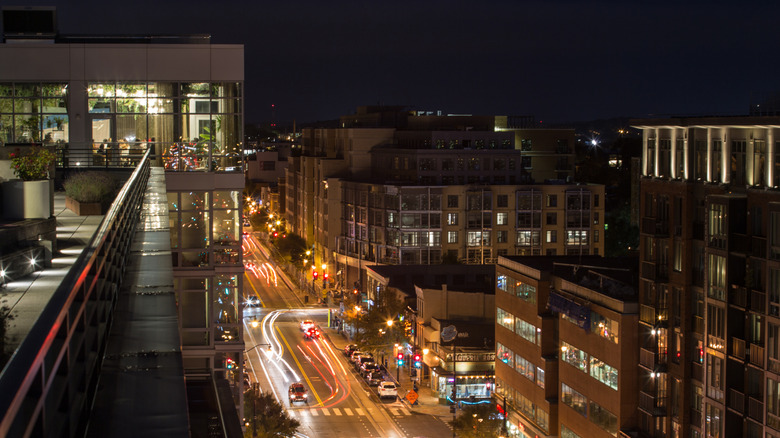
Living in Northwest D.C.'s suburban enclaves, the H Street Northeast neighborhood is somewhat outside of my normal D.C. travels. When I finally visited for the first time last year, I couldn't believe that the city was hiding such an amazing urban cultural center in plain sight. The H Street Northeast neighborhood covers about a mile and a half of its namesake H Street, several blocks east of Union Station and the NoMa neighborhood. Though a mile and a half doesn't sound like much, H Street Northeast packs quite a bit of punch with a remarkable blend of boutique shops, cozy cafes, multicultural dining, and an overall artistic atmosphere. And the neighborhood's smaller size and flat, open city streets make it ideal for an afternoon walking tour.
H Street Northeast has a reputation as one of the area's capitals of arts and entertainment, earned in part through the historic Atlas Performing Arts Center. Once a popular movie theater dating back to the 1930s, the Atlas and its arresting art deco exterior closed down in the '60s before being resurrected in 2006 as a major community arts and performance center. Since then, the rest of H Street Northeast has followed the Atlas Center's lead and assumed an artistic, somewhat edgy atmosphere that blends seamlessly with its lengthy history.
H Street establishments like Little Miss Whiskey and Pie Shop blend tasty eating and drinking options (in this case, drinks and pies, respectively) with live music. H Street's Maketto Marketplace combines coffee, shopping, and Southeast Asian cuisine in one 6,000-square-foot storefront. Last September, I also got to experience the H Street Festival, a one-day block party celebration of music, food, and culture courtesy of the Atlas Performing Arts Center.
Brookland
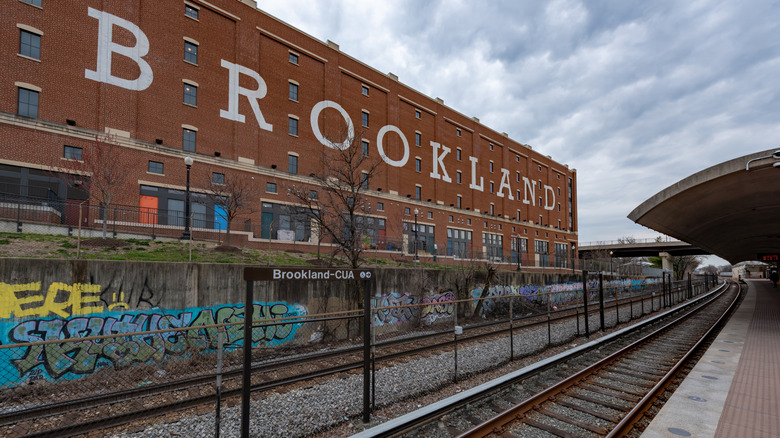
On a map, Brookland sits a bit out of the way from Downtown D.C. and Capitol Hill. It still manages to capture the attention of city residents for miles around thanks to its crowning landmark: the impressive dome and spire of the Basilica of the National Shrine of the Immaculate Conception on the campus of Brookland's Catholic University of America. The National Basilica is the largest Roman Catholic church in the United States and one of the 10 largest in the world. With a tower reaching 329 feet high, the National Basilica is taller than even the U.S. Capitol Building.
The Catholic University's campus and surrounding religious sites are also quite lovely to walk around. In particular, the nearby Franciscan Monastery of the Holy Land in America is a beautiful, walkable space defined by historic churches, gardens, and replicas of Holy Land shrines. It's one of the reasons why Brookland is nicknamed D.C.'s "Little Rome."
As a fan of religious architecture, I have toured the Basilica and the Franciscan gardens many times. However, I recently discovered how much more Brookland has to offer beyond its unmissable Basilica and religious sites. Just a block or two away from the university campus awaits a network of beautiful, tree-lined city streets and captivating public art befitting a trendy, up-and-coming neighborhood. Once little but farmland, Brookland today includes hip cafes like Cool Coffee, brew pubs like the Right Proper Brewing Company's Brookland Taproom, and the eclectic restaurant-art gallery-poetry den Busboys and Poets. I have experienced firsthand Brookland's artistic side on the Brookland Arts Walk, an immersive walking tour of the neighborhood's 27 art studios showcasing the work of local artists.
U Street Corridor
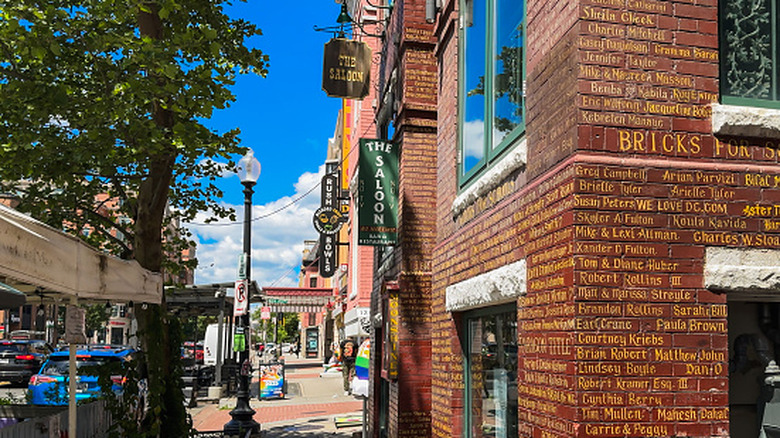
If any one neighborhood could lay claim to being D.C.'s most culturally rich area, the U Street Corridor may have the strongest case. After all, the neighborhood was the birthplace of jazz icon Duke Ellington, which, alone, should rocket U Street to the top of the district's most culturally important areas. U Street's many claims to fame, however, go well beyond its most famous son. Since at least the early 20th Century, the U Street Corridor has been the central cultural hub for the area's large African-American community, to the point where U Street itself acquired the title of "Black Broadway."
My frequent walks through U Street always impress me with just how well the neighborhood maintains its cultural roots while keeping one foot in the present. A stroll down U Street will take you past urban landmarks like the African American Civil War Memorial and the historic Lincoln Theater, while also putting you in touch with plenty of bars, restaurants, and shops. Given the Duke Ellington connection, U Street has been a hotbed of jazz for virtually as long as "jazz" has been a thing. Even today, U Street establishments like Jojo Restaurant serve up jazz performances several nights a week alongside creative menus.
A visit to the U Street Corridor is not complete without a stop at the iconic Ben's Chili Bowl, a long-time local favorite and a top restaurant stop for adult-oriented tours of Washington, D.C. U Street is not only jazz and chili, of course. In recent years, the neighborhood has been a hotbed for some of D.C.'s best Ethiopian restaurants. And, for history lovers like myself, the Greater U Street Historic District provides a memorable tour of the city's Victorian-era architecture in a thriving urban setting.
Adams Morgan
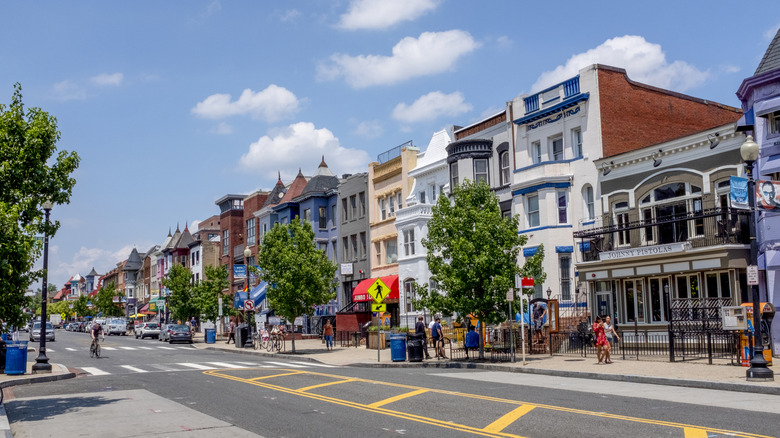
Of all of D.C.'s many trendy neighborhoods, Adams Morgan is the one closest to where I live. As such, it's the one I have explored the most over the years. This is fortunate for me, because Adams Morgan has frequently held the standard as D.C.'s countercultural hub. The neighborhood's history involves the integration of previously racially disparate districts into an ethnically and culturally diverse enclave. Today, Adams Morgan's streets are lined with one of the highest concentrations of locally-owned businesses in the entire city.
Coming from the more upscale Connecticut Avenue, the walk to Adams Morgan involves a lovely stroll over the Duke Ellington Bridge and the beautiful Rock Creek Park below. On the other side of the bridge are Adams Morgan's lovely, brightly colored historic rowhouses. Once you hit the main drag on 18th Street, you'll find as wide an array of indie cafes, boutique shops, art galleries, tattoo parlors, clubs, and diverse dining options as anywhere in the city.
As one of D.C.'s most diverse neighborhoods, Adams Morgan has equally diverse food options. I personally have discovered dining options representing Afghanistan, Ethiopia, Japan, Mexico, El Salvador, and West Africa. The area is also ground zero for D.C.'s nightlife. Comedy fans can check out underground standup at Adams Morgan's Hotbed comedy club, while music lovers can enjoy some live music and carefree dancing (and plenty of food) at the electric Madams Organ (the place "where the beautiful people go to get ugly"). Adams Morgan's annual Porchfest is perhaps D.C.'s most unique music festival, featuring more than 100 bands. Each October, the neighborhood's storefronts, porches, and corridors literally transform into stages hosting live music of diverse genres, with plenty of food, shopping, and discounts for local businesses.