
This Underrated Country With Unique Attractions And Landscapes Has Been Gaining The Most Tourists Over The Years
The Middle East has captivated the imagination and interest of travelers throughout the world for centuries. The dynamic role the region has played — from the cradle of civilization in ancient Mesopotamia to the eternal outline of the Great Pyramids and the crossroads of major world religions — continues to attract visitors despite a volatile political climate. Yet one outlier has been raising eyebrows recently after pivoting from a relatively closed-off country that flew under the radar to an up-and-coming tourist destination: the Kingdom of Saudi Arabia. In 2025 alone, it welcomed 123 million domestic and international tourists, while international arrivals were up 67% from 2019, according to the OECD Tourism Trends and Policies 2026 report.
Since the country's unification under the ruling Al Saud dynasty in 1932, Saudi Arabia has been known on the international stage first and foremost for its immense petroleum wealth. Alongside its central role in the oil industry, the country has long been a primary pilgrimage destination in Islam because it is home to the religion's two holiest cities, Makkah and Madinah. However, after decades of immense prosperity, the kingdom has made economic diversification a priority as it seeks to reduce reliance on oil, prompting the reform project known as Vision 2030.
With tourism a fundamental pillar of that project, the country has witnessed remarkable growth in the sector. Saudi Arabia has emerged as one of the fastest-growing tourist destinations compared with pre-pandemic levels, outperforming the likes of Morocco, Egypt, and even Japan. It's proving to be more than a one-trick pony, directing the world's attention to its treasure trove of unique attractions and striking landscapes. From luxury resorts along the Red Sea to UNESCO-listed sites such as Hegra and dune expeditions into the Empty Quarter, Saudi Arabia has plenty to put on a traveler's radar.
A unique country with unique attractions
Until relatively recently, Saudi Arabia was largely off the map, unintentionally insular in its own cultural bubble. However, the landscape often dictates the mindset of the people, and for the desert dwellers of the Arabian Peninsula, adaptation and momentum meant progress. Under Crown Prince Mohammad bin Salman, the way forward meant opening the country's doors to opportunity with Vision 2030. Investment and development in tech, entertainment, and tourism followed. In 2019, the kingdom also launched a tourist visa program that significantly expanded access for international leisure travelers.
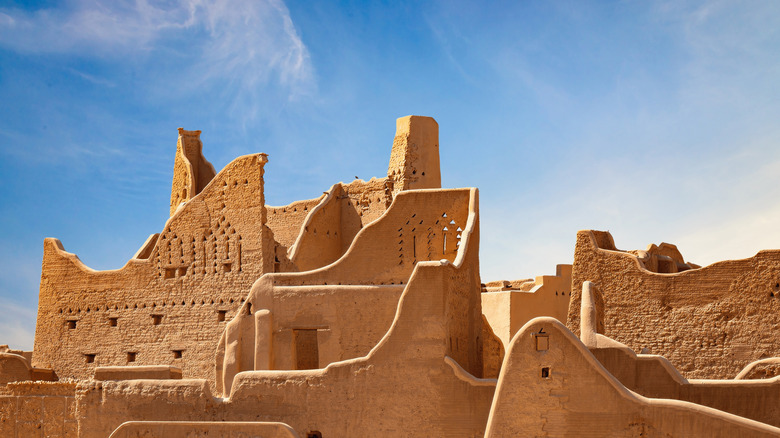
If you're landing in the country's capital of Riyadh, you are bound to witness the old alongside the new, particularly in Diriyah. Home to one of the largest mud-brick cities in the world, Diriyah grew into the capital of the First Saudi State in the 18th century and is the birthplace of the Kingdom of Saudi Arabia and ancestral home of the Al Saud family. Make sure to visit its At-Turaif District, which features a stunning maze of Najdi architecture. A UNESCO World Heritage Site since 2010, it is home to Salwa Palace and galleries exploring local social life and military history.
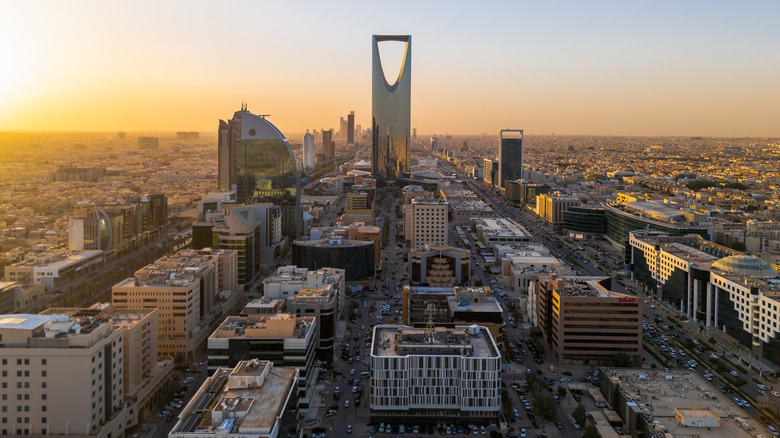
Spending a few days sightseeing around the rapidly changing capital of Riyadh offers a glimpse of how a society deeply rooted in tradition and heritage is also propelling itself forward. Business towers, museums, and galleries abound along its boulevards. From extravagant shopping malls and panoramic towers like Al Faisaliah Tower to historic districts with shaded, narrow lanes like the Addoho Neighborhood, the capital is a unique blend of modernity and tradition. When moving on, jumping on a domestic flight from King Khalid International Airport (RUH) is often the most efficient way of seeing more of the country, especially if you're in search of luxurious retreats hidden among the cliffs bordering the Red Sea.
Otherworldly landscapes are everywhere
Depending on your perspective, poetic silence and contemplation can be found in the Saudi desert. Rub' al Khali, or the Empty Quarter, sprawls across the southern Arabian Peninsula and is the world's largest uninterrupted sand desert, offering sights you will struggle to find elsewhere. If you wish to leave civilization far behind, its landscape of dunes reaching 800 feet beneath starlit skies stretches for 250,000 square miles. Keep in mind that exploring the Empty Quarter isn't casual tourism, and proper planning and an experienced guide are strongly recommended because of the extreme heat and isolation. Nature's hazards apart, Saudi Arabia remains one of the safest countries in the world to visit.
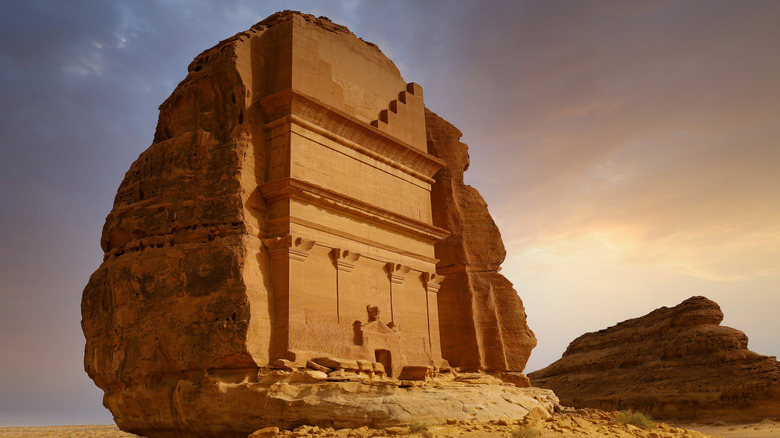
A scenic 3.5-hour drive from Red Sea International Airport (RSI) brings you to a mystical oasis valley with an ancient past. Its sandstone cliffs preserve thousands of years of human history, with silent monumental tombs of the Nabataean Kingdom carved into its bright clay-colored rock. With surreal landscapes, Al-Ula has witnessed countless civilizations pass through and is open to non-Muslim international travelers. Within the region lies Hegra, which became Saudi Arabia's first UNESCO World Heritage site in 2008.
With over $800 billion in tourism investment and major hotel groups ranging from Hilton to luxury brand Aman developing hospitality projects across the kingdom, Saudi Arabia is looking firmly ahead. The abundant cultural heritage of this ancient land, unforgettable landscapes, enormous investment in new infrastructure, and international events such as the Grand Prix, music festivals, and art exhibitions are working in its favor. For a country that is mostly desert, Saudi Arabia is looking very much alive.