
Hidden Outside Valley Of Fire State Park Is A Secluded Nevada Gem With One-Of-A-Kind Rock Formations
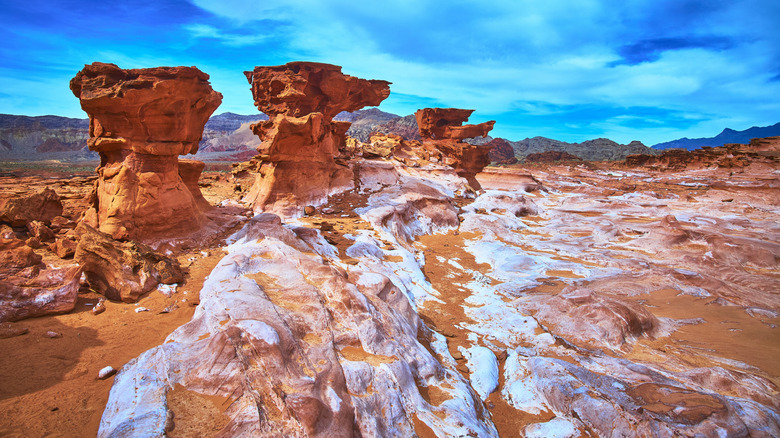
Tucked away in Gold Butte National Monument, just east of Valley of Fire State Park, Little Finland is a secluded sandstone plateau packed with weird and wonderful rock formations. Covering just 15 acres, this otherworldly Nevada landscape might be small, but what it lacks in size, it makes up for in scenery. Intricate shapes have been carved out of the red Aztec sandstone over time, capturing the imaginations of photographers and off-road explorers. In a state already famous for its unusual geology, Little Finland stands out from the crowd.
The name "Little Finland" comes from the delicate fin-shaped rock formations that make this area so striking, rather than the Nordic country thousands of miles away. This photogenic landscape has also been called the Devil's Fire or Hobgoblin's Playground, and with all the surreal red sandstone shapes, it's easy to see why.
Thanks to its remote location, Little Finland feels hidden and secluded, with an explorer on Tripadvisor reporting that it "experiences little in the way of visitors." Despite its whimsical appeal, The American Southwest blog predicts that Little Finland will stay off most tourist radars, as it's 37 miles from the nearest highway and the access track is only possible with a 4x4.
Otherworldly rock formations off the beaten path
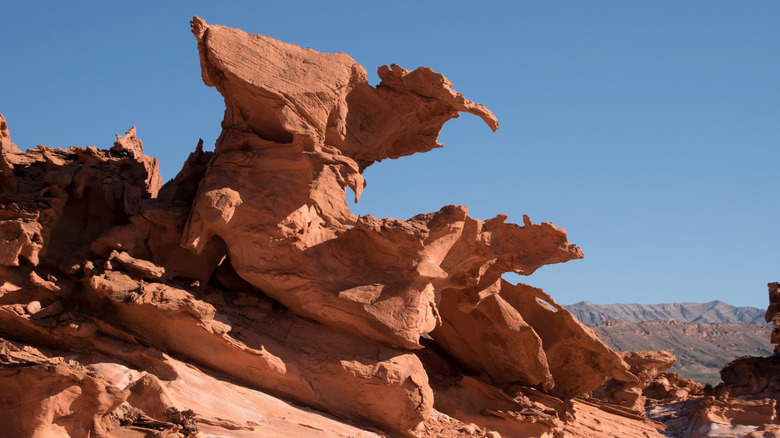
Similar to the vibrantly colored canyon walls in Valley of Fire State Park, the rocks in Little Finland have a distinct reddish hue. Thousands of years of erosion have worn away the less resistant layers, exposing the colorful stone and leaving behind one-of-a-kind rocky fins. Carved by wind and water, these densely packed hoodoos come in all sorts of shapes and sizes, with jagged edges that make each one unique. The distinct outlines mean you won't find these formations anywhere else, and one Tripadvisor user said they "had never seen anything like it."
Some of the rocky pinnacles in Little Finland undoubtedly have unusual characteristics, with the more prominent ones resembling a perching bird or the jaws of a shark. The Unusual Places blog likens some of these bizarre natural sculptures to "an alien throne" and a "warped flying saucer," while a visitor on Tripadvisor described the twisted formations as "beautiful 'goblins.'" They certainly give the landscape an otherworldly feel amid the desert landscape of Gold Butte National Monument.
As these fin-shaped structures are usually quite small, they tend to blend in against the surrounding rock, which can make photographing them a challenge. To combat this, blogger Terra Galleria suggests that a "low camera angle detaches them against the sky" for a clearer shot. They also recommend visiting in the late afternoon for the best light.
How to visit the remote Little Finland plateau
Little Finland is a 2.5-hour drive from Las Vegas, so it makes a great day trip from the city. For a longer adventure, you could combine it with a visit to nearby Lake Mead, which is one of the most breathtaking lakes in Nevada. To reach Little Finland, you'll need a 4x4 vehicle with high clearance, as sections of the route are rough, with deep gravel in places along the track. There may be no cell service in this remote area, so make sure your gas tank is full and that you carry plenty of food and water.
There aren't any official trails at Little Finland, so you can just wander off grid and explore the landforms at leisure. You can access the rock formations from either the north end or the wash beside the plateau. If you choose the latter, you might spot the ancient petroglyphs carved centuries ago by Native Americans. For visitors who prefer to follow a set route, there's a 5.4-mile loop suggested on AllTrails that crosses the open desert and leads up to the formations. One hiker on the platform advises downloading the map so GPS can be used to navigate, as the trail isn't marked.
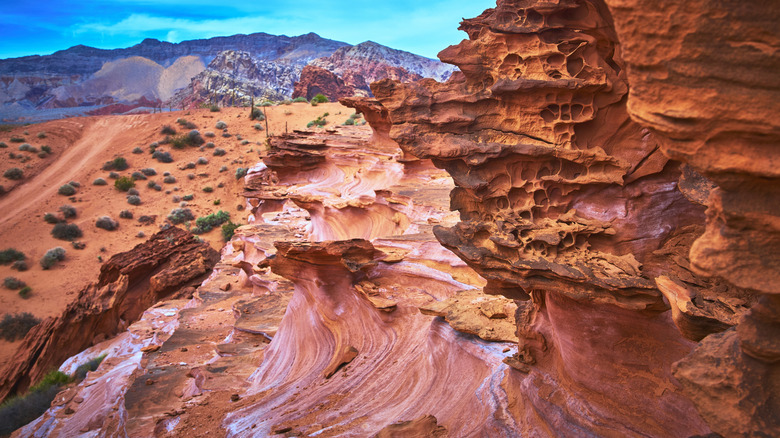
Once up on the plateau, allow a couple of hours to explore and take photos of the landforms. To see the most striking rock formations, The American Southwest blog recommends heading to the northern and western edges of the main area. There are also some small side canyons to the east of the plateau that give a different perspective of the landscape.