
Nestled In Death Valley National Park Is A Road With Ethereal Canyon Views, An Abandoned Mine, And Wildlife
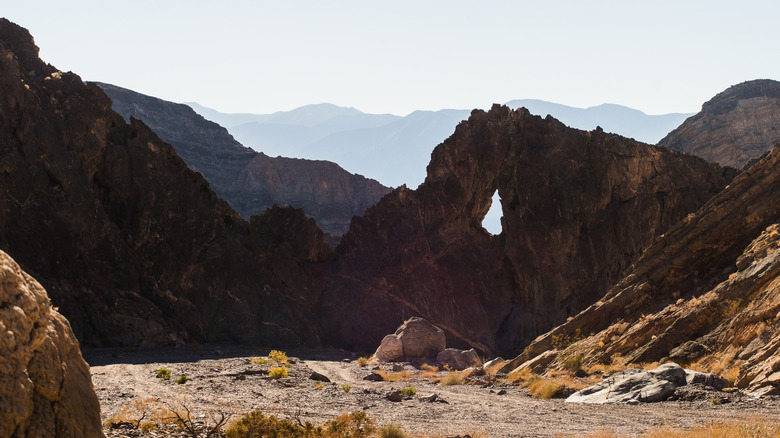
Death Valley National Park might be one of the most extreme environments on earth. But as with other extreme environments — polar regions, vast deserts, the deep ocean floor — we can't help but find a perverse beauty there, too. Visitors to Death Valley risked getting cooked like slabs of steak on a hot iron skillet (125-degree days in summer are not uncommon), but they're rewarded with an immense emptiness, all canyons and dunes and salt flats and starry night skies. Some of the sharpest scenery in the park is along Echo Canyon Road, which travels up over a moraine and weaves through the gray-red canyons before arriving at an early 20th-century gold mine.
At around 10 miles (20 miles out and back), Echo Canyon Road is quite short and is best attempted in a 4x4 vehicle because of the gravelly terrain. Expect to stop and take occasional detours to gawk at the landscape, which resembles those captured by the Curiosity rover on her long Martian sojourn. When a landscape is compared to Mars, as Death Valley often is, we may interpret this as meaning it looks inhospitable. But despite being bone dry and baked by furnace-like heat, Death Valley provides a habitat for hundreds of species.
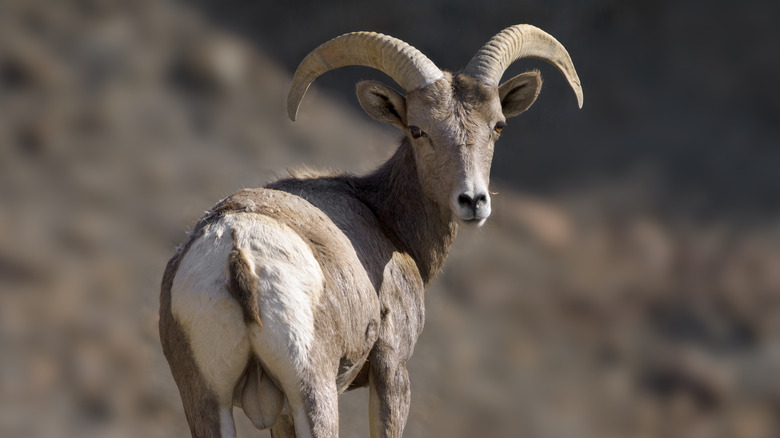
Included in the fauna here are roadrunners, jackrabbits, tortoises, sidewinder snakes, and even water-reliant animals like bullfrogs, toads, salamanders, and pupfishes in the marshes, creeks, and springs. Drivers en route toward Inyo Mine — which most travelers treat as the terminal point on Echo Canyon Road — will often spot desert bighorn sheep roaming the valleys and climbing the slopes of the canyon. With their cloven hooves (perfect for climbing) and ability to digest hardy Death Valley vegetation, bighorns are well adapted to life in this extreme.
Views and wildlife in Echo Canyon
The ethereal canyon views are the main reason to drive to Echo Canyon. Wide, flat plains sprinkled with the occasional creosote bush or desert succulent; the wrinkled mountains in the distance; and the sun cooking the earth from a seemingly endless sky — you'll feel so insignificant amidst it all. As you rise up through the canyon, tall walls of rock close around you, and strange formations appear: huge striations along the canyons and the Eye of the Needle Arch, which looks like a gargantuan creature has perforated a peephole in the rock wall. Keep in mind that you'll get a better view of the latter on the return drive.
Death Valley is one of the best American national parks for spotting rare and endangered wildlife, including desert tortoises. Hardy little creatures, they've adapted to the conditions by spending time in underground burrows (cooler than the earth's surface in summer, warmer in winter). Unfortunately, human activity and off-road driving have contributed to the endangerment of desert tortoises. So if you see one in the flats or foothills of the canyon, count yourself lucky — and take care not to disturb it. Incidentally, the rarest fish in the world is also found in Death Valley: the Devil's Hole pupfish, of which the entire wild population lives in a single cave pool.
Also, look out for desert bighorn sheep traversing Echo Canyon. The sheep are quite elusive, but enjoy navigating steep terrain, so the canyon is one place you might spy them. But be sure to stay a respectable distance from a bighorn herd. Rutting season is usually late summer through early fall, though it can occur at any time of year. It's always wise to treat young rams with extra caution when they're seeking out a mate.
Exploring Echo Canyon's Inyo Mine
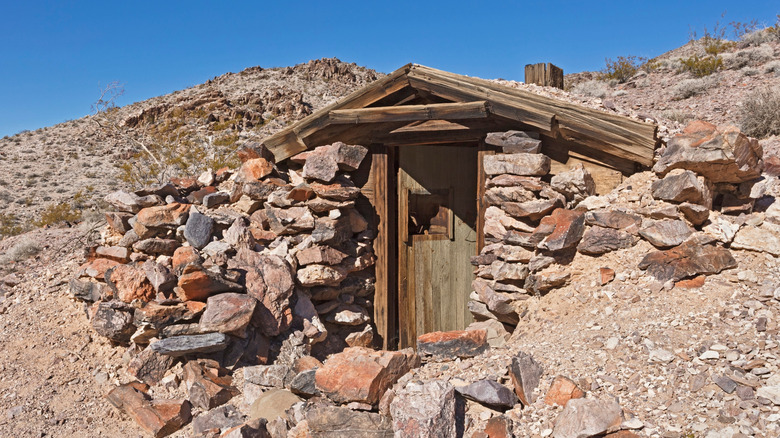
You'll want to make a stop at Inyo Mine, once one of the most profitable gold mines in this part of the Funeral Mountain Range. Here you'll find collapsed mineshafts, rusted equipment, an ore chute, and a smelter with a chimney, all in varying states of decay. Some of the old wooden buildings remain standing, including a boarding house and the ore mill, though most look more like shipwrecks after decades of abandonment and exposure to the punishing Death Valley sun. You can still walk through century-old tunnels hacked into the Death Valley rock, but of course you do so at your own peril. Also, beware that there's an elevation gain of almost 4,000 feet to get to Inyo Mine, which might be challenging for your vehicle in inclement conditions.
Though seemingly in the middle of nowhere, Echo Canyon Road is accessible from major cities. Los Angeles is 4.5 hours away by car, while Las Vegas, America's top summer destination last year, is just two hours across the California-Nevada border. Backcountry camping is permitted in Death Valley National Park, including along Echo Canyon Road. Just make sure you reserve a spot well in advance, and check out the park's regulations and safety tips — it's not called Death Valley for no reason.