
Under An Hour From Halifax Sits Canada's Fun Wildlife Park With Scenic Wetlands And Trails
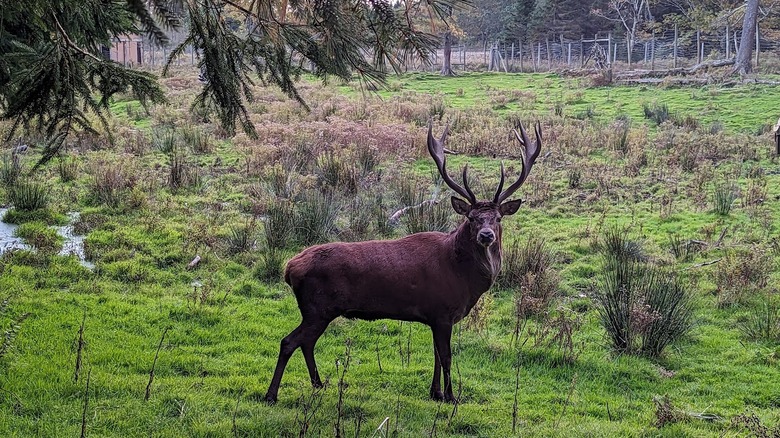
As the biggest metropolis in the Maritime provinces, Halifax attracts visitors for both its wealth of museums and maritime history, as well as for its great connections to outdoor sanctuaries across Nova Scotia. Those visiting Canada's "ocean playground" do not need to travel far outside the city to find accessible pockets of nature and wilderness. Just under an hour from the province's capital, the Shubenacadie Provincial Wildlife Park offers visitors a fun, laid-back opportunity to get close to lots of animals, enjoy scenic marshland trails, and even learn about the park's precious wetland habitats.
Shubenacadie Provincial Wildlife Park is home to more than 50 animal species, from large North American mammals like black bears, cougars, lynx, and elk, to exotic birds from across the world. Due to its dedication to educational programs and preservation, all of the park's animals are kept in captivity within naturalistic enclosures. Though the park makes a great family-friendly activity, it does not cater exclusively to youth. Grown-ups will find plenty to do too, from bird watching to trekking the marsh trails to learning about habitat conservation on site. On top of that, it makes for an inexpensive day out, with adult tickets priced at about $3.50 US, discounted tickets for youth tickets, and free access for children under the age of 5.
Visitors can easily reach this immersive wildlife hub by taking a short 45- to 50-minute drive northeast from Halifax or Dartmouth – Canada's "city of lakes" with endless outdoor opportunities located just across the Halifax Harbour. The park is open every day between May 15 and October 15, and remains closed during weekdays outside of the summer season.
Observe over 50 fascinating species in Shubenacadie Provincial Wildlife Park
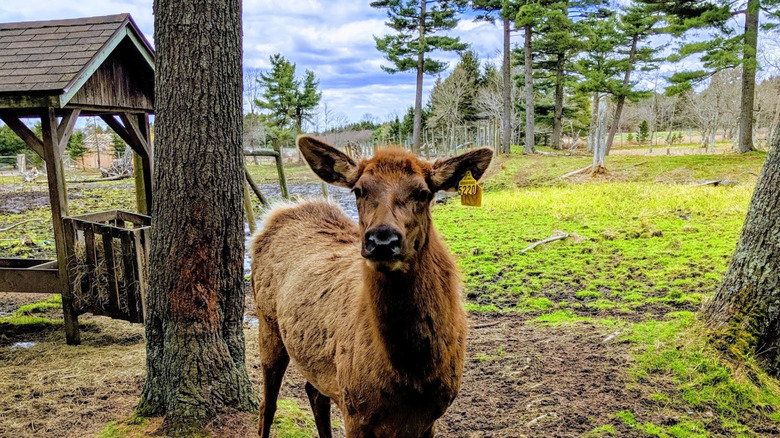
There is only one province where visitors can see all of Canada's "Big Five" in the wild, but it's not Nova Scotia. That's why one of the perks of Shubenacadie Wildlife Park is that it gives Nova Scotia residents a chance to see, and get close to, many animals that they may not easily spot in the wild — including those that don't call Nova Scotia their home. Following the park's 1.2-mile-long Main Wildlife Trail, visitors can observe endangered species such as gray wolves, which are extinct in the entire province, and animals that are nocturnal, or usually harder to spot, like barn and great horned owls. Those interested in crepuscular species can even join a two-hour night tour led by the park's expert guides. The Main Wildlife Trail is a tree-shaded, easy loop on gravel and primarily flat terrain, making it accessible for mobility aids.
Of the park's over 50 species, many hail from farther than Canada. Its exotic residents include the colorful Himalayan monal pheasant, emus native to Australia, and the giant African land snail, whose size can span the length of a human hand. The park even has its very own meteorological mascot — the groundhog Shubenacadie Sam, who announces her end of winter predictions every year on February 2.
Animals in the Shubenacadie Wildlife Park are divided by large enclosures, depending on their type and habitat needs, but they all share an inability to be released into the wild. Some are born in captivity, while others are orphaned or have suffered injuries that have resulted in them being kept at the center. Indeed, the park itself started as a rescue center in 1949. Visitors can learn about the park's history and its species in several ways: from information plaques and interpretive signs illustrating the exhibitions in the park to visiting the main interpretive center and asking the park guides on site.
Follow a walking trail through the marshes and lush wetland
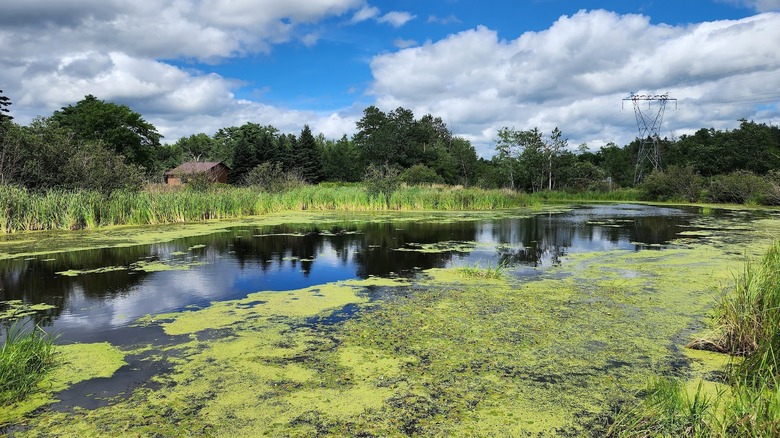
Exotic and native animal species aside, the natural environment of this 99-acre provincial park is worthy of exploration in and of itself. Leaving the main trail behind, those who are up for a slightly more challenging terrain and are looking to experience the most scenic wetland parks on America's East Coast should embark on the St. Andrew's Marsh Trail. The trail, stretching between 1.24 and 2.18 miles for a round trip, crosses 200 acres of marshland and begins from a picnic area close to the main educational hub, the Wetland Centre. Starting at the center, visitors can visit the Nature Lab to learn more about the wetland ecosystem, or hole up at the bird hide on site to spot the park's winged residents, which include peregrine falcons, red-tailed hawks, and even Nova Scotia's wild bees. The St. Andrew's Marsh Trail traverses native flora and tree species, and small wetland pools, and there is even a dedicated gazebo at the end of the trail to rest and admire the marsh in its vastness.
While the Main Wildlife Trail is a popular spot for families and school outings, visitors can expect the St. Andrew's Marsh Trail to provide a quieter, and less polished experience, with a more intimate contemplation of wilderness at its heart. At the start of the trail, visitors can enjoy some downtime at the picnic area, with benches and facilities for an al fresco meal, and nearby restrooms, or even extend their family fun at the park's playground, close to the park's entrance.