
The Largest Freshwater Lake In The Florida Keys Resides In A Once-Thriving Quarry With Nature Walks And Wildlife
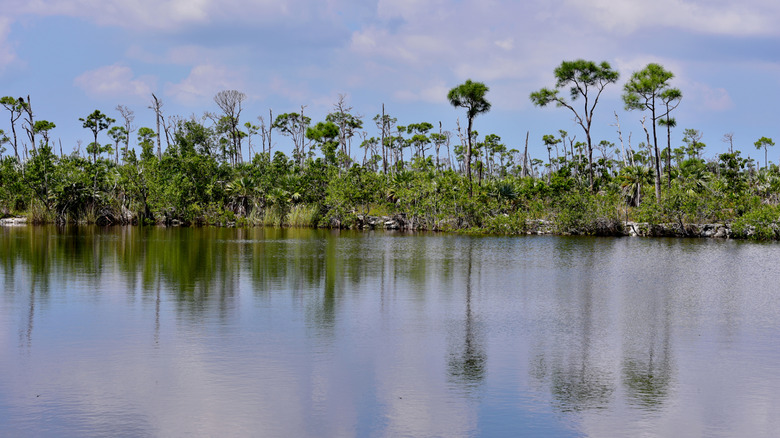
The Florida Keys are one of America's most unique destinations. This tropical archipelago comprises over 1,700 islands spread across more than 200 miles. Many are connected by 42 bridges that carry travelers over the crystalline Atlantic Ocean and coral reefs. While there's plenty of saltwater and ample beaches to be found here, freshwater lakes are a much rarer occurrence. That's what makes the Blue Hole on Big Pine Key so special. It's the largest freshwater lake in the Florida Keys, because it's also the only freshwater lake here. Lake Surprise might sound like another exception, but its water is actually salty to brackish. The lower Keys' other freshwater sources are also only small ponds and marshes, making Blue Hole all the more unusual.
Blue Hole contains freshwater because it was artificially created in an abandoned quarry. This was once one of the Florida Keys' most important quarries, providing the limestone that helped build many of the archipelago's roads and Henry Flagler's Overseas Railroad, which connected the Keys to mainland Florida between 1912 and 1935. It's not fed by freshwater streams or underground sources — it relies predominantly on rainwater, with saltwater also seeping through its limestone walls. You might think this makes Blue Hole more brackish than fresh (it can lean this way at times depending on rainfall and tides), but it's predominantly freshwater, with saltier water sitting at the bottom.
While you can't swim here due to the resident alligators, it's still worthwhile for walking and wildlife spotting. That's because Blue Hole's unique mix of fresh and saltwater makes it an integral Florida Keys ecosystem for many wild birds, mammals, reptiles, and fish. While it doesn't necessarily live up to the blue hue its name implies, it's a consistently highly rated destination for getting a closer look at native wildlife.
Walking amongst nature at Blue Hole
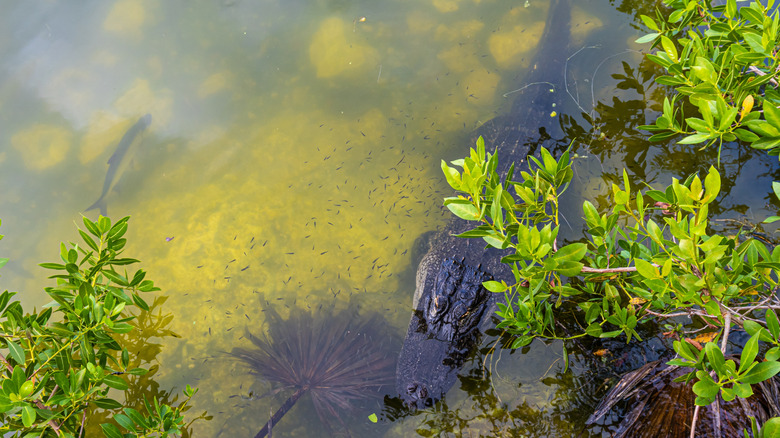
Blue Hole is part of the wider National Key Deer Refuge on Big Pine Key, a hidden Florida island and small town for nature lovers. As the refuge's name suggests, you have a good chance of spotting Key deer, including at Blue Hole. Sightings are most common during early morning or just before sunset. Recent visitors have seen Key deer while strolling along Blue Hole's short nature trail, a 0.2-mile-long pathway that takes you around roughly half of the quarry. You can take your time, stopping at benches along the way to soak in the surrounding nature and watch for other wildlife, including turtles, alligators, iguanas, and even snakes.
You'll find more nature walks just north of Blue Hole. The Mannillo Trail leads you 800 feet across hardened limestone to an observation platform overlooking a freshwater wetland. It's another good spot for seeing Key deer amongst the saw palmettos and slash pines. You can also learn more about the island's ecosystem from interpretive signs along the way. Combine this trail with the adjacent Watson Wildlife Trail, a 0.8-mile loop that takes you through a karst landscape, pine rocklands, and freshwater wetlands known for alligator sightings.
Observing Blue Hole's wildlife
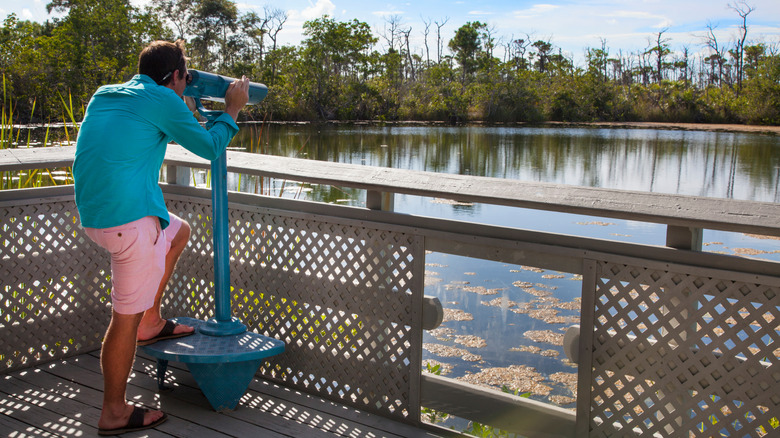
Although it helps, you don't need to walk far to see the various wildlife at Blue Hole. The refuge has set up an observation platform with great views of the lake. The timber deck juts out over the water and has a pair of mounted binoculars, along with a lower viewing window for kids. Visitors can enjoy sightings from the deck, including gators that swim right up to it. Keep an eye out for various fish in the water too, including saltwater and freshwater species like tarpon, which reportedly became trapped in the Blue Hole following two hurricanes. Key deer are also known to come up to humans looking for snacks, but resist the temptation to feed them.
Birders can also treat themselves to various sightings. Osprey, green herons, frigatebirds, gnatcatchers, and white-eyed vireos often frequent this rare source of freshwater. You can even sometimes see anhingas swimming through the water or drying their wings in the sunshine. Then there are the white-crowned pigeons, which feed on the fruits of the native poisonwood that grows on Big Pine Key — a seriously toxic plant for humans that should be avoided when walking the trails. Speaking of things to avoid, pack bug spray to ward off the mosquitoes that thrive in this environment.
You can drive to Blue Hole in about three hours from Miami, thanks to the scenic island bridges comprising the Overseas Highway, one of America's prettiest roads surrounded by ocean. It's also a 45-minute drive from Key West International Airport (EYW), Florida's closest airport to the beach. Big Pine Key has some motels, guesthouses, and RV parks if you want to stay nearby. Otherwise, you can find hotels and resorts on practically every other key and island east and west of Big Pine Key.