
Forget Florida, Retire To This Southern Region With Mountain Views, Scenic Wetlands, And Vibrant Cities

You'd be hard pushed to find a list of top retirement destinations in the U.S. that doesn't include Florida, either at or near the top. Offering tax advantages, a strong sense of community, an outdoor lifestyle, and access to major healthcare systems, it makes sense that many people would choose to live out the rest of their years in the Sunshine State. But it's not the only option, and in fact, the neighboring East South Central region — comprising Kentucky, Tennessee, Alabama, and Mississippi — is a great alternative.
For a start, three of the East South Central states are in the top 10 of America's most affordable for 2026, according to research conducted by U.S. News & World Report, with Mississippi ranked 1st. Tennessee sits in 17th place, yet is still considered much better value than Florida down in 42nd place. But it's not just about money; the region has many merits of its own.
You've got vibrant cities: Louisville, one of America's friendliest cities and a foodie mecca; Nashville, known for its country music and Southern charm; Memphis, home of the blues and resting place of the King of Rock and Roll; and Birmingham, with its parks and museums and rich civil rights history. Down near the Gulf in Alabama and Mississippi, you'll find scenic wetlands you can hike through, and further north in Tennessee sit the Great Smoky Mountains, known for their hazy, atmospheric views and waterfall trails. A city lifestyle of culture and cuisine or life in the great outdoors — both are equally available in the East South Central U.S. The tricky part is trying to narrow it down to just one location.
Cultural hubs and mountains views in Kentucky and Tennessee
If you see yourself retiring in a city, consider Louisville. It's the official starting point of the Kentucky Bourbon Trail, with a welcome center in the Frazier Kentucky History Museum. Tasting events, tours, and cocktail-making are available here before you embark on a cross-state, whiskey-drinking pilgrimage that'll take you to distilleries throughout Kentucky. Louisville also has great galleries and museums, celebrating contemporary art, the Kentucky Derby, and the most famous of Louisvillians: Muhammad Ali. You'll eat well here, too; the city is experiencing a food boom, with new restaurants taking over old warehouses and churches.
Music lovers could retire happily in Nashville, Tennessee's capital city, which has been fundamental to the growth of American country music. Nashville sees regular country, folk, and bluegrass gigs in its bars and live houses, and it has some great museums, including a tribute to one of the city's most legendary voices, Johnny Cash. It's also the northern terminus of the Natchez Trace, a pioneer-era travel corridor now marked by a 444-mile parkway that winds through Mississippi, Alabama, and Tennessee. Activities like hiking and camping are available along the way. Nashville doesn't have the best public transport network, but you're close to other urban centers, with 40% of the nation's population living within 600 miles. This means plenty of road trip opportunities.
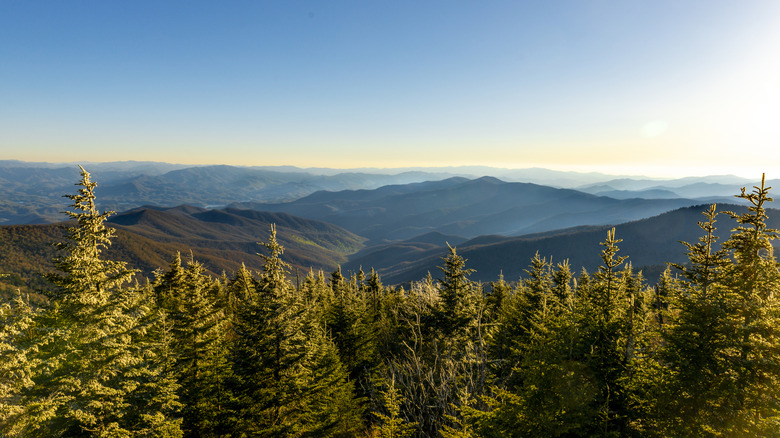
If you'd prefer to retreat into the mountains, Great Smoky Mountains National Park, the most-visited national park in America, lies in the eastern reaches of the region, straddling the North Carolina-Tennessee border. The views along the park's 800 miles of trail are immense, whether you're gazing across the mountains' smoky profile, each outline silhouetted against the next, or standing at the foot of their thundering falls. Closest cities include Knoxville and Chattanooga.
Wetland trails and historic cities in Mississippi and Alabama
While Mississippi lags behind its counterparts when it comes to healthcare — a factor retirees should bear in mind — there are still many reasons to plant your roots here. Interesting cities include Natchez, home to grand antebellum mansions and the southern terminus of the Natchez Trace, and Jackson, a historic city that played a key role in the civil rights movement. Mississippi also ranked second in the country for cost of living and housing affordability in U.S. News & World Report's 2026 analysis, meaning those retirement dollars will stretch further.
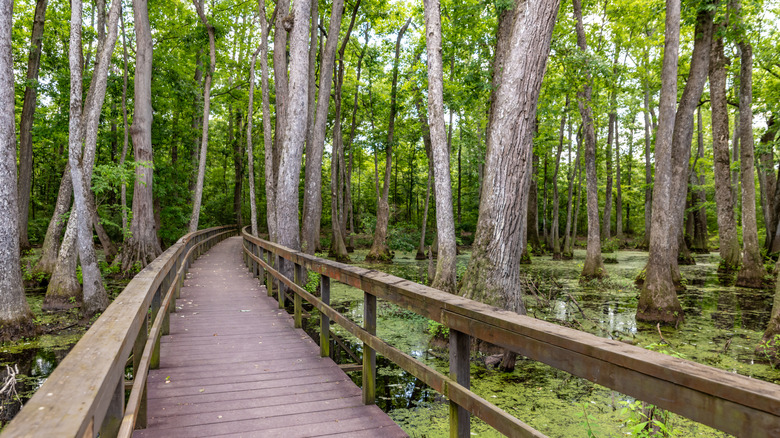
The Mississippi wetlands are, perhaps, the most unique regions of the state, offering scenic environments for hiking. One of the best examples is Cypress Swamp in Madison County, where a boardwalk cuts through a grove of submerged water tupelo and cypress trees. Though short, it gets great reviews on AllTrails. For more miles of trail, head to St. Catherine Creek National Wildlife Refuge, just outside Natchez, where walking paths wind through swamps and wetlands. The trails are secluded, though conditions can make it tricky in parts, so it's best to walk with fellow hikers. You'll also find coastal wetlands in southern Alabama, with sun-splashed views across the Gulf. For backcountry trails, as well as RV access and watersports on Lake Shelby, head to Gulf State Park.
Mobile, Alabama, is only an hour from the park, where you could have the best of both worlds: life in a fun coastal city and quick access to nature. If a big city is more your style, Birmingham, in the heart of the state, is considered Alabama's cultural capital, home to the Birmingham Civil Rights Institute and the Birmingham Museum of Art. The food scene might be enough to swing your decision: Eater named Birmingham one of the top dining destinations in the world for 2026.