
Canada's Once-Thriving Mining Village Is Now A Picturesque Mountain Gateway Filled With Endless Outdoor Fun
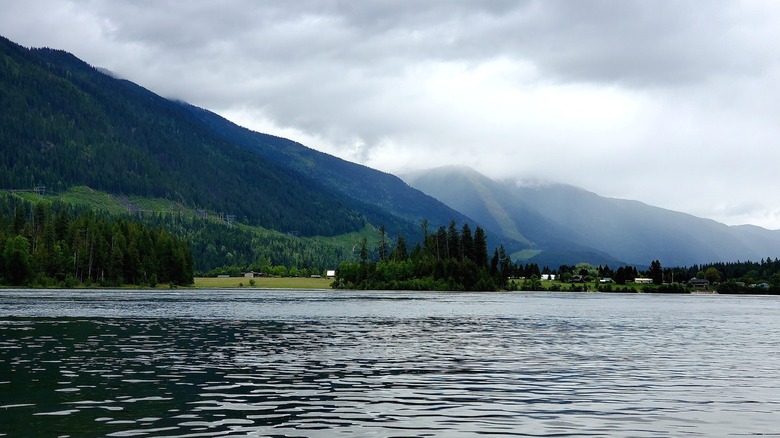
If you were to drive through the Slocan Valley today, you would see gorgeous mountains hovering over a valley full of small, secluded, yet modern towns where you can get a good coffee and a meal before hiking thickly wooded trails. You'd never know that about 135 years ago, this valley was filled with prospectors seeking their fortunes without a cappuccino in sight. This region of mountainous beauty and outdoor adventures is now one of the BBC's 20 Best Places to Travel In 2026, and it's well worth seeing in person.
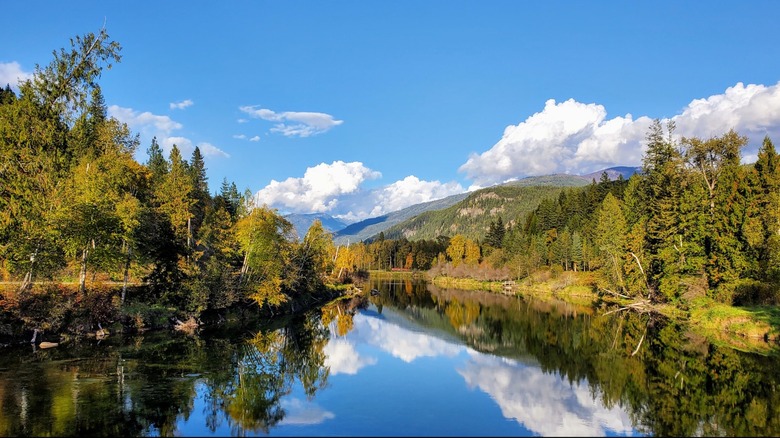
Its seclusion in the majestic West Kootenays is part of what keeps it so pristine. West Kootenay Regional Airport (YCG) in Castlegar is the closest airport with scheduled commercial service, while Kelowna International Airport (YLW) and Canadian Rockies International Airport (YXC) in Cranbrook offer other options for travelers willing to make a longer drive. Land approaches from any direction offer views of British Columbia's verdant forests and splendid mountain peaks along the way. Your route will likely put you within sight of the region's deep blue lakes and rivers, offering a preview of what you'll enjoy once you reach the Slocan Valley.
When you arrive, take a look around and imagine how it must have looked during its mining heyday, when the region was the focus of a silver boom so lucrative that it became known as "the Silvery Slocan." Remnants of this era still stand in scattered spots around the valley, which at one time had over 300 mines being worked by silver seekers from North America and overseas. Today, the area has largely recovered from the hectic fever of the silver boom and has turned into a calm, scenic respite from the crowds and smog of larger cities.
Getting to know scenic Slocan and its environs
Visitors can explore a part of World War II history closely tied to this area. The experiences of Japanese Canadians who were forcibly displaced and interned in the region are commemorated along the Japanese Canadian Legacy Trail, which leads visitors through sites in New Denver, down into Slocan, and several other locations along the valley, including the fascinating ghost town of Sandon. This sobering and educational experience can be explored at one's own pace, with interpretive information at each stop along the route.
These days, the village of Slocan, nestled at the south end of Slocan Lake where it narrows into the Slocan River, is a convenient base for exploring the Slocan Valley's natural splendor. It sits near Valhalla Provincial Park, which offers opportunities for fishing, paddling, hiking, and other backcountry adventures amid panoramic views of peaks and lakes. Camping is permitted at designated sites along the Slocan Lake beaches for an extended backpacking trip. Parts of the park have occasional partial closures, so check with BC Parks which areas are open before heading out. The village hosts events throughout the year, and visitors can learn more about local history through the area's historic sites on a self-guided walking tour, accompanied by an online guidebook. The mountain and lake views certainly haven't suffered with time. Perhaps enough of the landscape has been preserved to offer a glimpse of what the Sinixt knew long before settlers arrived with silver in their eyes.
With fewer than 500 residents, Slocan remains decidedly small. You can grab breakfast or a burger at the Harold Street Cafe, a local restaurant that boasts an average 4.7-star rating, or get a meal, catch live music, and spend the night at the quaint Slocan City Hotel, which occupies a restored building seven decades old. Both locations exude a rural yet stylish vibe that combines local history and modern cool.
Outdoor adventures for every taste
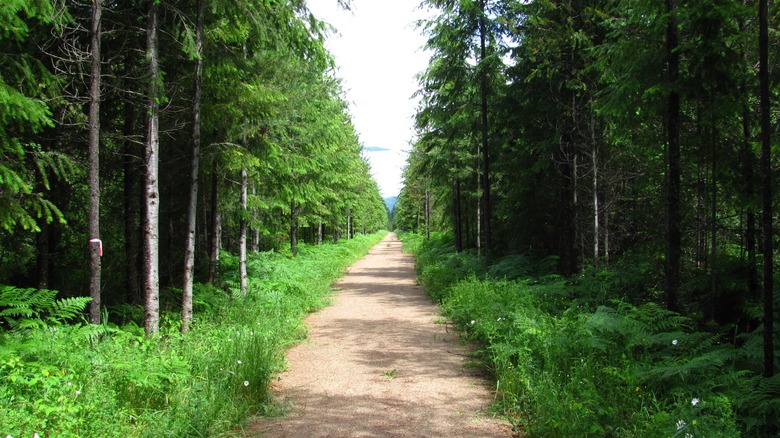
Endless amounts of outdoor fun can be had in the Slocan Valley. Urban explorers and history lovers can get their fill of wandering through the Valley of the Ghosts, where the region's mining history is on full display. For a longer excursion, the Slocan Valley Rail Trail stretches roughly 32 miles and leads hikers from Slocan Lake south toward the Kootenay River. The nonmotorized route winds through lush scenery and bucolic small towns, weaving alongside the Slocan River for much of the journey. It can be explored on foot, by bike, on horseback, and when conditions permit, on skis or snowshoes. When it's time to take a break, you may rest and absorb the views at picnic tables and benches found all along the trail.
As one of Canada's 10 deepest lakes, Slocan Lake reaches a maximum depth of about 978 feet. Scuba divers have reported encountering historical artifacts in its waters, while anglers can try their luck for fish including kokanee, pikeminnow, and trout. Bring your fishing license if you want to cast a line. You can also rent a canoe or kayak from Smiling Otter Canoe & Kayak in Slocan, then spend the day paddling the lake, gazing down into the clear waters or along the treetops all around you.
You might not expect to get in some beach time while surrounded by deep greenery, yet there's a sandy shore at Slocan Beach, which has a gazebo that you can rent for a get-together. Rather than gazing at a flat horizon, you'll be treated to a nearly fjord-like scene of tree-carpeted mountains framing the lake. Golfers don't have to miss out on their hobby, either. Valley View, about 10 minutes south of Slocan, offers a course amid the vivid surroundings of Slocan Valley.