
Everyone Thinks About Banff When Visiting Canada, But They Always Miss Out On This Little-Known National Park
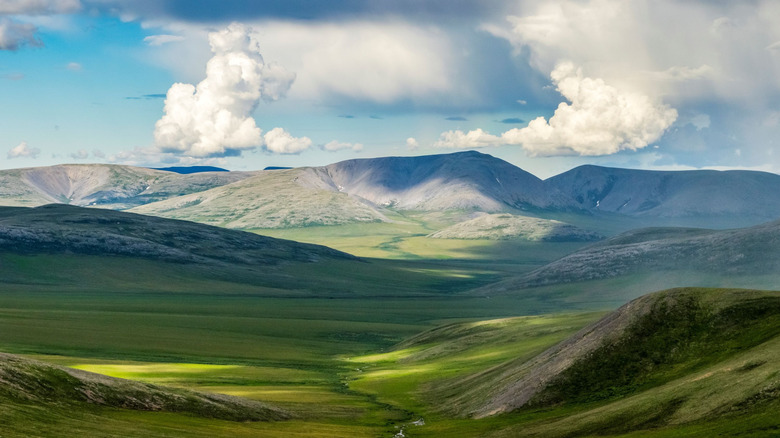
The winter wonderland of Banff National Park and the stunning lakes of Jasper National Park are often the first to come to mind when planning a Canadian national parks expedition. For good reason, too — both parks are relatively easy to access and absolutely gorgeous. However, a lesser-known gem hidden in Canada's northern wilderness could give Banff and Jasper a run for their money in rugged beauty and abundant wildlife. Nestled deep in northern Yukon, past the Arctic Circle, lies the unspoiled, vast territory of Vuntut National Park.
Unlike Canada's more famous national parks, Vuntut National Park attained national park status only in 1995, more than a century after Banff. Its establishment marked a significant step in acknowledging the Vuntut Gwichin's longstanding connection to the region. Today, the park is cooperatively managed by Parks Canada, the Vuntut Gwitchin Government, and the North Yukon Renewable Resources Council.
Vuntut National Park is almost entirely undeveloped. No facilities or developed trails exist in the park — all that remains is unspoiled natural beauty as far as the eye can see. It's bordered by Ivvavik National Park to the north and Alaska's Arctic National Wildlife Refuge to the west, with the three forming an extensive wilderness area. Visitors to the park can expect a completely remote, isolated setting — way off the beaten path, since fewer than 25 people make it here each year. Despite the lack of people, there's plenty of company in the form of the park's extensive wildlife.
Exploring Vuntut National Park
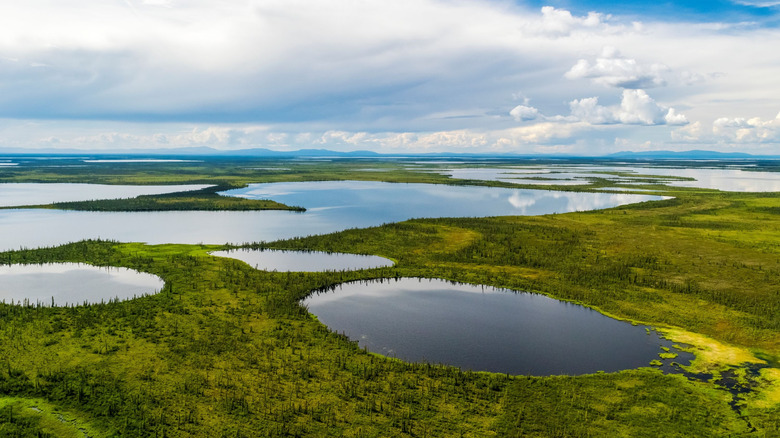
Since it's almost totally undeveloped, most recreation in Vuntut National Park revolves around exploring its scenic surroundings or observing its wildlife. Important portions of the spring, summer, and fall migration range of the Porcupine Caribou pass through the park, with a 2025 photocensus estimating the herd at about 143,000 animals. Grizzly bears, wolves, moose, and other wildlife also thrive in the area. Up to half a million waterfowl use the lakes and ponds of the Old Crow Flats each year.
The park provides scenic beauty in multiple forms — from rugged, snow-capped mountains to vast flats and lakes. The Old Crow Flats section in the southern part of the park is a wetland area with over 2,000 shallow lakes and ponds and peat ridges forming the boundaries between lakes. Because of the relatively flat terrain, it makes for an excellent spot for bird-watching. When darkness returns later in the year, the area offers opportunities for viewing the northern lights. You can also arrange for canoe tours of the Old Crow River to explore the park by boat.
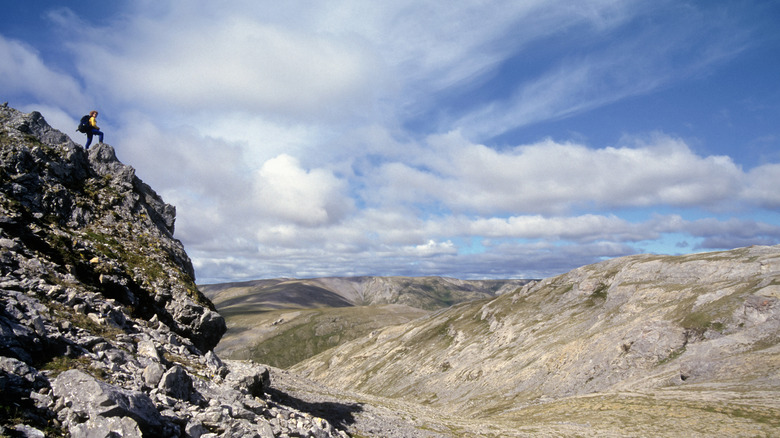
The northern half of the park includes the British Mountains, which rise dramatically toward the clouds. It's an interesting region to explore not just for its sweeping valleys and rugged peaks, but also for its unique history. Unlike most parts of the Northern Hemisphere, the area was part of Beringia, a region that remained largely unglaciated during the last ice age. This allowed many plants and animals to survive, leaving the region with an abundance of ice-age fossils. Hikers can trek through the valleys and climb the mountains for panoramic views; however, there are no facilities on-site. Visitors should be prepared to handle emergencies independently, as help is a long way away.
Planning a trip to Vuntut National Park
Because of its remote location, Vuntut National Park isn't a place you can visit on a whim. The nearest inhabited settlement to the park is the Gwich'in community of Old Crow. However, no roads go into the park, and no roads reach Old Crow either, so prospective visitors have to fly into Old Crow from Whitehorse, the historic wilderness access-point capital of the Yukon. Whitehorse, in turn, is accessible from Vancouver by air. By road, visitors will have to drive from Vancouver to Whitehorse via the Stewart-Cassiar Highway or the Alaska Highway — the Pacific Northwest's most epic road trip. For the latter route, you can also start your journey from Edmonton.
You'll need your backcountry camping essentials, as there are no campsites, water stations, or other visitor facilities at the park. Apart from essentials like a tent and sturdy hiking boots, equipment such as headlamps, water filtration systems, and other high-tech camping gadgets can be useful in such a remote camping environment. Plan for at least a few nights to really enjoy as much of the park's more than 1 million acres as possible. You'll also have to coordinate with Parks Canada in advance to secure camping permits, which cost 37 Canadian dollars (approximately $26.55) per person per night as of this writing.
Because Vuntut National Park is located beyond the Arctic Circle, summers are short. The best time to visit is between June and August, when temperatures rise slightly above frigid and the midnight sun ensures 24-hour daylight. However, if you can brave Northern Canada's freezing post-summer weather, the Yukon wilderness can provide excellent opportunities for northern lights viewing in the fall and winter months of August to April.