
Canada's Secluded Island Escape Is A Pristine Park Filled With Wildlife, Rugged Hikes, And Beach Beauty
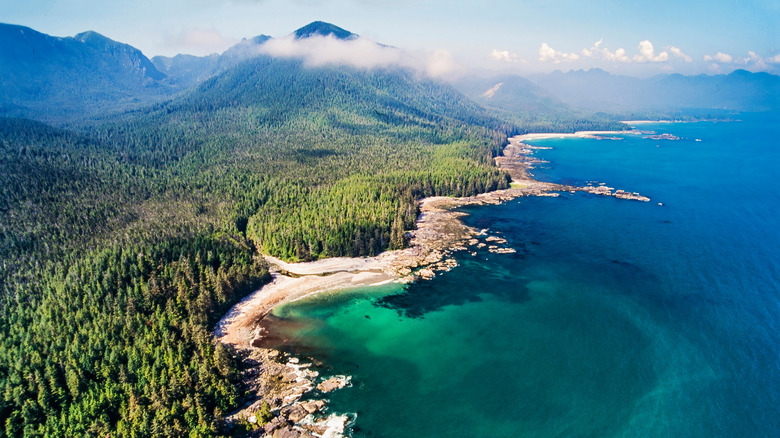
British Columbia has more than 700 national and provincial parks, which protect nearly 35 million acres of land in Canada's westernmost province. Vancouver Island, the province's largest island, is home to more than 150 of those parks. So, it can be hard to choose which one to visit. But one of them, Muqin-Brooks Peninsula Provincial Park, is a remote spot where you'll find deserted beaches, empty hiking trails, and more animals than people.
The Brooks Peninsula sits on the northwest coast of Vancouver Island, which is circled by the Vancouver Island Grand Loop, a more than 1,000-mile road trip that visits tourist-free forests and beaches. The peninsula is a 9-mile-long promontory, covered with old-growth forests, that protrudes into the Pacific Ocean. Both the Kyuquot/Checleset and Quatsino First Nation peoples used the isolated area as fishing and hunting grounds. Even Captain James Cook, the British naval captain who explored the world and was the first European to reach British Columbia, called it the "cape of storms."
So, it's not surprising that the peninsula remains largely untrodden. A recreation area was first established here in 1986. It increased in size and was reclassified as Brooks Peninsula Provincial Park in 1995. Then, in 2009, it was officially renamed Muqin-Brooks Peninsula Provincial Park to honor the culture and history of the original stewards of the land. The provincial park now spreads across 127,583 acres, which makes it the second-largest protected area on Vancouver Island.
Find beaches and rough trails in Muqin-Brooks Peninsula Provincial Park
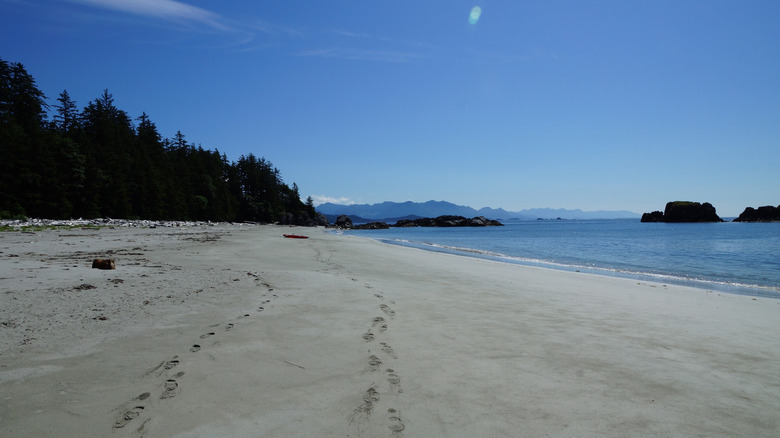
As you approach Muqin-Brooks Peninsula Provincial Park, the first thing you'll notice is its dramatic coastline with deep fjords, rocky cliffs, and beautiful beaches. The fjords provide shelter from the exposed ocean. The cliffs rise steeply from the ocean up to forests full of western hemlock, amabilis fir, and Sitka spruce trees. Plus, the beaches are long, sandy, and windswept.
No matter which beach you set your sights on, you're bound to have it all to yourself. If you approach the southeast side of the peninsula — there's a safe anchorage in Columbia Cove — you'll find a stunning beach near Jakobson Point. It has white sand and impressive rock formations. There's an equally pristine beach on the opposite side of the Brooks Peninsula. Near the Klaskish Inlet, another safe harbor, you'll a long stretch of sand with a tidal lagoon around Orchard Point.
Once you've explored the coastline, it's time to head inland and start hiking. There are no marked or maintained trails on the peninsula. Instead, you'll find rough paths leading to stunning viewpoints. From Columbia Cove, you can head south to Clerke Point, the southernmost point on the peninsula. It's a multi-day hike that passes creeks, marshland, and sea caves. Or, if you head east instead, you can head up the Ououkinsh Inlet to follow the Power River to Power Lake, which is in the neighboring Hisnit/Power River Watershed Protected Area.
Look for animals on the peninsula
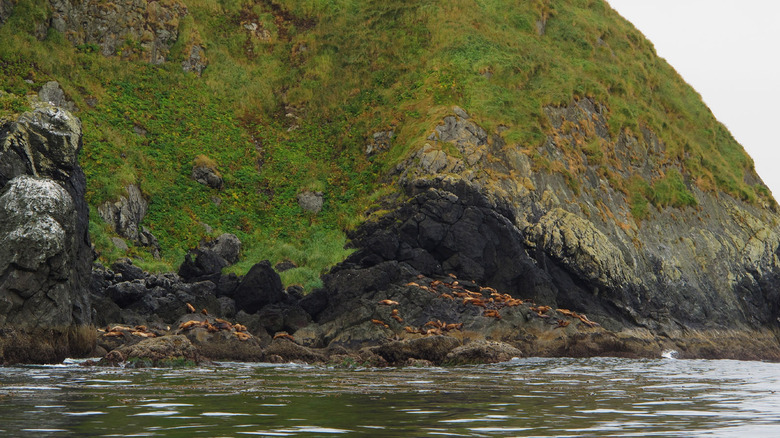
Whether you spend time beachcombing or hiking, you need to remain on high alert for wild animals in Muqin-Brooks Peninsula Provincial Park. Black bears are probably your biggest worry. You should continually make noise while hiking to scare them. Black-tailed deer, elk, and even wolves could watch you hike, too. Along the water, you may hear sea lions, sea otters, or harbor seals before you can see them. Plus, gray whales and orcas may make an appearance just offshore.
Since Muqin-Brooks Peninsula Provincial Park is so remote, it's not an easy destination to reach. There are no roads leading to the peninsula. Voyager Water Taxi offers boat service from Fair Harbour to Kyuquot, a tiny village with more sea otters than residents, and then from Kyuquot north to the Brooks Peninsula. Their water taxis fit up to 12 people, or eight people with kayaks. Just be prepared to get wet upon arrival, since there isn't a dock where the boat can drop you off.
But even Fair Harbour is quite a journey. The closest airport, Port Hardy Airport (YZT) is 95 miles — and more than two and a half hours — away. Though the small airport only receives flights from Vancouver International Airport (YVR), Canada's second-busiest airport takes the crown for being the best in North America. Once you get this far northwest on Vancouver Island, you also shouldn't miss a side trip to Nootka Island, a dreamy adventure island with diving, surfing, trails, and rainforests.