
Missouri's Lesser-Known State Park Is A Swampeast Gem With Scenic Wetlands, A Boardwalk Trail, And Unique Wildlife
Between the sinkholes at Ha Ha Tonka and the massive boulders at Elephant Rock State Park, Missouri is home to numerous bucket list-worthy destinations. While the crowds flock to these popular sites, those seeking out hidden gems can take the road less traveled — you just might end up at Big Oak Tree State Park. Situated near the Missouri-Kansas border, this lesser-known day-use park is a lush haven, with oak and hickory forests thriving among the picturesque wetlands. One visitor best described the scenery: "The trees here are a brilliant reminder of what once was and what can again become if we take care of our beautiful forests."
Established in 1938, Big Oak Tree State Park preserves the original wilderness of "Swampeast Missouri" before much of the surrounding landscape was drained and cleared for farming. Covering 1,007 acres of old-growth bottomland hardwoods and giant champion trees, the state park was established after locals saw the threat of deforestation. Thanks to their efforts, visitors can still explore the swamp wetlands, woodlands, and rare plants native to this corner of Missouri.
With diverse habitats come diverse wildlife, and Big Oak Tree supports an abundance of creatures. In fact, this is where you'll find the one-of-a-kind prothonotary and cerulean warblers. You can spot them by following the state park's boardwalk trail that guides you safely above the wetlands and into the forests. Keep a sharp lookout for everything from familiar wildlife to some of the park's less commonly seen species. There are two other trails to check out at the state park, although those have natural surfaces. Big Oak Tree is located almost three hours from St. Louis, while Memphis, Tennessee, is a bit closer at 2.5 hours. You can drive from Evansville, Indiana, too, which will take a little over three hours.
Follow the boardwalk and other trails at Big Oak Tree State Park
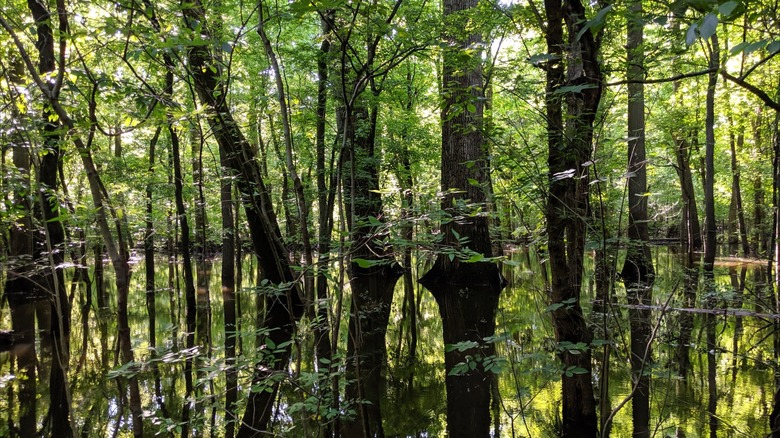
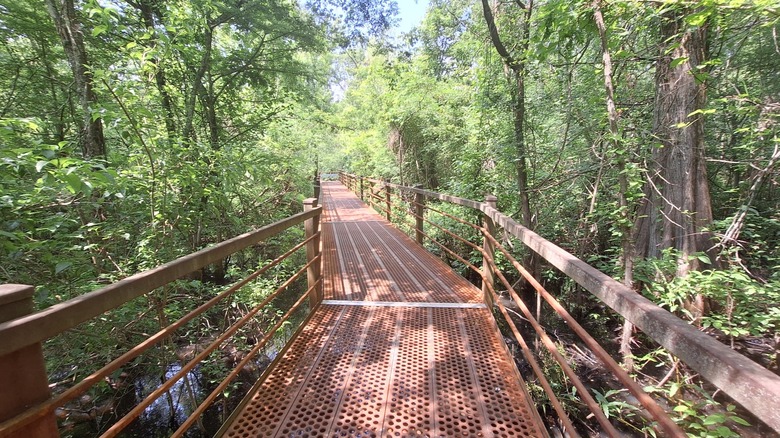
Big Oak Tree State Park boasts several natural features that immerse you in the area's vibrant ecosystem. From dense oaks and hickory trees rising 120 feet into the sky to thick woody vines and marshy wetlands, you'll discover what the Swampeast is truly made of. It's also home to the sole cypress swamp in the entire state park network. Experience the landscape by going on a stroll along the boardwalk. The wheelchair-friendly trek is a 1.4-mile out-and-back trail that offers an easygoing journey through the wetlands. From the day-use area, the boardwalk runs through an oak and cane woodland, eventually bringing you to a viewing platform in the heart of the swamp. Although it's a short and easy route, you'll find benches for taking breaks along the way. Make sure to have insect repellent with you, as there are lots of mosquitoes.
Another brief walk in the state park is the Cypress Trail. This is a 0.8-mile loop that circles the perimeter of an old reservoir. Flanked by the namesake trees, the path features a nearby borrow pit — the very same one that was dug to build the levee. Complete this easy hike in the summer, and you'll likely come across lily pads floating across the water.
The third trail at Big Oak Tree State Park is the one that leads into the park's bottomland forest. Aptly named the Bottomland Trail, this is a 1.4-mile loop that gives you more of a workout compared with the other two. The moderately challenging trail winds through an area designated as a National Natural Landmark and showcases the remnants of the Mississippi River's bottomland hardwood forests. For more hiking, visit the Geer Spring Trail, a scenic Ozark trek with wildflowers.
Wildlife watching and other activities at Big Oak Tree
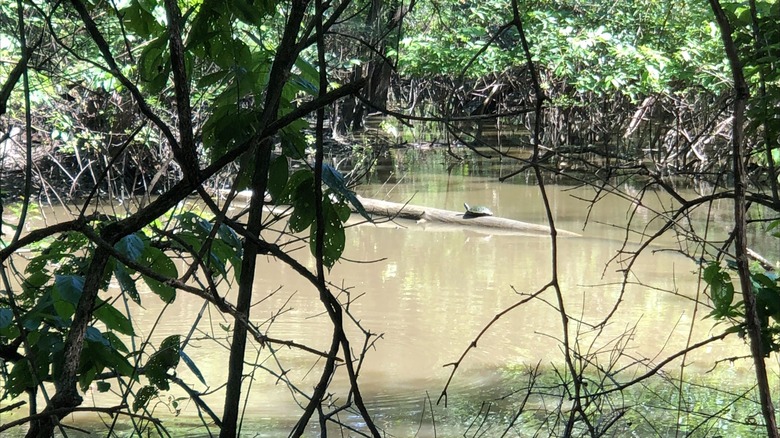
As incredible as the greenery is at Big Oak Tree, the wildlife is just as terrific. The state park is home to reptiles, mammals, amphibians, and hundreds of bird species. While you're on the trails, keep your eyes peeled for native creatures like the swamp rabbit. Common sightings include squirrels and deer in the forests, and turtles around the wetlands. You'll also encounter raccoons, lizards, opossums, and snakes.
There's a variety of birdlife as well. You might not see Big Oak Tree frequently listed among the best birdwatching destinations in the U.S., but many consider it a haven for spotting rare species. Bring your binoculars to observe Mississippi kites during the summer months and prothonotary warblers in the spring and fall. Those visiting in the winter have the chance to see bald eagles soaring overhead. The park is also home to populations of fish crows, white-breasted nuthatches, summer tanagers, and more than 150 other avian species.
Besides boardwalk strolls and wildlife watching, you can enjoy a picnic amid Big Oak Tree's verdant landscapes. Smaller parties can claim one of the 10 picnic sites available, while larger groups can book a picnic shelter. Guests have access to water and a vault toilet. While the adults prepare an outdoor meal, kids can head to the playground to burn off some energy. Casual fishing is allowed at the borrow pit, too. If you plan your trip for mid-September, you can attend Living History Day at the park. During this event, guests can learn about the area's pioneer history. With demonstrations ranging from quilting to blacksmithing, the annual event offers another way to explore the state's past. For your next Missouri getaway, visit the lesser-known Table Rock Lake, an Ozark wonderland with clear waters.