
A Spanish City With One Of The Lowest Costs Of Living Is Famous For Dramatic Cliffside Architecture And Cultural Flair
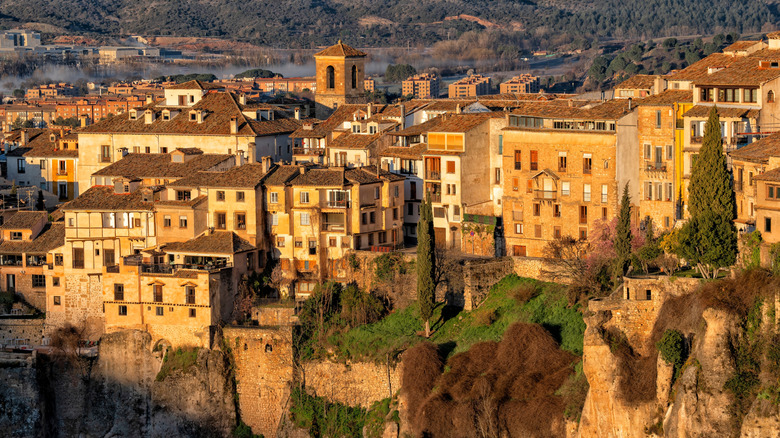
For those nursing a dream of making sangrias, tapas, and balmy weather a daily thing, moving to Spain is the fantasy. But upon closer inspection, that dream comes with a price tag — and we mean a hefty one. EuroNews reports that cities like Madrid, San Sebastián, and Palma de Mallorca top the rental price charts, amid a real estate market still straining under historically high housing costs.
The silver lining? A small city called Cuenca, nestled halfway between Madrid and Valencia. Idealista named it one of Spain's cheapest cities in 2026, with rent running about €8 per square meter as of January 2026 — a fraction of EuroNews' reporting of Madrid's roughly €19 per square meter price tags. Cuenca city's population of 54,000 is a far cry from the millions living in Madrid or Barcelona, so expect a slower job market, a tamer nightlife scene, and a gentler cadence to everyday life.
But there are trade-offs: Tucking into a meal around Cuenca, named 2023's "Spanish Capital of Gastronomy" by Foods and Wines from Spain (FWC), is estimated to cost 21% less than dining out in Barcelona. Exploring the city comes cheap; walking around the historic old town on foot is a free way to soak in its medieval streets and cliffside architecture. Even some museums and attractions are free, like the centrally located Museo de Arte Abstracto Español. Those that aren't, like the Cuenca Cathedral, generally don't cost more than $8. Between its affordability and cultural flair, Cuenca delivers the good life without the exorbitant price tags of bigger Spanish cities.
Cuenca stuns with its unique cliffside architecture
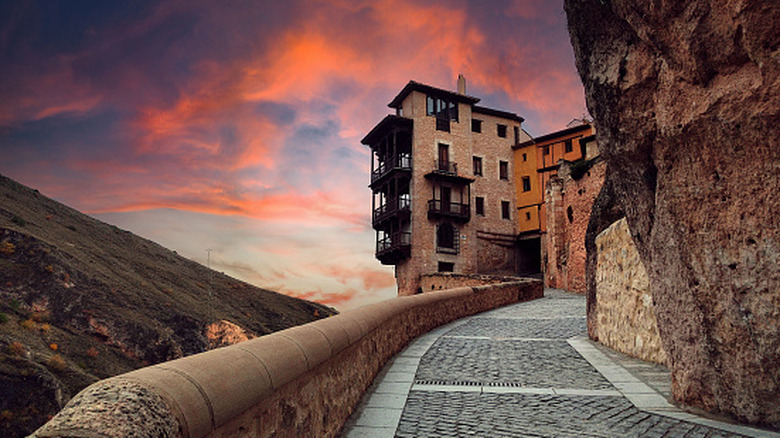
If Cuenca's cost of living is delightfully low, there's one thing that soars high: the city itself. Anchored on rocks, Cuenca's lofty heights give soaring views of the gorges below. And if the dramatic vistas weren't enough, the city features houses built right up to the edge of its cliffs, with wooden balconies cantilevering over the facades.
Dating back to the 15th century, Casas Colgadas — Hanging Houses — are a highlight of Cuenca. They're nestled in the historic walled town, itself a designated UNESCO World Heritage Site — a label that makes any travel destination worth exploring. There were originally more houses of its kind, whittled down to three open to visitors today. The Museo de Arte Abstracto Español takes over two of the houses. The third building, dubbed Casa de la Sirena (House of the Mermaid), hosts the achingly modern-minimalist interiors of the eponymous Michelin Guide-recommended restaurant.
Want a view of the walled city and the river gorges of Júcar and Huécar from an even higher vantage point? Hike the peak of Cerro del Socorro, or simply walk to the reddish iron San Pablo Bridge for a view of the Hanging Houses and the town. In Cuenca, all roads lead to the perfect Instagram shot.
A city of cultural and artistic flair
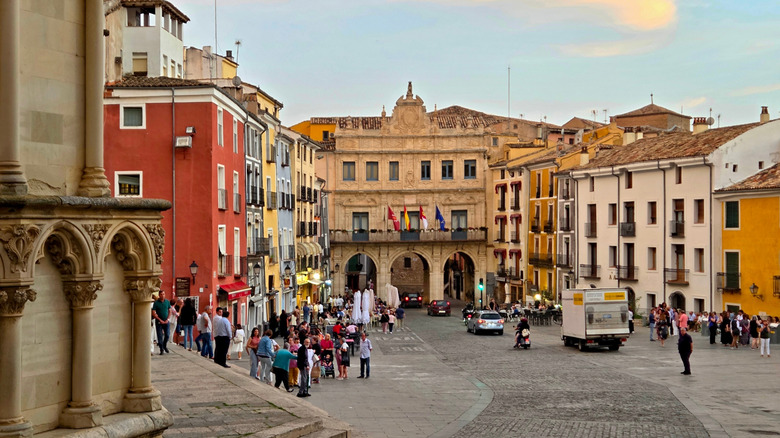
For such a compact city, Cuenca's cultural and artistic flair reaches far and wide. Steeped in history, the city boasts a proud display of museums and medieval architecture. In the candy-hued streetscape of Plaza Mayor stands the Cuenca Cathedral, whose 12th-century origins make it, according to UNESCO, Spain's earliest Gothic cathedral. Delve deeper into its history at the Cuenca Museum, which walks curious visitors through artifacts pre-dating the Medieval era and beyond.
But Cuenca doesn't just dwell on its past — the city has an unexpected modern side. Contemporary art collections grace the walls of the Museo de Arte Abstracto Español, Espacio Torner, and the Fundación Antonio Pérez. Come springtime, international orchestras and artists take over churches and convents for Cuenca's Religious Music Week.
Cuenca's culture spills beyond its walls, lived through the unhurried pace of the city, where siestas turn into evening drinks looking over Plaza Mayor (and later, a hearty meal of morteruelo or zarajos that doesn't break the bank). As cities like Barcelona or Seville double down on their efforts to combat rampant overtourism, Cuenca remains blissfully untouched by the tourist crowds. Raring to go? Cuenca's rich cultural heritage and artistic flair have never been more within reach: High-speed trains from Madrid connect you to Cuenca in an hour, and the international airports of Madrid (MAD) and Valencia (VLC) are just 1.5 hours and two hours away by car, respectively. Also worth a stop within the Cuenca province is Alarcón, a serene city with incredible murals and storybook towers.