
Breaking This Japanese Food Etiquette Rule Is Nowhere Near As Bad As People Make It Seem
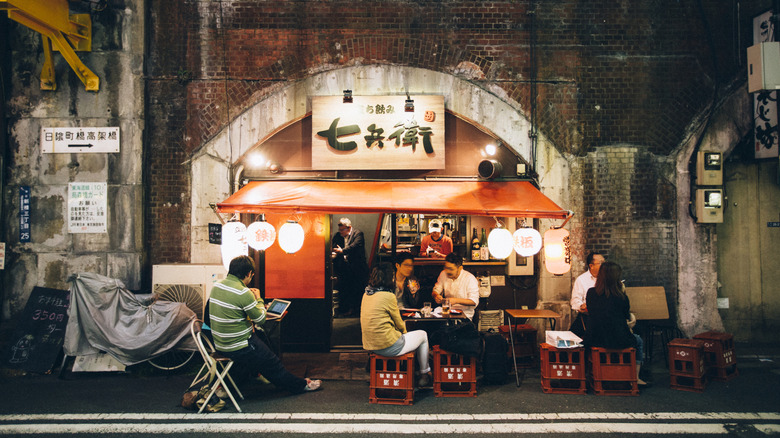
Having lived in Japan for seven years — covering the country and its culture for newspapers and magazines, as well as writing guidebooks — there's a topic that I'm often required to address: etiquette. The surplus of apparent rules and accepted behaviors in Japanese social life is a holdover from the samurai era, when society was ordered into a rigid hierarchy. Some of these behaviors, like how and when to bow or the precise form of Japanese to use when conversing with your elders, are ancient. Others have appeared gradually, such as the rule that you shouldn't eat while walking.
If you were to believe some of the stories warning against eating while walking in Japan, you'd think it was a mistake worthy of deportation. This rule of etiquette is born out of the philosophical mindset of "wa," which English speakers might translate as "preserving social harmony." It dictates one shouldn't engage in behaviors likely to inconvenience one's fellow citizens. "Wa" is why you don't talk on the phone while riding the train and why you never enter someone's home with your shoes on. It's why you shower vigorously before slipping into the public baths, and it's the reason you attach suffixes like "san" to another person's name (but under no circumstances attach them to your own).
For whatever reason, avoiding eating while walking in Japan is one piece of etiquette that attracts a lot of airtime. Social media posts and vlogs on the topic are rife, while in 2019, CNN reported that the historic city of Kamakura had issued an official ordinance asking tourists to refrain from the behavior. But for all the rules and mores you should be aware of before traveling to Japan, there's no harsh punishment for not adhering to them — other than embarrassment, which can feel punitive enough.
What happens if you eat while walking in Japan
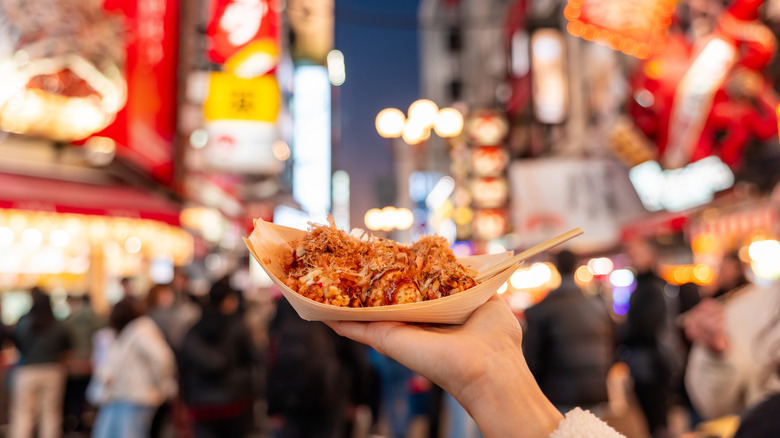
I think it's reductive to assume the entire population of Japan, 120 million people, would think monolithically about a given breach of etiquette. It's not easy to predict how people will react if you eat while walking. Locals might side-eye you for breaking this custom, especially in a train station or main street full of hurried commuters. At a traditional festival or fish market, where street food stalls are plentiful and crowds are often moving to prevent bottlenecks, you might find consuming food on the move unavoidable. You might even see Japanese people doing it, too.
One problem with breaking Japanese etiquette as an outsider is that you're often viewed as an ambassador for your country, if not the entire foreign diaspora living and traveling in Japan. Embracing frowned-upon behaviors can support the growing concern that foreigners lack respect, which is becoming an increasingly pervasive belief amid growing anti-tourism sentiment throughout the country. This is worth being mindful of, while remembering there's little you can do to influence locals whose views trend towards the extremes. If you speak to Japanese people, you'll usually find their views on eating while walking are pretty diverse, just as they are with other common tourist behaviors said to rub locals the wrong way.
Ultimately, I've broken this taboo many times over the years. Perhaps it was to soak up an evening's worth of alcohol while rushing for the last train home, or maybe it would feel weird to skulk down an alleyway just to eat a rice ball. The bottom line is you can't — or at least shouldn't — spend your trip fretting about every minor social indiscretion. Provided you treat Japan with respect and curiosity, you can expect the Japanese to reciprocate.
How to avoid eating while walking
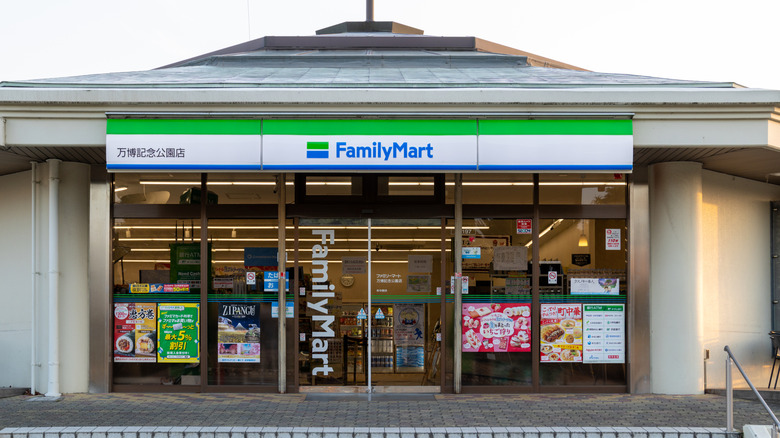
The question then becomes: What are the alternatives to eating while walking? If your on-the-go food is bought at a convenience store, sometimes there's a table with chairs along one wall of the store, or (in rare cases) a full sit-down dining area known as an "eat-in space." In 2024, however, convenience store chain FamilyMart announced it would gradually replace eat-in spaces with product display areas in branches nationwide.
Unfortunately, Japanese cities tend to not have a lot of benches for public use, so if you want to sit down and eat, a public park or river promenade is often a better option. You may also notice that when locals buy tea or coffee from a streetside vending machine, they'll consume it there before moving on. Though advice varies on this one, eating while standing by a vending machine is usually better than eating on the move.
If you've bought food at a busy festival, you could wait until the crowd has thinned before tucking into your lunch. This will benefit you as well as your fellow festivalgoers. After all, there's nothing fun (nor graceful) about trying to chopstick piping hot yakisoba or okonomiyaki into your mouth while getting dragged along by a crowd. But wherever you are, I think it all comes down to common sense. If you want to eat and you're not going to stink out a public space, nor are you in such close proximity to someone that you'll be masticating in their ear, then go ahead and enjoy.