
Halfway Between Liverpool And Manchester Is A Quaint Town With A Local Market And Historic Charm
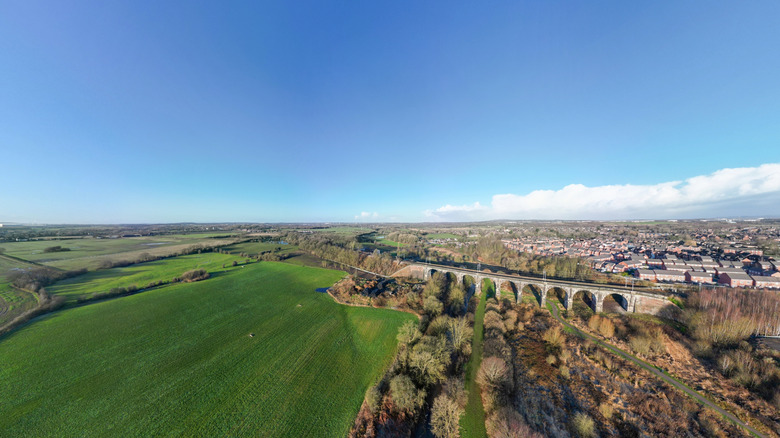
Newton-le-Willows is a market town. This quaint Northern English community has a long and rich history, and for centuries has been defined by the Earlestown Market, which sells food, antiques, and other assorted items every weekend. Newton-le-Willows is also a railroad town, sitting on one of the most historic railways in the world — indeed, the first to ferry either people or products between two cities.
This small city with roughly 25,000 residents sits almost exactly between those two cities, which are two of England's most famous, with both sharing an industrial history and a substantial musical legacy. Liverpool, the shipping port that was home to The Beatles, sits 20 miles away; meanwhile, Manchester, the Industrial Revolution metropolis that gave the world bands like New Order, The Smiths, and The Fall, sits 20 miles in the other direction. That makes Newton-le-Willows a great place to stay if you want easy access to either city without the hassle of staying in a city; a stay at the small boutique hotel the Kirkfield, with a locally-sourced restaurant and live music on Fridays, will let you indulge in the small-town atmosphere of Newton-le-Willows with those two cities just a short train ride away on the Northern Rail, or drive on the M6 and M62.
Newton-le-Willows might sit in the shadow of these two giants, but between its historic charm, strong market tradition, and quaint nature, a visit here is well worth the time. Here's why you should pull off in this exciting little town the next time you're in the North West of England.
Attending the Earlestown Market in Newton-le-Willows
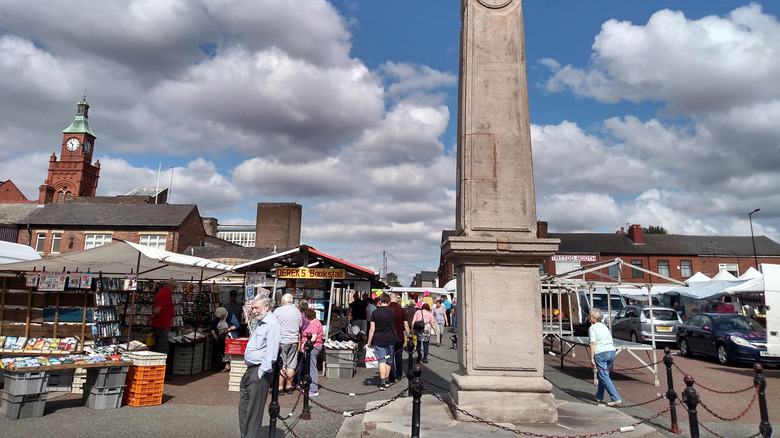
Newton-le-Willows' market dates back to the 14th century — almost 700 years ago. What is now called the Earlestown Market was founded in Newton by a Royal Charter in the 1300s and ploughed along for centuries. When the town exploded with the arrival of the railroad, Earlestown became its fastest-growing suburb, and the market was moved there in the 1890s. The Earlestown Market has been the de facto town center ever since.
Today the Earlestown Market comes to life every Friday and Saturday with two different shopping experiences and over 150 stalls. The Earlestown Friday Retail Market, which runs every Friday of the year from 9 a.m. to 5 p.m. (unless Friday happens to be Christmas, Boxing Day, or New Year's Day), is a traditional market where you can find produce, fish, cheese, and other food from local dealers. On Saturdays it hosts a car boot sale, with all manner of products for sale, including antiques, clothing, collectibles, household goods, and more. You never know what you'll find at Earlestown Market, but one thing you can count on when visiting is engaging with its centuries-old mercantile tradition.
Earlestown Market Square recently underwent refurbishment as part of a larger transformation of Earlestown Towne Center, but it's keeping the old ways alive — and even building on them. The Earlestown Artisan Market, a new market focused on local creators and artisans, is set to launch in September 2026. It's scheduled to run on the final Sundays of every month, with locally-made art, jewelry, gifts, and other knick-knacks for sale. Who doesn't love a new spin on a timeless tradition?
The rails and iron fuel Newton-le-Willows' historic charm
Newton-le-Willows enters the historical record with a mention in the Domesday Book, the survey ordered by William the Conqueror that was completed in 1086. A town this old is often filled with fascinating history, and Newton-le-Willows is no exception. Despite being nearly a thousand years old, much of that history dates back to the 1800s, when the railroad put Newton-le-Willows on the map.
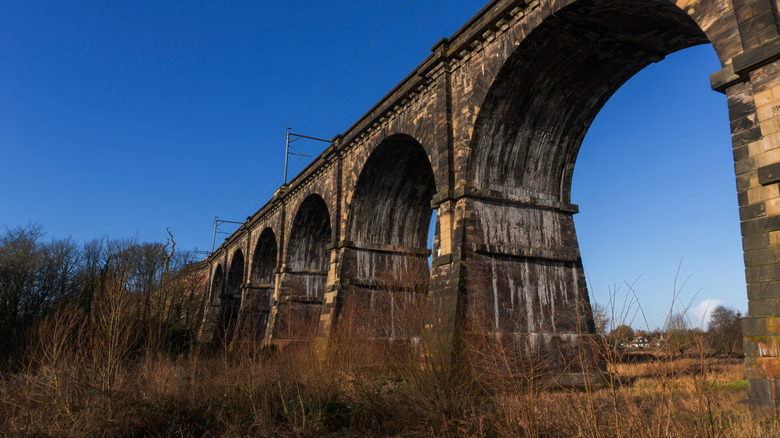
The most visible and dramatic sign of the town's railroad history is the Sankey Viaduct. The Nine Arches, as it's colloquially called, opened in 1830 as part of the Liverpool and Manchester Railway — the world's first inter-city railroad, connecting the underrated city of Manchester with Liverpool, which Rick Steves calls "the UK's best big-city destination outside of London." The elevated track carried passengers and freight alike over the Sankey Valley and Sankey Canal. It needed to be high enough for barge sails, which cruised under the canal, to clear, standing 70 feet off the ground and towering like an ancient Roman aqueduct. Today, it's a reminder of the railroad's pivotal role in changing this part of Britain and, eventually, the world — it's also a pretty great photo opportunity. You can get close to the Nine Arches on the Sankey Valley Park Circular walking trail, which starts in Sankey Valley Park in the nearby town of Warrington, known for its vibrant parks and shops. The moderately difficult trail loops for 4.6 miles, taking about 1.5 to two hours to complete.
With its spot on the new railway, Newton-le-Willows was an ideal place to build a foundry. Vulcan Foundry opened in 1830, and was a vital part of the town's growth and health over the next century and a half. Little of the ironworks remains today, but you can get a sense for the employee housing that Vulcan built in Vulcan Village, which also dates to the 19th century. This strip of row houses facing the village green gives today's visitors an idea of what daily life was like for the ironworkers at Vulcan Foundry throughout the 19th and 20th centuries, and is also just a charming collection of little white homes. It's one of the final vestiges of the company that helped fuel the growth of Newton-le-Willows and the region it calls home.