
Louisiana's Scenic Wetlands Gem Between Lafayette And The Texas Border Has Nature Walks, Boating, And Wildlife
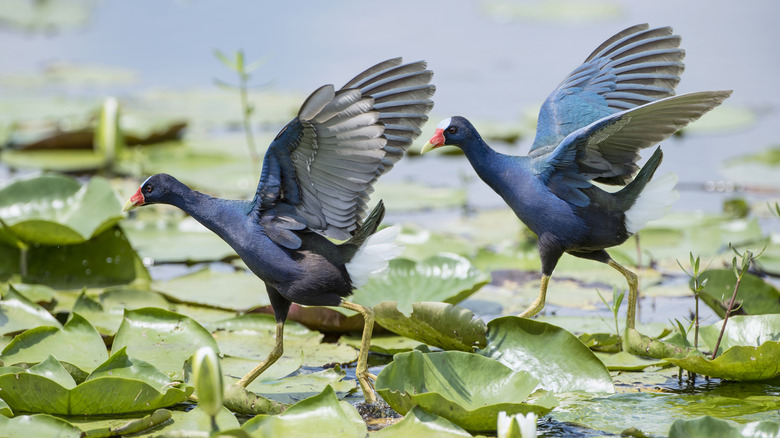
From bayous to swamps to wetlands, Louisiana's southern shore is one of the Pelican State's most alluring features. Along its nearly 7,800 miles of coastline, land and water blend together into unique habitats and ecosystems that capture the imagination. Some, like the bayous of the Mississippi Delta, are world-renowned for their moss-laden trees and ethereal backwaters steeped in folklore legends and eerie histories. Other coastal areas are lesser known but no less scenic, one of which is the Cameron Prairie National Wildlife Refuge.
Located in western Louisiana close to the Texas border, this nearly 25,000-acre reserve consists of a mix of coastal prairie, marshes, wetlands, and abandoned rice fields. About an hour and 45-minute drive from Lafayette and 50 minutes from Lake Charles, it may not be the most easily accessible area to visit. But it's worth the effort for its serenity, scenic vistas, and unique fauna. You're more likely to encounter crowds of birds than crowds of people out here. Its lakes and channels also make for some epic boating, with hikes sprinkled in for some on-land fun.
An abundance of wildlife awaits in Cameron Prairie
Unlike the thickly wooded swamps and marshes of eastern Louisiana, this area of the coast is all wide open spaces, with some tree cover scattered throughout. Flooded grasslands, ponds, and canals stretch out across the flat expanses of Cameron Prairie National Wildlife Refuge, which makes it easy to spot some of the wildlife that put this place on the map. The refuge sits at the meeting point of two major flyways for migratory birds and was created as a sanctuary where these on-the-go waterfowl could overwinter, making it a prime place for birdwatching. Along with spots like Lake Catahoula and the Atchafalaya Loop, it's one of Louisiana's top spots for birding.
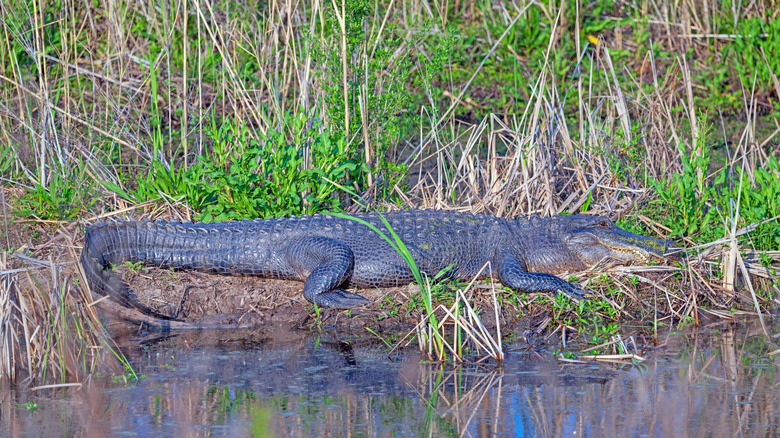
Over 200 different species can be seen in the area, with exact sightings varying by season. Every winter, thousands of geese and ducks, including snow geese and green-winged teals, descend onto the refuge to overwinter. Throughout the year, birders have the chance to spot species ranging from great blue herons and roseate spoonbills to raptors like bald eagles, ospreys, and Cooper's hawks. Beyond birds, keep eyes peeled for wildlife of the non-flying variety like otters, coyotes, raccoons, opossums, snakes, and white-tailed deer. Watch the waters and banks as well for American alligators, which are some of the most exciting sightings in the area — just be sure to keep your distance!
Exploring the marshlands and waterways of Cameron Prairie
With scenic driving routes, trails, and navigable waterways for boats, there are all sorts of ways to experience Cameron Prairie. The refuge is split into two sections: the northerly Gibbstown unit and the southerly East Cove unit. The 9,621-acre Gibbstown is the main unit with all the amenities like restrooms and a visitor center — and the only one accessible by car, making it a good place to start.
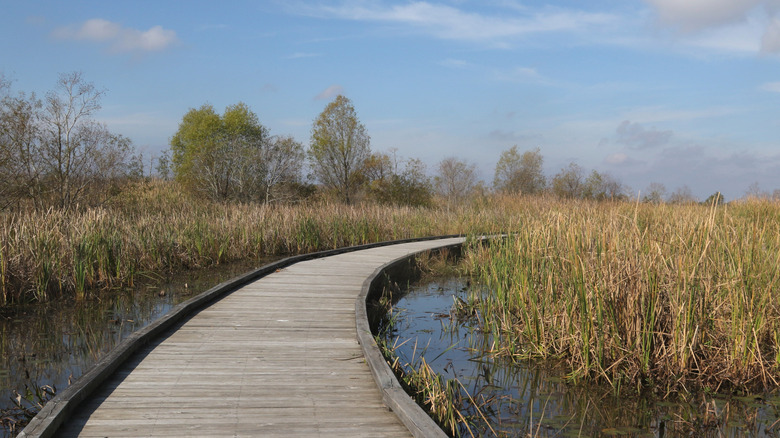
Begin at the visitor center, where educational exhibits share more about the local flora and fauna. Right outside, there are two short boardwalks; the 0.6-mile route is a good choice as it leads to the Alan C. Bonsack Observation Tower. Then, hop in the car and drive south to Pintail Wildlife Drive, a three-mile scenic loop with parking areas for pulling over and admiring the views and wildlife. Even though the refuge is largely comprised of marshlands and waterways, there are a few places to get out and stretch your legs on short hikes. This area has one of them: the Pintail Boardwalk. Stretching just over half a mile, this flat, easy-to-walk route loops around a scenic marshland area, where you can scan the water and grasses for wildlife. Unless there's posted signage, you can also walk across levees and dikes.
Offering access to more remote areas, including the boat-in-only 14,927-acre East Cove, boating is arguably the best way to get around here. Not far from Pintail Wildlife Drive, a boat launch offers access to the intracoastal waterway. From there, you can take a motor or paddle boat (depending on the area) to nearby lakes or go all the way to Calcasieu Lake and head down to the undeveloped East Cove Unit, where you'll pass grassy islets and take in unobstructed views. Fishing and hunting are also allowed with permits, but only in designated areas and specific seasons. The refuge also sits along the Creole Nature Trail All-American Road, an 180-mile scenic byway through "Louisiana's Outback." Connecting Cameron Prairie to other nearby wildlife refuges like the Rockefeller State Wildlife Refuge, the route makes for a great road trip.