
One Of The Sierra Nevada's Most Scenic Hikes Is A Yosemite Trail With An Abandoned Mining Camp And River Views
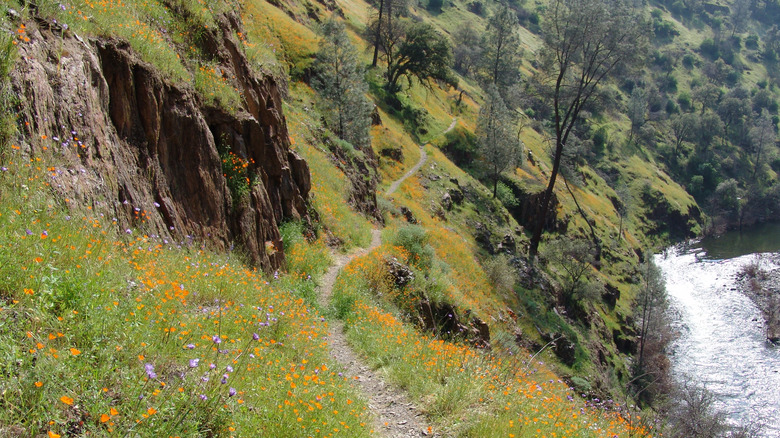
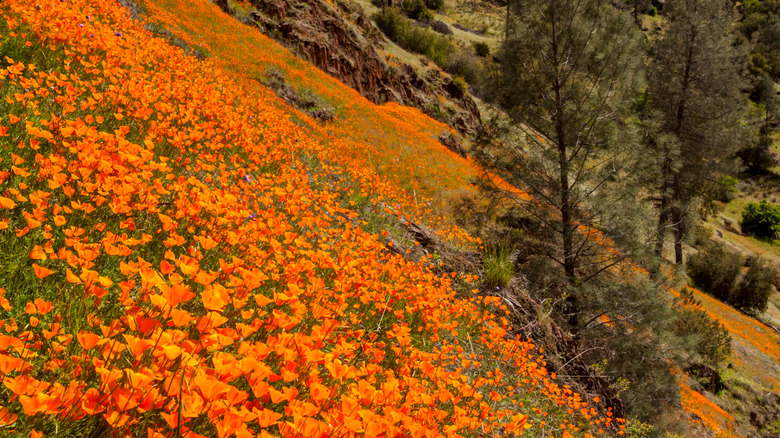
Running alongside the south fork of the Merced River near Yosemite National Park, the 8.5-mile out-and-back Hite Cove Trail might be one of the prettiest hikes in the Sierra Nevada. An abandoned mining camp lies at the end of the trail, but this route is best known for its wildflower blooms, with over 50 species spotted here. The orange tufted poppies are the main draw, with millions of them covering the steep hillsides during spring. You can see species like blazing star, bluedick, and redbud here too, bringing pops of color to the grassy slopes.
Per Wilderness Portal, the Hite Cove Trail has "one of the densest wildflower displays in the central Sierra," making it a top spring walk in the region. AllTrails reviewers agree, with one remarking that it's "a gorgeous hike teaming with springtime wildflowers." The best wildflower displays are found along the first part of the trail, with the highest concentration of poppies just half a mile in. This means that you don't need to complete the full route to enjoy the blooms.
Yet it's not all about the flowers. While hiking the trail, visitors can enjoy views of the Sierra Nevada National Forest and the Merced, a designated Wild and Scenic River that carves through the narrow canyon down below. As one AllTrails hiker reports, "Following the river was a treat, and the rocky outcropping at the end of the trail was a divine spot for a lunch break." Another user comments that as you follow the river, you "can see it and hear it rushing your whole way." The river leads you up to the deserted mining settlement at the head of the valley.
The abandoned Hite Cove gold mining camp
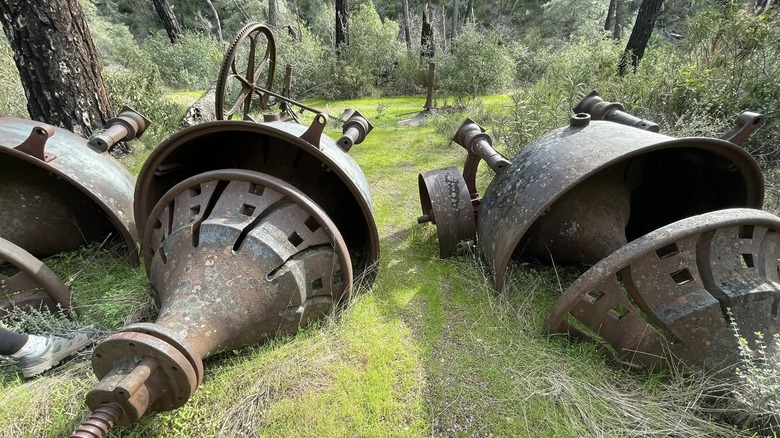
The abandoned 19th-century gold mining settlement of Hite Cove is 4.5 miles along the trail and marks the turning point of the route. As one AllTrails review notes, this is a "beautiful hike" with "curious remains/ruins of an old mining operation and settlement once you reach the Hite Cove sign." Like many of the secret spots in nearby Yosemite National Park, it's steeped in history.
Named after John Hite, a prospector who discovered one of the richest gold veins in the area, the Hite Cove mining camp was active during the 1860s and '70s, and again in the 1900s. It was a prosperous and busy operation, with around 100 people living in the cove, many of whom worked in the mine and the mills. There was a hotel, a blacksmith's workshop, and even a dance hall to support this remote Gold Rush community.
There's very little left of the mining camp now, as it burned down in 1924, but you can still see some of the old ironworks lying on the ground. A few crumbling stone walls from the town's buildings are also visible in the undergrowth, as well as the remains of the old suspension bridge that once crossed the river. Those interested in California's mining past might also want to make the 30-minute drive to Mariposa, a charming gold rush town known as the "Gateway to Yosemite."
Tips for hiking the Hite Cove Trail
You'll find the trailhead just off Yosemite's Highway 140, about 8.5 miles from the El Portal border. There's limited roadside parking near the Redbud Lodge and Savage's Trading Post, so arrive early to snag a space. The trailhead is signed, so it's easy to pick out. It's a moderately challenging trail, thanks to its undulating narrow path and steep first section. The trail gradually slopes down toward the river, and at the 1.5-mile mark, you'll be beside the water. Several hikers on AllTrails recommend wearing long pants to avoid scratches from the sharp foliage and contact with poison oak.
The best time to visit is between March and May when the wildflowers are in bloom. The trail is long, so it never feels crowded, even at the height of flower season. The low elevation means you can admire flowers here while areas of Yosemite are still experiencing winter. Indeed, the poppies are often at their best in March, since the exposed south-facing slopes receive plenty of sun.
There's little shade on the trail, as it runs along the north side of the valley, so carry plenty of water and remember to top up your sunscreen during the hike. Keep an eye out for newts and rattlesnakes as you walk — they're often spotted basking in sunny spots on the path. And if you want to see more bright blooms, head over to Yosemite National Park for an underrated hike to stunning lakes and wildflowers.