
This Trending Asian Capital Is The World's Most Walkable City
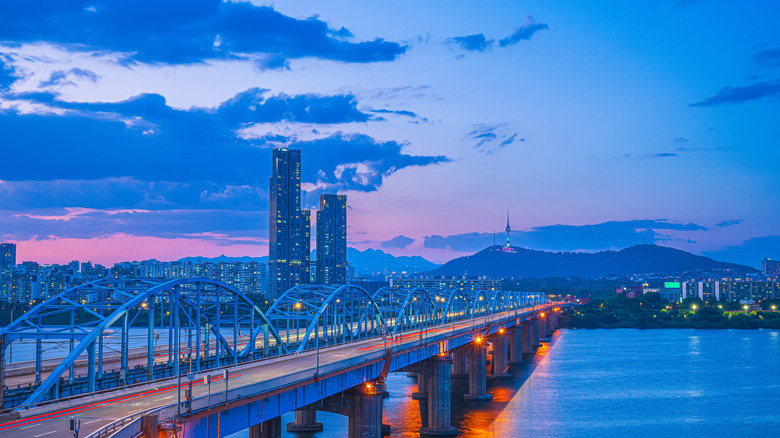
Walkability might not be the defining factor in choosing whether to travel to a particular city, but it's an attractive trait. It gives you greater agency, cuts time wasted on buses and trains, and encourages you to venture into less-touristed corners of town. Never mind that it's good for happiness, the environment, your health, and the economy. But being walkable doesn't necessarily mean being compact, because according to TimeOut, the world's most walkable city in 2026 is Seoul, South Korea's sprawling — and increasingly popular — capital city.
TimeOut's annual survey, which this year questioned more than 24,000 urbanites, is designed to uncover the best cities to live and travel in globally, and the best cities in certain categories, like nightlife, street food, and exploring on foot. Seoul might seem a strange city to come out on top of the walkability category. Granted, it's massive — covering 233 square miles and populated by 9.5 million people — but it also has an unusual cityscape, with skyscrapers rising among verdant hills and mountains that cut through the city. For all that, 93% of Seoul residents considered the city to be great for exploring on foot, a figure matched only by Edinburgh, a comparatively small, pedestrian-friendly city known for its iconic Royal Mile, one of the best sightseeing walks in Europe.
Seoul is quite a safe city on the whole, which encourages walking, even when venturing into lesser-known neighborhoods. Some of its most prominent and touristed neighborhoods, like Myeongdong and Insadong, have broad pedestrianized streets full of fashion stores, cosmetic boutiques, barbecue joints, and street food stalls. Seoul also introduced Seoullo 2017 Skygarden in 2017, a former 3,000-foot stretch of elevated highway that now functions as a walkway lined with thousands of plants. The city also plans to introduce more shade on pedestrian streets so people can walk comfortably during the height of summer.
The most walkable Seoul neighborhoods
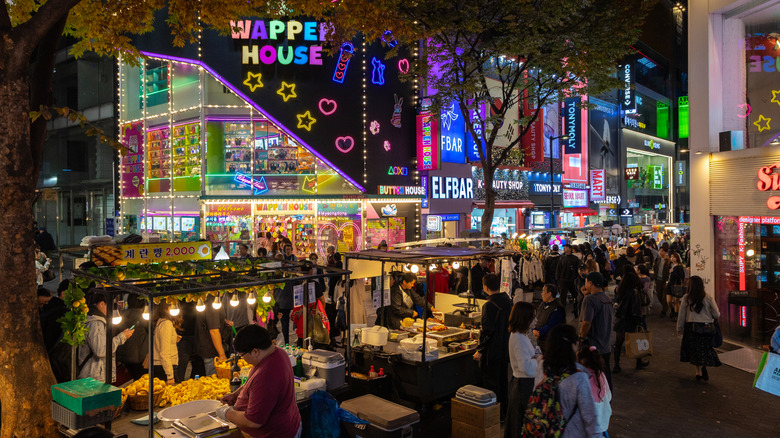
Myeogdong is one of Seoul's most classically walkable neighborhoods. It's flat, fairly contained, and carved up by lively streets reserved for foot traffic. By day, shop in one of its famous Olive Young cosmetics stores, walk its restaurant-filled alleys, and admire Namsan Seoul Tower rising from the nearby hills — you can also hike or take a cable car to the top, where you'll get awesome views of the city unfurling across the Han River basin. After dark, people flock to the Myeongdong Night Market, where street food vendors serve tteokbokki, grilled seafood, hotteok pancakes, Korean fried chicken, tornado potatoes, and much more.
Insadong is also great for pedestrians, particularly along the 2,300-foot Insadong-gil walking street. This is an artsy part of town, with craft stores, pottery shops, clothing boutiques, galleries, and teahouses. Stop in the semi-open-air Ssamzigil craft mall, where you can shop for all kinds of unique artworks and curios, including music boxes, sleek ceramics, woodworks, jewelry, and other handmade accessories and miscellany. There's also a shop that repurposes old vinyl into everyday items and a rooftop garden.
Hongdae is considered Seoul's trendiest neighborhood. Famous for its colorful "Red Road", a 1.2-mile pedestrian thoroughfare with street fashion stores, sunglasses shops, jewelry stalls, pop culture emporiums, and soul food restaurants. You'll also find buskers, street performers, and street food stalls in the area at night. Itaewon is a cool area to walk around, too. Though one of the city's more cosmopolitan neighborhoods, it still feels distinctly East Asian, with its bustling alleyways lined with restaurants and entertainment venues. On a rainy day, grab a coffee and relax in one of Itaewon's trendy cafes — there's a reason they say Seoul is Asia's coziest city. Also explore the trails of the recently redeveloped Korean Forest Garden, located in the Itaewon neighborhood.