
Washington's Former Landfill Is Now An Urban Seattle Park Full Of Nature Walks And Gardens On Lake Shoreline
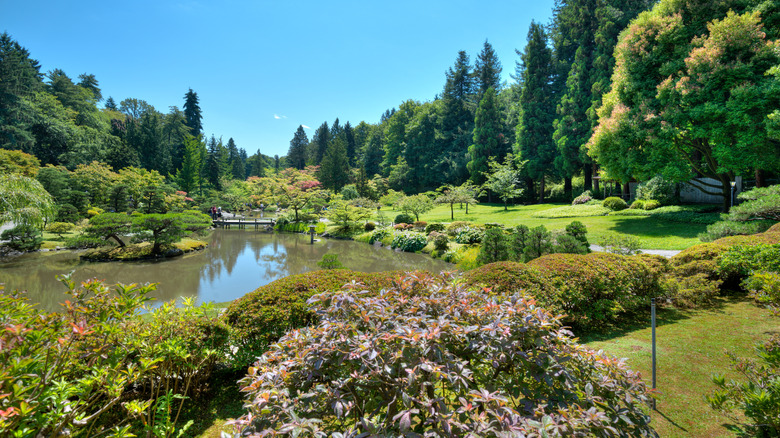
It's hard to imagine it now, but the lowlands and marshes around Lake Washington's Union Bay were once home to several of Seattle's sprawling garbage landfills. The Washington Park Dump was one of the city's largest. Opened in the early 1900s, the dump filled a rather steep gully near East Madison, just a few miles from downtown. The site was eventually shuttered and reclaimed, getting a new lease on life, with some of the lush flowers and plants at the Washington Park Arboretum sprouting up in its place.
Founded in 1934, the urban sanctuary is part of the University of Washington Botanic Gardens. The park stretches across 230 acres and is blanketed with an impressive assortment of plants, including rare and exotic plant species. It's pretty easy to see why this peaceful oasis ranks among the most popular attractions in Seattle, America's most outdoor-friendly city. You can stroll the park's paths from dawn to dusk throughout the year, though some of the facilities do have limited hours, including the visitor center and gift shop.
The Arboretum currently doesn't charge an entrance fee. But you will have to pay to explore the Seattle Japanese Garden where the old Washington Park Dump used to be, which currently costs $10 for adults and $6 for kids and seniors, as of the time of writing. Traipse through all the colorful plants at your own pace, or opt for a guided tour of the vibrant blooms. Just be sure to make time to stop and smell the roses.
See the colorful flowers around the Washington Park Arboretum
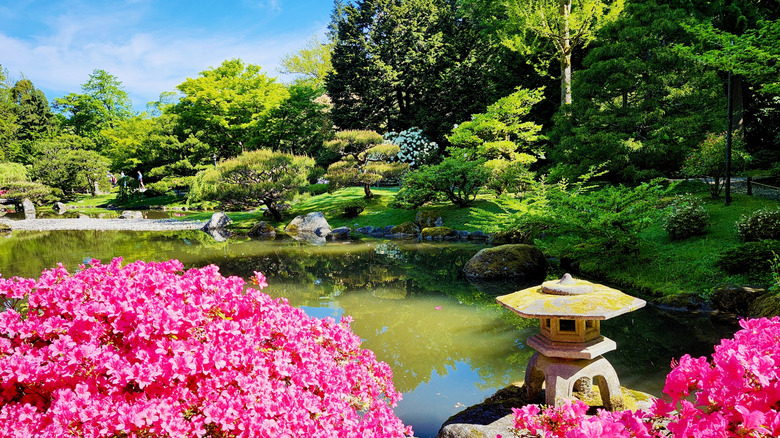
The Washington Park Arboretum's Japanese Garden sits at the south end of the park. This tranquil retreat evokes traditional Japanese landscapes, from the large koi pond to the rocky waterfall. The plot's not very big, spanning 3.5 acres. But there's still plenty of pretty scenery to take in as you walk the gravel trails, which are on par with some of the most gorgeous Japanese gardens in America. As one visitor shared on Tripadvisor, "the winding path and benches allow you to sit [and] view the garden slowly and mindfully, in all of its detail — stones, water, lanterns, bridges, buildings, plants, and animals."
There are half a dozen other gorgeous garden spaces around the Arboretum, each connected by a network of scenic paths. You can see a good chunk of the park by tackling the 2.4-mile Arboretum Loop Trail. Stop by the Pacific Connections Garden, near the Japanese Garden, which boasts plants from other countries along the Pacific Ocean, including Australia, Chile, China, and New Zealand. Some of the "iconic plants" to watch out for include monkey puzzle and snow gum trees. Download the online field guide so you know what to look for as you stroll along.
The Rhododendron Glen is also close by and houses one of the park's oldest plant collections, stemming from the late 1930s. The plot showcases the beauty of the Pacific Northwest, with magnolias, firs, and lush thickets woven throughout. More woodsy terrain is on display in the Woodland Garden, near the middle of the park. From there, the Lookout Trail loops through the gardens for about a mile. The path takes you to a scenic gazebo and is lined with interpretive signs, so you can learn more about the Arboretum's roots.
Explore the waters around the Washington Park Arboretum
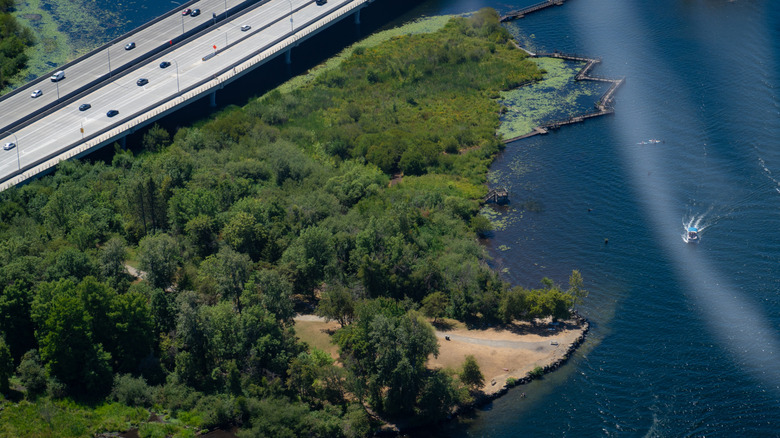
In addition to all the flowers, you can also take in views of Union Bay on Lake Washington. The Washington Park Arboretum's Waterfront Trail runs along the northern end of the recreation area for about 1.3 miles, connecting the mainland to Marsh and Foster islands. Note that, as of this writing, portions of the trail will be closed intermittently for a restoration project. The work began in June 2026 and will be completed in segments, with the first phase expected to be done in early 2027.
Several launch points can be found along the shoreline if you want to paddle along the bay. If you don't have a vessel, you can rent a kayak or paddleboard at the nearby University of Washington Waterfront Activities Center or Agua Verde Paddle Club. The latter also offers guided kayak tours of the surrounding waters.
Whether you opt to hike or paddle around the Washington Park Arboretum, do a bit of wildlife watching as you go. Coyotes have been spotted in the park, while beavers and river otters have been known to splash around in the wetlands. Nearly 200 species of birds have also been recorded around the Arboretum, from barred owls and red-breasted sapsuckers to Hutton's vireos and hermit thrushes. If you're looking for more bird havens around the country, consider visiting some of the best birdwatching destinations in the United States, from Tualatin River Wildlife Refuge to Madera Canyon.