
'America's Oldest Landscaped Garden' Is A Charleston Gem With Nature Walks, Artisan Shops, And A Restaurant
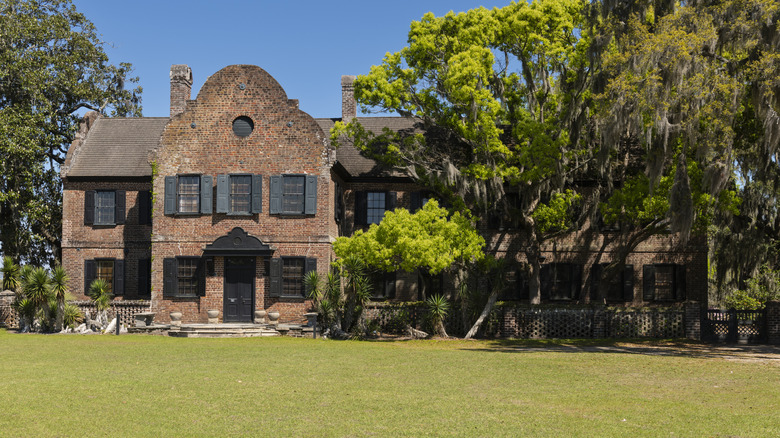
Charleston is a city steeped in history — that much is obvious from the stately homes framed by flickering gas lanterns and the horse-drawn carriages that rattle down the French Quarter's cobblestone streets. But along with the litany of the city's historic firsts, from the nation's first public museum to the first shots of the Civil War, there's one lesser-known site that travelers should know about. Nestled along the banks of the Ashley River about 16 miles northwest of downtown Charleston, Middleton Place holds the esteemed title of "America's oldest landscaped gardens," becoming a National Historic Landmark in 1971.
Originally the private residence of Arthur Middleton, a delegate of South Carolina and signer of the Declaration of Independence, the restoration of the gardens began generations later in 1925 before it would eventually open to the public as a house museum in 1975. Now, the historic site comprises not just the grand gardens which made Middleton Place famous, but also exhibits honoring the lives of the enslaved people who worked there, a living museum with artisans and animals in the stableyards, and tours of the estate's historic residences.
Middleton Place spans about 110 acres (65 of which make up the gardens), and its variety of experiences and amenities makes it worth a full day of exploration. The grounds are open from 9 a.m. to 5 p.m. daily (except for Christmas Eve and Christmas Day). Adult admission is $35 at the time of writing, with discounts available for children, students, seniors, and military personnel. Select additional tours and rotating exhibits may require an additional fee.
Take a stroll or a guided tour through the gardens of Middleton Place
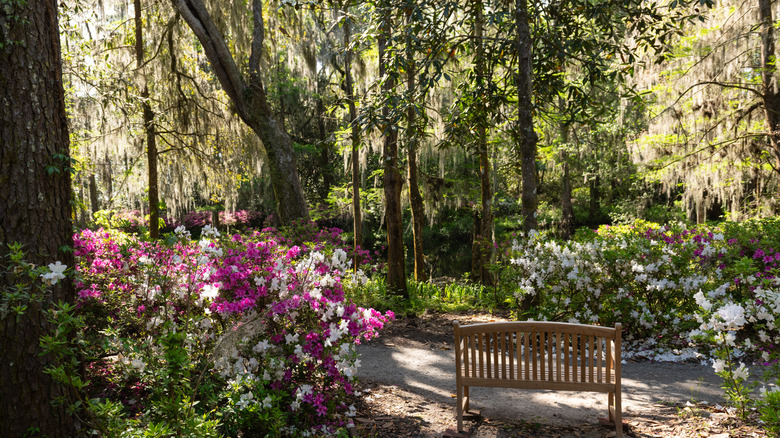
The gardens of Middleton Place were part of the grand vision of one man: Henry Middleton, father of Arthur, who in 1741 set out to create his own version of the classical gardens of Europe. Indeed, he took great pains to follow the guidelines laid out by André Le Nôtre, the mastermind behind the gardens of Versailles. Perhaps the most notable feature of Middleton Place is a stepped terrace leading down to two ponds resembling the impression of butterfly wings. A path leads around the perimeter, so visitors can take in the view of the water or step back and admire the precise landscaping of the grounds.
A quick tip for visiting: If you can, try to time your trip between March and April, when upwards of 100,000 azaleas are in vibrant bloom. As a bonus, you might escape some of the oppressive heat and humidity Charleston's summer months are known for. Middleton Place is also known for its camellias, which may have been first introduced to America in Middleton Place's gardens in the 18th century. Tea olives and crepe myrtles were introduced to the gardens around the same period, though none hold a candle to the famous centuries-old Middleton Oak, similar to another of South Carolina's natural wonders just outside of Charleston, the Angel Oak.
For an in-depth look into the gardens of Middleton Place, consider booking a guided tour. Guided garden tours are included with general admission and can be booked in-person at the visitor's center. Other included tours focus on the lives of the enslaved people who lived at Middleton Place and the Revolutionary War's role in the Middletons' lives.
Dine al fresco and pick up local souvenirs at the Shops at Middleton Place
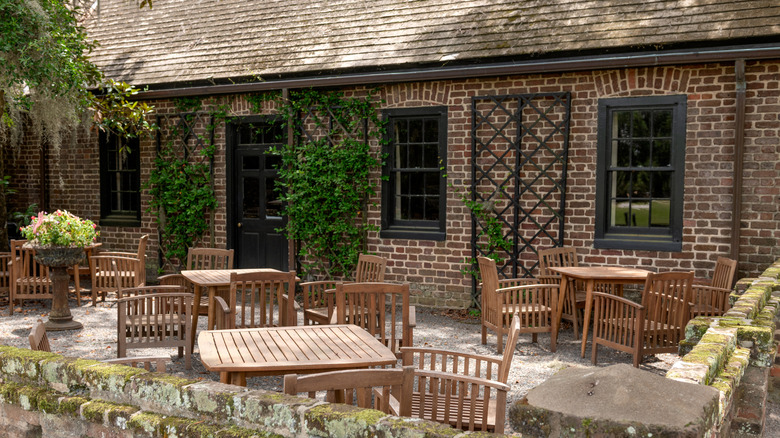
While its gardens might be its most noteworthy quality, there's more to Middleton Place than pretty landscaping. The park has its own hotel, the Inn at Middleton Place, with rooms overlooking the river starting around $190 nightly (which includes general admission for all guests). The Inn's restaurant, aptly named the Restaurant at Middleton, specializes in local Lowcountry fare with an upscale twist, including some of the must-eat dishes when visiting Charleston, like she-crab soup.
Likewise, the shops at Middleton Place offer distinctly Charlestonian wares, many of which are handcrafted by resident blacksmiths, coopers, and potters. Sweetgrass baskets may be among the most iconic souvenirs — and one of those must-buy items when visiting Charleston — but the Garden Market also sells a variety of local products, from jams and jellies to live plants from the nursery. Additionally, the Museum Shop offers decorative pieces for the garden or home, along with literature on the history of Middleton Place. And if Middleton Place doesn't satisfy your appetite for local shopping and dining, you're always just a 30-minute drive away from one of the world's most charming main streets, Charleston's King Street.